Benefits of Agile Development Methodology: Faster Delivery, Higher Quality

The real magic of agile development lies in its ability to deliver value faster, pivot on a dime, and build a genuinely better product. By ditching the traditional "big bang" approach and breaking massive projects into small, manageable pieces, teams can get working software into users' hands sooner. This lets them collect real-world feedback and adapt to market shifts without derailing the whole timeline.
What Is Agile Development and Why It Matters Now
Let's imagine you've been hired to build a car. The old-school approach, known as the Waterfall method, would require you to spend months creating a perfect, exhaustive blueprint. You'd then disappear into the workshop, build the entire vehicle, and unveil the finished product a year later, just hoping it's what the customer still needs.
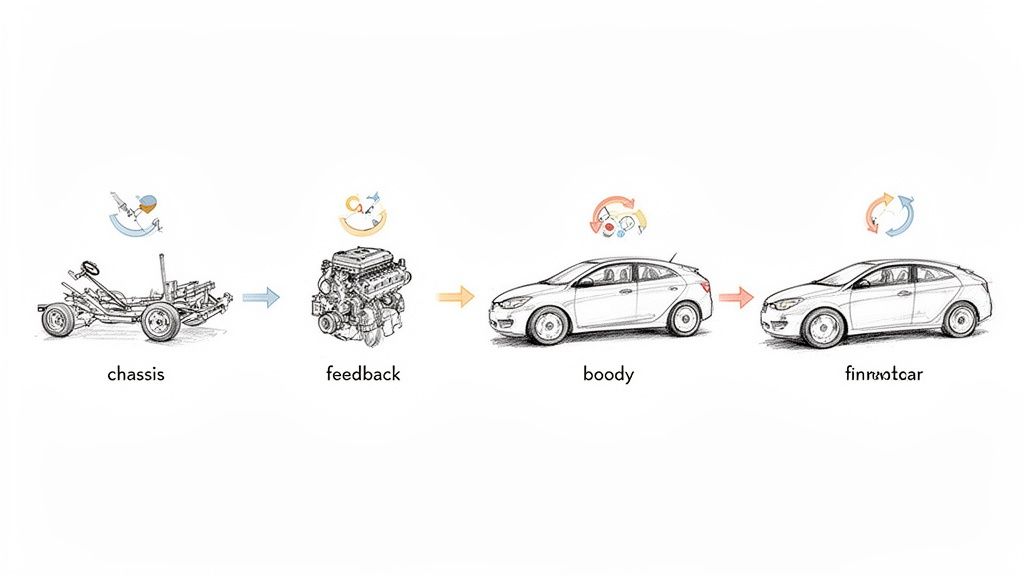
Agile completely flips this script. Instead of one huge reveal, you work in short, repetitive cycles called sprints. You might start by building and delivering a functional chassis. Then you get feedback. Is it sturdy enough? Is the size right? Next, you add the engine and wheels, and again, you gather more feedback.
This constant loop of building, shipping, and learning is the heart of agile. It ensures the final product isn’t just a guess—it's a direct reflection of what customers actually want and what the market demands.
The Shift From Rigid Plans to Flexible Progress
At its core, agile is a mindset that prioritizes responding to change over blindly following a plan. It's built on the honest admission that in any fast-moving market, our initial assumptions are probably wrong. The ability to pivot is far more valuable than a perfect but outdated strategy.
This whole philosophy was captured in the Agile Manifesto, a document drafted by a group of software developers who knew there had to be a better way. Its principles are simple but incredibly powerful:
- Individuals and interactions over processes and tools.
- Working software over comprehensive documentation.
- Customer collaboration over contract negotiation.
- Responding to change over following a plan.
These values aren't just abstract ideals; they create real business advantages. For example, instead of wasting months on documentation that no one will read, teams focus their energy on shipping code that works. One of the most popular frameworks for putting this into practice is the Scrum methodology, which gives teams a structured way to apply these principles.
To give you a clearer picture, here's a quick breakdown of how these agile principles translate into direct business outcomes.
Agile Development at a Glance
| Agile Principle | Core Concept | Business Impact |
|---|---|---|
| Iterative Development | Build and release in small, frequent cycles (sprints). | Faster time-to-market and early revenue generation. |
| Customer Collaboration | Involve stakeholders continuously throughout the process. | Higher product-market fit and reduced rework. |
| Responding to Change | Adapt plans based on feedback and new information. | Increased adaptability and a competitive edge. |
| Working Software | Prioritize shipping functional product increments. | Tangible progress and improved stakeholder confidence. |
This table shows that agile isn’t just a different way to manage projects; it's a strategic framework for building better products in a world of constant change.
A Strategic Advantage for Modern Business
Ultimately, the agile approach provides a road map for navigating uncertainty. It’s what allows a startup to find its product-market fit before the money runs out and helps established companies innovate without the massive risk of multi-year, all-or-nothing projects.
By focusing on delivering value in small increments, agile de-risks development, enhances team morale, and keeps the customer at the center of the process. It transforms development from a linear, high-stakes gamble into a dynamic, learning-driven journey.
In this guide, we'll dig into the specific benefits of agile development methodology, from slashing your time to market to improving product quality and boosting your team's productivity. We’ll show you exactly how adopting this mindset can become a cornerstone of your success.
Accelerate Your Time to Market
In a world where speed is a serious competitive advantage, traditional development can feel like you're stuck in the slow lane. You spend months—sometimes years—planning and building, only to find out at the very end if you've hit the mark. Agile flips that script. It’s less like a single, massive road trip and more like a series of quick, targeted sprints, each one delivering something valuable.
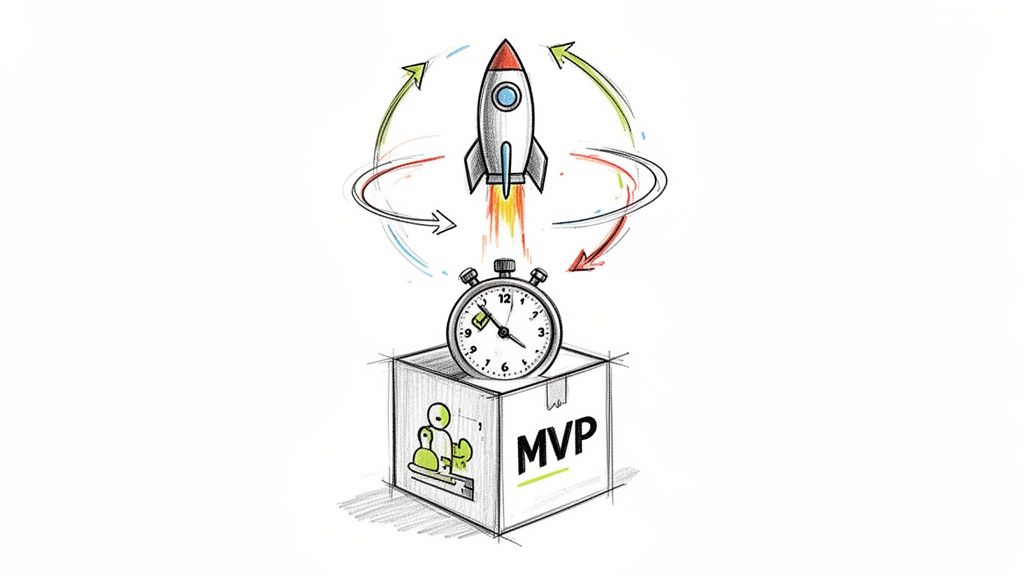
This simple shift is one of the most powerful benefits of agile development methodology. Instead of aiming for one "big bang" launch far off in the future, agile teams push out functional pieces of the product in short, predictable cycles. The result? You get a working product into the hands of real users, fast.
Launching with a Minimum Viable Product
The secret to this speed is the Minimum Viable Product (MVP). Don't mistake an MVP for a buggy prototype. It's the leanest version of your product that genuinely solves a core problem for your first users. It has just enough functionality to be useful and attract those crucial early adopters.
Imagine you're tasked with creating a new way for people to get around. The old way would be to spend a year designing and building a car. The agile way? You start by shipping a skateboard. It’s basic, sure, but it gets the job done—moving someone from A to B. And most importantly, you can start getting feedback immediately.
By focusing on launching an MVP, you shift from guessing what users want to knowing what they want. You replace internal assumptions with real-world data, which is invaluable for making smart, customer-centric decisions.
Getting to market early is a total game-changer. It lets you prove your core idea has legs, sign up your first users, and even start generating revenue while your competitors are still stuck in planning meetings. You're no longer building in a silo; you're building with your market.
The Power of the Build-Measure-Learn Loop
Once that MVP is out in the wild, the real fun begins. Agile is built on a continuous feedback cycle called the build-measure-learn loop. It's a straightforward but incredibly effective process for evolving your product based on what people actually do, not what they say they'll do.
Here’s the breakdown:
- Build: Your team develops a new feature or an improvement within a short sprint, which usually lasts one to four weeks.
- Measure: You release it and immediately start collecting data. This can be hard numbers like usage metrics and conversion rates, or qualitative feedback from customer interviews and support tickets.
- Learn: You dig into that data to figure out what worked, what flopped, and why. These insights become the priority for what you build in the very next sprint.
This rapid, iterative cycle ensures every bit of development effort is a direct response to real user needs. It slashes the time wasted on building features nobody asked for and puts the focus squarely on delivering value. This is a huge reason why so many companies are going agile; research shows 52% of businesses adopt it specifically to get products out the door faster. And it's working—developer adoption of agile practices shot up from 37% to 86% in just five years. To go deeper on this trend, you can discover more insights about the growing Agile methodology market on globalinsightservices.com.
Seizing Market Opportunities Faster
Being able to move this quickly gives you a massive edge. While competitors are mired in long-winded planning cycles, your agile team is already in the market, learning from users and adapting on the fly. This agility means you can:
- Capture Market Share: Getting to market first with a smart solution helps you plant your flag and build brand loyalty before anyone else shows up.
- Respond to Trends: Tastes change, and new tech emerges. Agile’s flexibility allows you to pivot and capitalize on these shifts without blowing up your entire roadmap.
- Outmaneuver Competitors: By shipping new features and updates constantly, you stay a step ahead. You can react to a competitor’s move in weeks, not months.
At the end of the day, a faster time to market isn’t just about being quick. It’s about being smart—reducing risk, learning faster, and building a product that’s perfectly tuned to what your customers actually need. That’s the momentum that fuels real growth.
Enhance Product Quality and Customer Satisfaction
One of the best things about agile development is how it directly boosts product quality, which naturally leads to happier customers. In the old-school waterfall model, quality assurance was treated like a final, high-stakes gate at the very end. It's like cramming for a single, massive final exam—if you discover a major flaw, you’re in deep trouble.
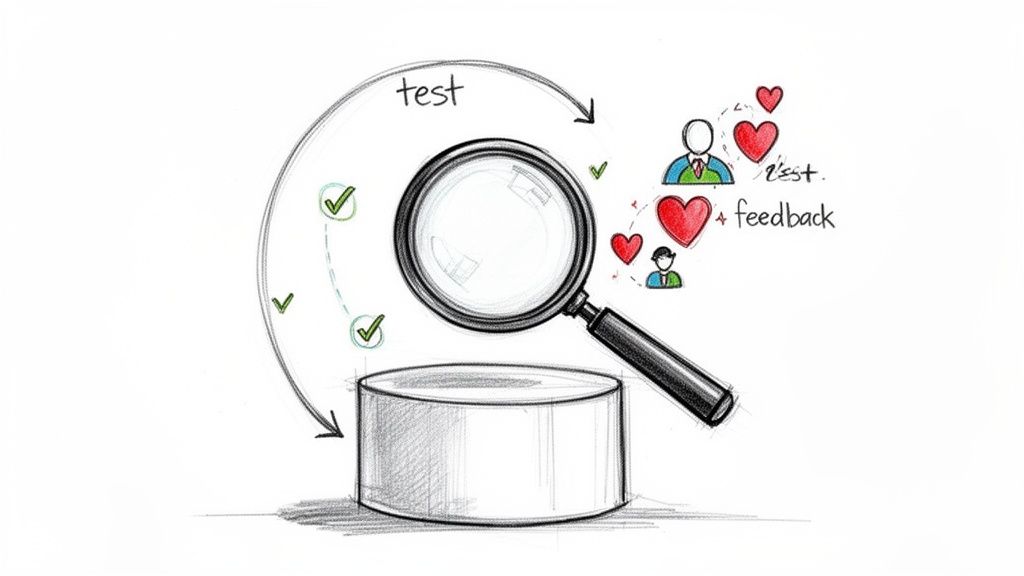
Agile flips that script completely. Instead of one big test, quality checks are woven into the daily work. This makes quality a shared, ongoing responsibility, not just some final step.
Continuous Testing and Early Bug Detection
Agile works in short cycles, usually two-week sprints. After each sprint, the team delivers a small but working piece of the product. This rhythm means testing happens all the time, not just once before launch.
This lets teams catch bugs and integration snags when they’re still small and simple to fix. It's far easier to solve a problem in code written last week than it is to untangle it months later after it's been buried under new features.
This constant focus on quality control is a core principle of agile. It helps create a superior product by making improvement and refinement a daily habit, not a final hurdle.
This approach also keeps technical debt in check—that’s the future cost of rework you create by taking shortcuts today. By tackling issues sprint by sprint, teams keep the codebase healthy and stable. To really get into the weeds on this, you can learn more about the role of quality assurance in software development in our detailed guide.
Building the Right Product Through Feedback
A bug-free product isn't enough. Real quality means building the right product—one that actually solves a user's problem. This is where agile's collaborative spirit is a game-changer.
Sprint reviews and demos aren't optional; they're essential checkpoints. These meetings bring everyone—developers, product managers, designers, and stakeholders—into the same room to look at the latest work. It’s a regular chance to:
- Check your assumptions by showing stakeholders a real, working part of the product.
- Get instant feedback on features, design, and overall direction.
- Realign priorities for the next sprint based on what you just learned.
This constant feedback loop prevents the team from veering off course. It stops you from wasting months building a feature on a bad assumption, only to have it flop at launch.
The Power of Strong Collaboration
This close-knit collaboration is the engine behind agile's success. When your technical and business teams are truly partners, you build products that are both well-engineered and strategically sound. In fact, 47% of organizations cite better collaboration between IT and business as a key benefit of going agile.
With 86% of software teams now using agile, this kind of harmony is becoming the new standard. This synergy ensures the final product doesn't just work—it delivers real value. The outcome? Higher adoption rates, more loyal customers, and a much better return on your investment. Agile helps you build products that people don't just use, they love.
Boost Team Morale and Drive Project Success
Beyond just shipping code faster, one of the biggest wins from agile development is how it transforms the team itself. Old-school, top-down project management can make developers feel like they’re just cogs in a machine, which is a fast track to burnout and disengagement. Agile turns that entire dynamic on its head.
It fosters an environment built on trust, autonomy, and a shared mission. This isn't some fluffy, feel-good extra—it's a core driver of project success. When your team is genuinely empowered and motivated, they solve problems quicker, innovate more, and simply produce better work.
Fostering Autonomy and Ownership
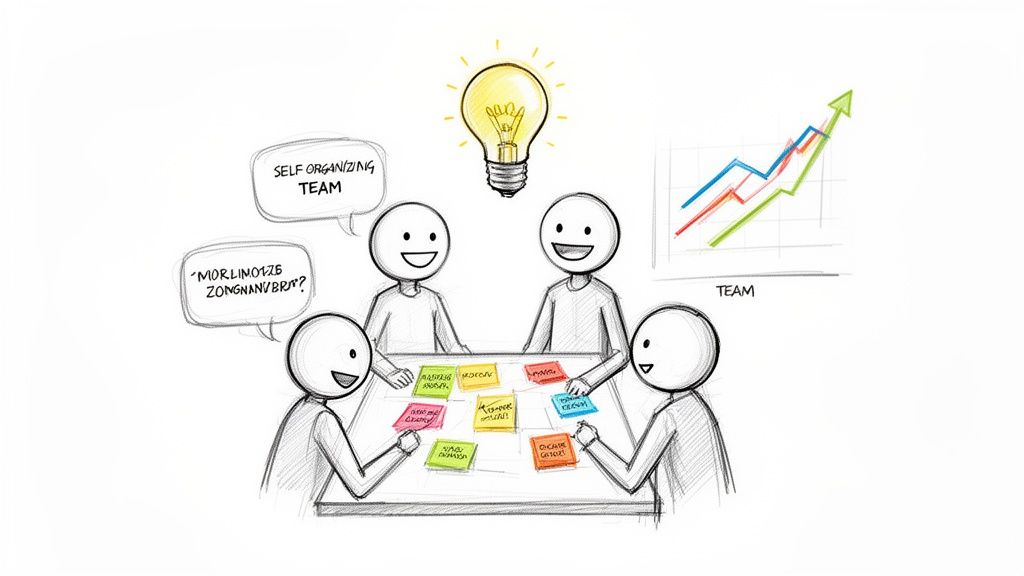
Agile is founded on the idea of self-organizing teams. This means that instead of a project manager dictating every single task, the team collectively decides how to best tackle the work in each sprint. This small shift from being assigned work to choosing how to complete it creates an incredible sense of ownership.
Suddenly, team members aren't just following orders; they're active partners in the project's success. This autonomy naturally leads to higher engagement and a much deeper sense of responsibility for the final product. When developers have a real say in the "how," they become far more invested in delivering something they're proud of.
This sense of ownership gets reinforced every single day during the daily stand-up meetings. These aren't status reports for management. They're quick, 15-minute huddles where the team syncs up, calls out roadblocks, and offers help to each other, strengthening their collective accountability.
An empowered team is a productive team. By trusting developers to manage their own work, agile unlocks a higher level of creativity and problem-solving that rigid, hierarchical systems simply cannot match.
Creating a Culture of Continuous Improvement
Agile methodologies have learning and adaptation baked right into the process. The prime example is the sprint retrospective. After every cycle, the entire team gets together to talk honestly about what went well, what was a struggle, and what they can do better in the next sprint.
This isn't about pointing fingers. It's a blameless, open forum focused on improving the process, not criticizing people. It gives the team a structured way to refine their workflow, try out new ideas, and solve those nagging issues that keep popping up. This constant cycle of reflection and adjustment builds a powerful culture of continuous improvement that goes far beyond just the code.
This proactive approach makes teams more resilient. They learn to navigate challenges more effectively, communicate with more clarity, and ultimately, become more efficient over time. This continuous refinement is key to both better project outcomes and a more satisfying work environment. Strong alignment in business is a natural byproduct of these agile practices, as everyone is working together toward shared goals.
The Direct Link to Project Success
This boost in morale and engagement isn't just a "nice to have"—it translates directly into measurable project success. Happy, motivated teams are more productive and far less likely to have high turnover. They communicate better, which means fewer misunderstandings and less costly rework. The data tells a compelling story.
According to the 17th State of Agile Report, a massive 39% of respondents using Agile methods achieved the highest average project performance rates. This is backed up by the fact that 98% of businesses that are thriving today credit Agile for helping them navigate digital chaos.
The benefits are clear: 64% report a sharper ability to handle shifting priorities, 73% of Agile marketing teams saw productivity spikes, and 71% noted better output quality.
Ultimately, agile recognizes a simple truth: great products are built by great teams. By focusing on creating an environment where talented people can do their best work, you don’t just improve morale—you build a powerful and sustainable competitive advantage.
How to Start Implementing Agile
Diving into agile doesn't mean you have to tear down your current process and start from scratch. The best way to make the switch is to think small. It's less of a company-wide revolution and more about building a new, better habit. Start with one team, prove it works, and let the momentum build naturally.
Your first move? Pick a pilot project. Don't try to get every team on board at once—that's a recipe for chaos. Instead, find a single, contained project. This gives your team a safe space to learn, mess up, and score some early victories without derailing the entire company.
Choosing Your Framework
With a project in mind, you'll need a framework to guide you. The two most popular starting points are Scrum and Kanban. They aren't an either/or choice, but they do offer different ways to look at your workflow.
Scrum: This one is fantastic for complex projects where you know things will change. You work in short, fixed-length cycles called sprints (usually two weeks). It comes with defined roles like a Scrum Master and Product Owner, giving a clear rhythm to teams who are brand new to agile.
Kanban: If you prefer a more visual and flexible approach, Kanban is your friend. It's all about continuous flow. Teams use a Kanban board to watch tasks move from "To Do" to "Done." It's perfect for teams with a steady stream of work, like support teams or content creators, because it helps you focus on finishing what you've started.
So, which one is right for you? If you’re building something new from the ground up, Scrum’s sprints can provide intense focus. If you're managing a constant flow of tasks, Kanban's flexibility is probably a better fit.
Fostering an Agile Culture
Let's be clear: tools and processes are just one piece of the puzzle. The real magic happens when you build a culture that actually lives and breathes agile values. This is all about getting your team to shift their mindset from rigid, long-term plans to making steady progress and learning as they go.
The point isn't to follow a framework by the book on day one. It's to build an environment where people feel safe enough to try new things, talk honestly, and change how they work based on real results.
You can start by introducing a few core agile ceremonies, even if they're simplified. A quick daily stand-up meeting, a simple planning session for the next cycle, and a look-back (a retrospective) are all you need to build the foundational habits of transparency and improvement. Encourage people to speak up and make it known that feedback is a gift, not a personal attack.
For more hands-on advice, check out our guide on agile software development best practices.
By starting small with one project, picking a simple framework, and focusing on the people side of things, you can make the move to agile feel both manageable and incredibly powerful.
Common Agile Challenges and How to Overcome Them
Adopting agile isn't like flipping a switch. While the benefits are huge, making the shift from traditional methods comes with its own set of very human, very real hurdles. Knowing what these bumps in the road look like ahead of time is the best way to make sure your agile transition actually sticks.
One of the first and biggest walls teams hit is cultural resistance. If your company has spent years operating with a top-down, command-and-control waterfall structure, the idea of autonomous teams and flexible plans can feel like complete chaos. You’ll see managers asking for detailed year-long roadmaps and developers who are hesitant to make decisions without a long chain of approvals. It's just muscle memory.
The best way to break through this is by showing, not just telling. Run a single pilot project using agile from start to finish. When you can point to a tangible success story—a project that was delivered faster and with better feedback—it’s much easier to win over the skeptics and get genuine buy-in.
Navigating Practical Hurdles
Even with the right mindset, teams still stumble over the day-to-day mechanics. For example, learning to accurately estimate the work you can fit into a two-week sprint is a skill that takes practice. Another classic trap is the "scrumfall"—where a team goes through the motions of daily stand-ups and sprints but still operates with a rigid, siloed waterfall mentality underneath.
The key to fixing these practical issues is a commitment to continuous improvement, which is exactly what retrospectives are for. These meetings are a designated time for the team to honestly discuss what’s working, what isn’t, and what they want to try differently in the next sprint.
Here are a few other common tripwires and how to navigate them:
- Scope Creep within Sprints: Protect your sprint goal like a hawk. When a new "urgent" request comes in mid-sprint, the answer isn’t to cram it in. The right move is to add it to the product backlog, where it can be properly prioritized for a future sprint. This keeps the team focused and on track.
- Stakeholder Disengagement: If stakeholders aren't showing up, it's often because the process makes it hard for them. Make their involvement both easy and essential. Schedule regular, non-negotiable demos so they can see progress firsthand and give direct feedback. This reinforces that their voice is critical to success.
- Documentation Lag: In a fast-moving project, documentation can quickly fall out of date. The trick is to stop thinking about documentation as a massive, static manual. Instead, explore modern Agile Documentation practices that favor just-in-time, valuable information over exhaustive but useless tomes.
The goal isn't to implement a perfect, by-the-book agile framework from day one. It's to build a resilient team that can adapt its processes to overcome challenges and consistently deliver value.
By anticipating these common pain points, you can move from a reactive to a proactive adoption strategy. This turns potential roadblocks into valuable learning opportunities, helping your team not just do agile, but truly be agile.
Got Questions About Agile? We’ve Got Answers.
Even after seeing the benefits laid out, it's natural to have questions when you’re thinking about going agile. Let's tackle some of the most common ones I hear from teams and leaders to clear up any confusion and really nail down the value of this approach.
"Isn't Agile Just for Software Teams?"
Not anymore. While agile was born in the software world, its core ideas have broken out of the server room and into just about every industry you can think of. Marketing teams, product designers, HR departments, and even construction crews are using agile frameworks to get work done.
Why? Because the principles of making progress in small steps, listening to feedback, and being ready to pivot are universal. It's really a mindset for tackling complex problems, not just a recipe for writing code.
At its heart, agile is for any team that needs to deliver value piece by piece in a world that won't sit still. It’s all about breaking down huge goals into smaller, winnable chunks and getting smarter as you go.
"How Do You Manage Budgets and Deadlines in an Agile World?"
This is a big one. Agile actually brings a surprising amount of predictability to the money side of things. Instead of locking in one massive, long-term budget and hoping for the best, you manage costs sprint by sprint. This gives leaders a crystal-clear view of where the money is going and lets them decide which features deliver the most bang for their buck.
Deadlines get a makeover, too. Forget the single, high-pressure launch date looming months or years away. The focus shifts to consistently shipping a working, valuable piece of the product at the end of every short cycle. You're always making tangible progress, which dramatically cuts the risk of those dreaded, project-killing delays.
"Can Agile Really Work if My Team is Remote?"
Absolutely. In fact, agile can be a superpower for remote and distributed teams, as long as you put the right habits in place. The whole game is about creating solid communication routines and using the right tools to keep everyone on the same page.
Here’s what I’ve seen work wonders for remote agile teams:
- Daily Video Stand-Ups: Face-to-face (even on a screen) is essential for connecting people to the mission and each other. It’s the daily heartbeat that keeps everyone aligned.
- Digital Task Boards: Tools like Jira or Trello are non-negotiable. They create a single, transparent source of truth so everyone knows what’s being worked on, who’s doing it, and what’s next.
- Purposeful Communication Channels: Using dedicated channels in Slack or Teams for different topics stops important conversations from getting lost in a sea of notifications.
With that foundation, remote teams can work together just as effectively—if not more so—than a team in the same room. It’s all about being intentional.