Staff Augmentation vs Staffing Guide for CTOs
The roadmap is already committed, the launch date is visible to customers, and the internal team has one problem it can't solve with more meetings. The product needs a senior mobile engineer, a UX specialist, or a technical SEO operator, but recruiting a permanent employee would take longer than the delivery window allows.
That situation pushes founders, CTOs, and product managers toward a familiar search: staff augmentation vs staffing. The labels sound similar because both models provide external talent. The operating consequences aren't similar. One model places specialists inside an existing team under client direction. The other can prioritize labor supply, placement, payroll administration, or provider-managed execution.
The practical question is therefore not which label sounds more flexible. It's who owns day-to-day delivery, output quality, compliance exposure, and integration with the internal team. That distinction affects a web rebuild, a mobile application, a UX/UI redesign, a digital marketing campaign, and an SEO program just as much as it affects a large software platform.
A CTO evaluating a nearshore partner should treat the choice as a governance decision. A marketing leader should ask whether an external SEO or content specialist needs to work inside the company's planning rhythm or complete a defined operational workload. A founder should understand whether the vendor is supplying capability, taking responsibility for a deliverable, or doing both through a hybrid arrangement.
This guide applies that lens to control, cost, hiring speed, scalability, legal boundaries, AI-era screening, and nearshore collaboration. It also builds on the practical considerations in this CTO guide to short-term staff augmentation. By the end, leadership teams should be able to choose the model that matches the work, assign accountability clearly, and evaluate a partner without confusing a low rate with a low total cost.
Table of Contents
- Introduction Why This Choice Matters for Product Leaders Now
- Understanding Staff Augmentation and Traditional Staffing
- Head to Head Comparison Across Control Cost Speed and Scale
- Cost Analysis and Time to Hire Metrics That Actually Matter
- Legal HR and Compliance Implications You Cannot Ignore
- Real World Use Cases and When to Choose Each Model
- Making the Right Choice and Next Steps with Nerdify
Introduction Why This Choice Matters for Product Leaders Now
A CTO at a growing SaaS company may have a product designer available, a backend team that understands the architecture, and a marketing manager ready to launch the campaign. The missing capability is a senior React Native engineer who can resolve performance issues before a mobile release. The roadmap doesn't need a permanent department. It needs a specialist who can join the existing workflow, understand the product context, and take direction from the people already accountable for the outcome.
That's where the choice becomes consequential. A provider can deliver a person who joins sprint planning, reviews pull requests, works with the product manager, and follows the company's priorities. Or the provider can supply a resource for a defined operational need while retaining more responsibility for coordination, administration, or delivery. Both arrangements can work. The wrong governance model creates friction immediately.
The same issue appears outside engineering. A UX/UI initiative might need a designer embedded with product and research teams. A digital marketing program might need SEO specialists who can work directly with content, analytics, and sales. A web development project might require additional frontend capacity while the client retains architecture decisions, acceptance criteria, and release ownership.
The decisive question: Does the company need direct control over delivery, or does it primarily need access to available talent?
That question matters because external workforce models are expanding beyond simple vacancy replacement. Procurement research for 2025 found that organizations identified cost efficiency as a reason for external workforce use at 74%, while cost as a primary driver stood at 6%, according to the 2025 procurement report on external workforce strategy. The distinction is important. Leaders increasingly buy external capability because it helps them execute, not merely because the provider offers a cheaper seat.
The rest of the decision depends on four practical tests:
- Control: Who assigns work, approves priorities, and manages performance?
- Capability: Does the team need a scarce specialist or additional labor for repeatable tasks?
- Economics: What do sourcing, onboarding, management, payroll, and replacement costs add to the headline rate?
- Risk: Which party carries employment, classification, data, security, and regulatory responsibilities?
Understanding Staff Augmentation and Traditional Staffing
A product team facing a release deadline needs more than another résumé. It needs clear ownership of priorities, code quality, security, and acceptance. Staff augmentation is an execution-control model built around that requirement. The external specialist joins the client's delivery process, while the client directs tasks, priorities, collaboration, and review. The provider generally manages sourcing and the employment or contractor relationship. The client owns the operating rhythm.
Read the staff augmentation model through its governance responsibilities, not its label. Who approves work? Who controls repository access? Who carries delivery risk when requirements change? Nearshore teams can work effectively across borders, but contracts, data access, security controls, and local employment rules must define the boundary between provider administration and client control.
Traditional staffing covers a wider set of arrangements, including temporary, contingent, and permanent placements, project-based staffing, managed services, recruiter placement, and other labor-supply models. The provider may concentrate on finding and administering workers. The client receives coverage for an operational or business need, with less expectation that each worker will join the product's internal delivery system.

The governance distinction matters more than terminology. Full Scale explains in its comparison of staff augmentation and staffing that augmentation keeps operational control and institutional knowledge within the client organization, while broader staffing can assign more process ownership to the provider.
Staff augmentation belongs inside the team
A nearshore developer may join the client's Slack channels, attend sprint planning, work in the client's repository, and follow the client's definition of done. The product manager assigns the backlog, and the engineering lead reviews implementation. The specialist adds capability without creating a separate delivery chain.
This approach suits work where context changes frequently, including product development, mobile releases, UX/UI systems, cloud modernization, analytics, and technical SEO. Validate skills against the actual stack, communication needs, security requirements, and use of AI-assisted tools. A strong résumé does not prove reliable delivery in an AI-enabled workflow.
Nearshore delivery adds value when working hours, communication habits, and cultural proximity support live collaboration. Nicaragua-based teams can overlap with North American stakeholders, making planning and clarification easier than handoffs built around delayed responses.
Traditional staffing supplies broader labor capacity
Traditional staffing fits defined coverage, such as administrative support, customer service, seasonal operations, and repeatable functions. It also suits commercial roles. A company considering Hire SDRs should first decide whether representatives need to operate inside its revenue process or whether the provider will manage more of recruiting and employment administration.
Choose augmentation when internal leaders must direct work and preserve product context. Choose broader staffing when the priority is worker access, placement, or managed labor administration.
Head to Head Comparison Across Control Cost Speed and Scale
The simplest way to compare the models is to follow the work from request to delivery. Who identifies the task? Who assigns it? Who evaluates the result? Who handles employment administration? Who absorbs the disruption when the person leaves?
| Evaluation Criteria | Staff Augmentation | Traditional Staffing |
|---|---|---|
| Day-to-day control | Client directs tasks, priorities, collaboration, and acceptance | Client may supervise assigned activity, while the provider can retain more coordination or process responsibility |
| Cost structure | Usually billed by the hour, day, or month for specific capability | Can include wages, agency fees, administration, onboarding, and placement costs |
| Hiring speed | Fast access to pre-screened specialists when the partner has the right talent pool | Efficient for broad recruiting, temporary coverage, and defined roles |
| Scalability | Scales a product or functional team around specific skill gaps | Scales labor supply across larger or more operational demand |
| Flexibility | Strong when priorities evolve inside an existing team | Strong when roles, shifts, and workloads are clearly defined |
| Legal and HR exposure | Provider or contractor may remain the legal employer, but client control still creates classification considerations | Provider often handles employment administration, while the client still needs to manage co-employment and supervision boundaries |
Control determines delivery behavior
In augmentation, the specialist works under client direction. The provider or contractor remains the legal employer, and the role is typically billed by the hour, day, or month rather than through a direct-hire payroll relationship, as described in this comparison of EOR, staff augmentation, and PEO models.
That structure suits an engineering squad that needs a cloud architect to respond to architecture decisions in real time. It also suits a marketing team that needs an SEO specialist to coordinate technical fixes with developers, content changes with writers, and reporting with leadership.
Traditional staffing can be better when the client's managers don't need to shape the work continuously. A warehouse, contact center, or administrative function may need people to follow established procedures. In that context, additional labor matters more than integration into product judgment.
Practical rule: If the work changes during the week, favor a model designed for collaboration. If the work is already documented and repeatable, favor a model designed for coverage.
Cost is more than the rate card
Augmentation may carry a higher hourly rate because the client is buying specialized capability and immediate integration. It can still reduce the burden of permanent hiring when the need is tied to a project, release, or temporary skill gap.
Staffing may produce a lower apparent rate for operational roles, but the total cost can include agency administration, onboarding, replacement effort, payroll handling, and supervision. Leaders comparing employment structures can use resources such as PEO vs ASO cost control to separate payroll administration from broader workforce governance.
Speed and scale serve different purposes
Augmentation scales a team around a capability. Traditional staffing scales labor around volume. A startup needing one senior mobile developer should not evaluate suppliers using the same criteria as an enterprise that needs a large pool of customer-support workers.
The staffing model should follow the bottleneck. If the bottleneck is architecture, design quality, or technical execution, augmentation is usually the stronger fit. If the bottleneck is coverage, shifts, or repeatable throughput, traditional staffing is more appropriate. Teams comparing these arrangements with outsourced delivery should also distinguish them from staff augmentation versus outsourcing, where the provider may own a larger portion of the outcome.
Cost Analysis and Time to Hire Metrics That Actually Matter
A rate comparison can hide economic decision. A low hourly price doesn't help if the supplier submits weak candidates, fills roles slowly, or requires repeated replacement. A higher specialist rate can be rational when the person joins an active team quickly and removes a critical delivery constraint.
Contingent-workforce leaders should measure the funnel instead of relying on general impressions. The temporary staff analytics guidance from Shyft identifies four useful metrics:
- Time-to-submit: How quickly an agency presents a candidate after receiving the request.
- Time-to-fill: How long it takes to close the vacancy from request to staffed assignment.
- Fill rate: How many requested roles the supplier staffs.
- Cost-per-assignment: Wages plus agency, administration, and onboarding overhead.

Read the metrics as a supply-chain diagnosis
A long time-to-submit points to sourcing speed or weak access to relevant talent. A long time-to-fill can indicate slow interviews, unclear requirements, compensation misalignment, or internal approval delays. A poor fill rate suggests that the provider can't consistently deliver against the roles requested.
Cost-per-assignment prevents a common mistake: comparing a bill rate with an employee wage and ignoring the rest. A serious comparison includes recruiting effort, interviewing time, onboarding, tools, management, compliance administration, and the cost of an empty seat.
For a product team, the relevant unit may be a staffed specialist who can contribute to the current sprint. For a marketing team, it might be an SEO analyst who can work across technical audits, content briefs, and reporting without requiring a separate agency handoff for each task.
Market size explains pricing differences
Staff augmentation is measured as a narrower, often IT-heavy service category. One estimate values the global staff augmentation services market at USD 2.145 billion in 2025, rising to USD 2.27 billion in 2026 and USD 3.14 billion by 2034, implying a 5.7% CAGR over that forecast window, according to Intel Market Research.
A separate estimate places the broader staff augmentation services market at USD 122.54 billion in 2025, USD 131.25 billion in 2026, and USD 201.53 billion by 2032, with a 7.36% CAGR, from the same market reference. The large spread reflects inconsistent category definitions. Some estimates count specialized talent extension, while others include wider labor-supply activity.
Traditional staffing sits in a much larger category. One estimate places the global temporary staffing market at USD 350 billion in 2022, with projected growth to USD 510 billion by 2030 and a 6.1% CAGR, as summarized by World Metrics. The broader staffing market was summarized at about USD 648 billion in 2023, with temporary help services accounting for roughly 85% of staffing industry revenue. Europe's temporary staffing market is estimated at over €170 billion, according to the same source.
The conclusion isn't that one model is universally cheaper. Augmentation is economical when specialized skill and delivery control matter. Traditional staffing is economical when volume, coverage, and administration matter more.
Legal HR and Compliance Implications You Cannot Ignore
The operational setup can create legal exposure even when the contract uses the phrase “staff augmentation.” Worker classification depends heavily on what happens in practice. If the client directs when, where, and how a person works, the relationship may look more like employment than independent contracting, which makes documented governance essential.
Providers often carry payroll, taxes, benefits, and compliance as the employer of record. That arrangement doesn't eliminate the client's risk. A client can still face co-employment or misclassification concerns if managers treat external workers exactly like direct employees without respecting the provider relationship and applicable behavioral-control tests used in the United States.
Build a clear control boundary
The operating agreement should state who handles:
- Employment administration: payroll, taxes, benefits, leave, and required records.
- Delivery management: priorities, acceptance criteria, sprint participation, and feedback.
- Security access: account provisioning, data permissions, device rules, and removal procedures.
- Performance escalation: technical feedback through the client, employment actions through the provider.
- Replacement and continuity: notice expectations, knowledge transfer, and transition ownership.
The client can direct project work in an augmentation model, but legal and HR decisions should remain with the appropriate employer or provider. Managers should avoid creating contradictory instructions, undocumented role changes, or informal employment promises.

Germany requires particular care
In Germany, an externally supplied worker can fall under Arbeitnehmerüberlassung when the person is integrated into the client organization and follows the client's instructions. The regime requires a government license and includes rules such as equal-pay obligations after a defined period and maximum assignment-duration limits, according to this overview of staff augmentation and Arbeitnehmerüberlassung.
That means a nearshore delivery plan involving German operations should receive legal review before onboarding begins. The contract label isn't enough. The parties should examine reporting lines, work instructions, assignment structure, documentation, and the provider's authorization.
AI increases the screening burden
Modern product teams increasingly need skills in AI, data, cloud, and compliance. A candidate who can produce code quickly isn't automatically safe to deploy. Screening should test whether the specialist can review AI-generated output, identify hidden defects, protect sensitive information, and apply the organization's release and security controls.
The same principle applies to marketing. An SEO specialist using generative tools still needs to validate claims, protect client data, inspect structured content, and coordinate changes with developers. Leaders should ask partners how they validate practical judgment, not just whether candidates list AI tools on a resume.
Real World Use Cases and When to Choose Each Model
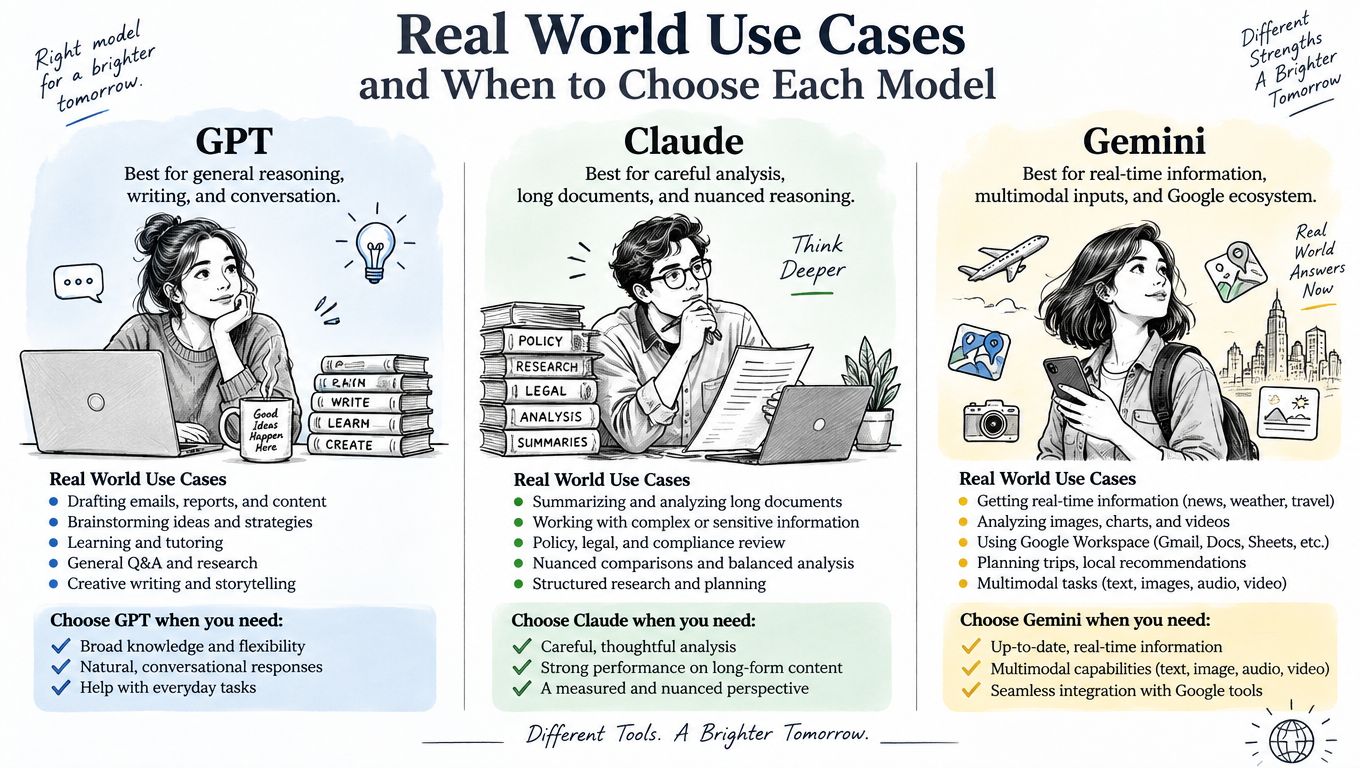
A product leader facing a release gap and an operations leader covering seasonal demand need different workforce models. Start with the operating problem, then decide who should control delivery, risk, integration, and day-to-day priorities.
A startup needs specialized delivery capacity
A startup preparing a mobile release may already have a product manager, backend engineer, and designer. The missing capability could be a senior iOS, Android, or cross-platform specialist who works within the existing delivery cadence. Staff augmentation is the better choice when the client must set priorities, approve architecture decisions, review code, and own release readiness.
A nearshore specialist should use the client's tools, attend working sessions, and absorb product context quickly. The role brief should define technical requirements, collaboration expectations, security access, decision rights, and success criteria. Those details protect integration and make accountability visible from the first interview.
An SME needs a flexible digital function
An SME may need UX/UI design for a redesign, technical SEO during a migration, or digital marketing support during a growth phase. If priorities cross departments and change frequently, augmentation keeps the specialist close to the people making product and marketing decisions. The internal leader can reset weekly priorities without routing every request through a detached production queue.
Leaders should manage contingent labor strategically, with clear ownership, supplier reviews, access controls, and performance measures. Define which manager owns the output, which approvals remain internal, and which administrative responsibilities stay with the provider. Nearshore delivery adds value only when communication, working hours, data access, and escalation paths are explicit.
An enterprise needs broad operational coverage
Traditional staffing fits high-volume temporary coverage, permanent recruitment, or work governed by stable procedures. A business adding customer-service representatives, administrative support, or operational workers who follow established workflows usually needs labor supply and placement more than product-team integration.
A hybrid model may fit an enterprise better than an either-or choice. Permanent employees can retain leadership and institutional knowledge, augmented specialists can close technical gaps, and traditional staffing can provide operational coverage. Procurement research for 2025 connects external workforce decisions with efficiency and specialized skills, supporting a capability-based workforce plan rather than one supplier category.
Use augmentation when the client owns delivery and needs expertise inside its team. Use staffing when the business needs labor supply, placement, or managed administration. Combine the models when different functions require different levels of control, compliance oversight, and capacity. In every case, validate practical skills, security judgment, and integration habits before granting access to production systems.
Making the Right Choice and Next Steps with Nerdify
A practical selection process can fit on one page. Start by defining the outcome, then decide how much control the client must retain.
- Name the bottleneck. Is it a missing skill, a delivery team that lacks capacity, or a volume problem?
- Assign ownership. Identify who will set priorities, review work, approve changes, and manage risks.
- Measure the need. Use time-to-submit, time-to-fill, fill rate, and cost-per-assignment where the work depends on contingent labor.
- Review the jurisdiction. Confirm employment, classification, data protection, security, and local labor requirements before signing.
- Test the partner. Require role-specific screening, references relevant to the work, a communication plan, replacement terms, and a documented onboarding process.
- Choose the smallest workable model. Don't buy managed delivery when the client needs an embedded specialist, and don't ask an internal product team to administer a labor pool it doesn't need to manage.
Nerdify is a Nicaragua-based nearshore development partner with over nine years of experience and more than 100 projects across ten countries. Its services include web and mobile development, UX/UI design, digital marketing, SEO, and nearshore staff augmentation. For founders, CTOs, product managers, and marketing leaders, the relevant evaluation points are proximity, communication, technical screening, transparent delivery, and the ability to scale a team around a defined capability.
The strongest partner conversation starts with a real delivery problem, not a generic request for “developers.” It should cover the product context, required skills, management boundary, compliance exposure, timeline, and the outcome the team must deliver.
Nerdify provides nearshore web and mobile development, UX/UI design, digital marketing, SEO, and staff augmentation for teams that need specialized capability without losing delivery control. Visit Nerdify to discuss the project, clarify the right operating model, and build a practical next step.