Finding the 7 Best Custom Software Development Companies in 2026

Choosing the right partner is the single most critical decision you'll make when building a custom application. The wrong choice can lead to missed deadlines, budget overruns, and a product that fails to meet user expectations. The right partner, however, becomes an extension of your team, translating your vision into a high-performance digital asset that drives business growth.
This guide is designed to cut through the noise and simplify your search for the best custom software development companies. We will explore a curated selection of top-tier firms, platforms, and directories, providing a clear framework for evaluating your options. Each profile breaks down strengths, typical project scopes, and key differentiators to help you make an informed, confident decision.
When evaluating potential partners, it's crucial to consider different engagement models. Understanding the pros and cons of staff augmentation vs outsourcing is a great first step to determine the best fit for your project's specific needs and internal resources. This roundup covers a range of models, so you can find a solution that aligns with your operational and financial goals.
Whether you need an end-to-end agency to handle everything from UX/UI to deployment, a flexible staff augmentation partner to scale your existing team, or a platform to find elite freelance talent, this list has you covered. We provide the direct links and details you need to start the conversation and find the perfect development team for your next big project.
1. Nerdify
Nerdify stands out as a full-service development partner, adept at transforming ambitious product visions into high-performance web and mobile applications. With a robust track record spanning over nine years and more than 100 successful projects across ten countries, they have established themselves as one of the best custom software development companies for businesses seeking a holistic, end-to-end solution. Their integrated approach combines technical expertise with a sharp focus on user experience and market strategy, making them an excellent choice for startups, SMEs, and enterprises alike.
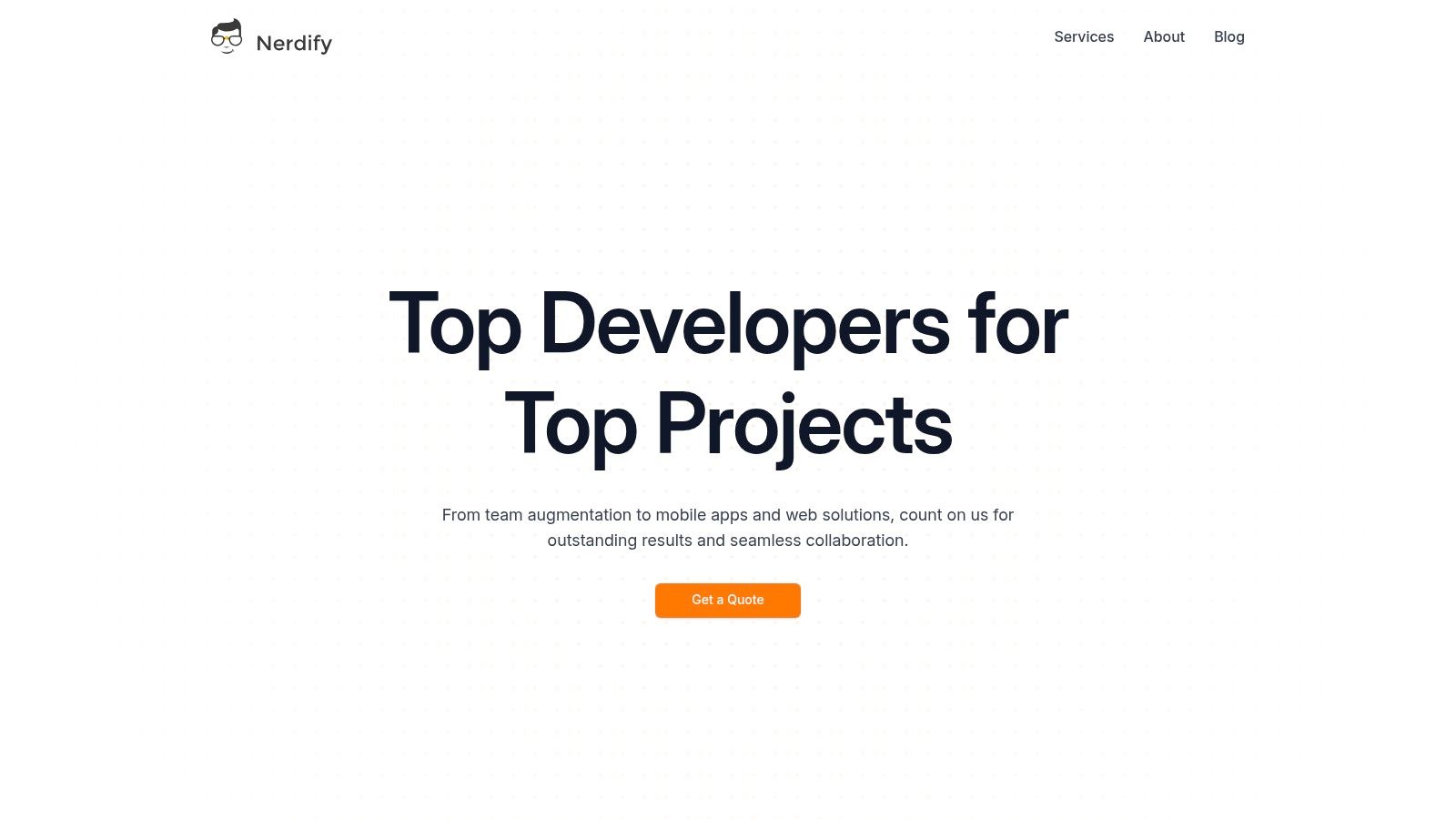
The agency’s core strength lies in its comprehensive service offering. Instead of juggling multiple vendors, clients can rely on Nerdify for everything from initial UX/UI design and web development to native iOS/Android app creation and post-launch digital marketing. This unified model ensures a cohesive product strategy and a seamless user journey from the first click to the final conversion.
Core Differentiator: Nearshore Staff Augmentation
A key advantage of partnering with Nerdify is its strategic use of a nearshore staff augmentation model. This approach provides clients with access to top-tier development talent in nearby time zones, eliminating the communication delays and cultural disconnects often associated with traditional offshoring.
This model is particularly beneficial for:
- Rapid Team Scaling: Companies can quickly onboard skilled developers to augment their existing teams without enduring long, expensive hiring cycles.
- Enhanced Collaboration: Time-zone alignment facilitates real-time communication and agile development practices, leading to faster project turnaround.
- Cultural and Language Affinity: Smoother collaboration is a direct result of shared cultural contexts and high language proficiency, which reduces misunderstandings.
Proven Process and Client Success
Client testimonials consistently praise Nerdify’s transparent and organized project management. They leverage industry-standard tools like GitHub for code management and maintain constant, clear communication through channels like Slack. This commitment to process ensures projects are delivered on time and on budget.
The results speak for themselves. Nerdify has a documented history of delivering significant business value, with client outcomes including doubling end-user bases year-over-year and launching first-to-market applications that provided a critical competitive edge.
Engagement and Pricing
Nerdify does not provide public pricing, opting for a tailored approach to project scoping and quoting. Prospective clients can request a custom quote via their website, email, or phone, with a commitment to respond within 24 hours. While detailed cost breakdowns aren't available upfront, you can gain a general understanding by exploring the factors that influence the average cost to develop an app.
Website: https://getnerdify.com
| Key Services | Ideal For | Pros | Cons |
|---|---|---|---|
| Custom Web & Mobile Apps, UX/UI Design, Staff Augmentation, Digital Marketing | Startups, SMEs, Product Teams, Enterprises | End-to-end service delivery, Nearshore model for efficient collaboration, Proven track record of client success | No public pricing information, Lacks formal industry certifications or awards |
2. Clutch
Clutch is arguably the most recognized and comprehensive B2B directory for finding and vetting service providers, especially among the best custom software development companies. Unlike a simple list, Clutch operates as a data-driven review platform, providing deep, verified insights into a company's capabilities, client satisfaction, and project history. Its core value proposition is trust; the platform invests heavily in verifying client reviews through phone interviews and detailed online forms, making the feedback far more reliable than on other platforms.
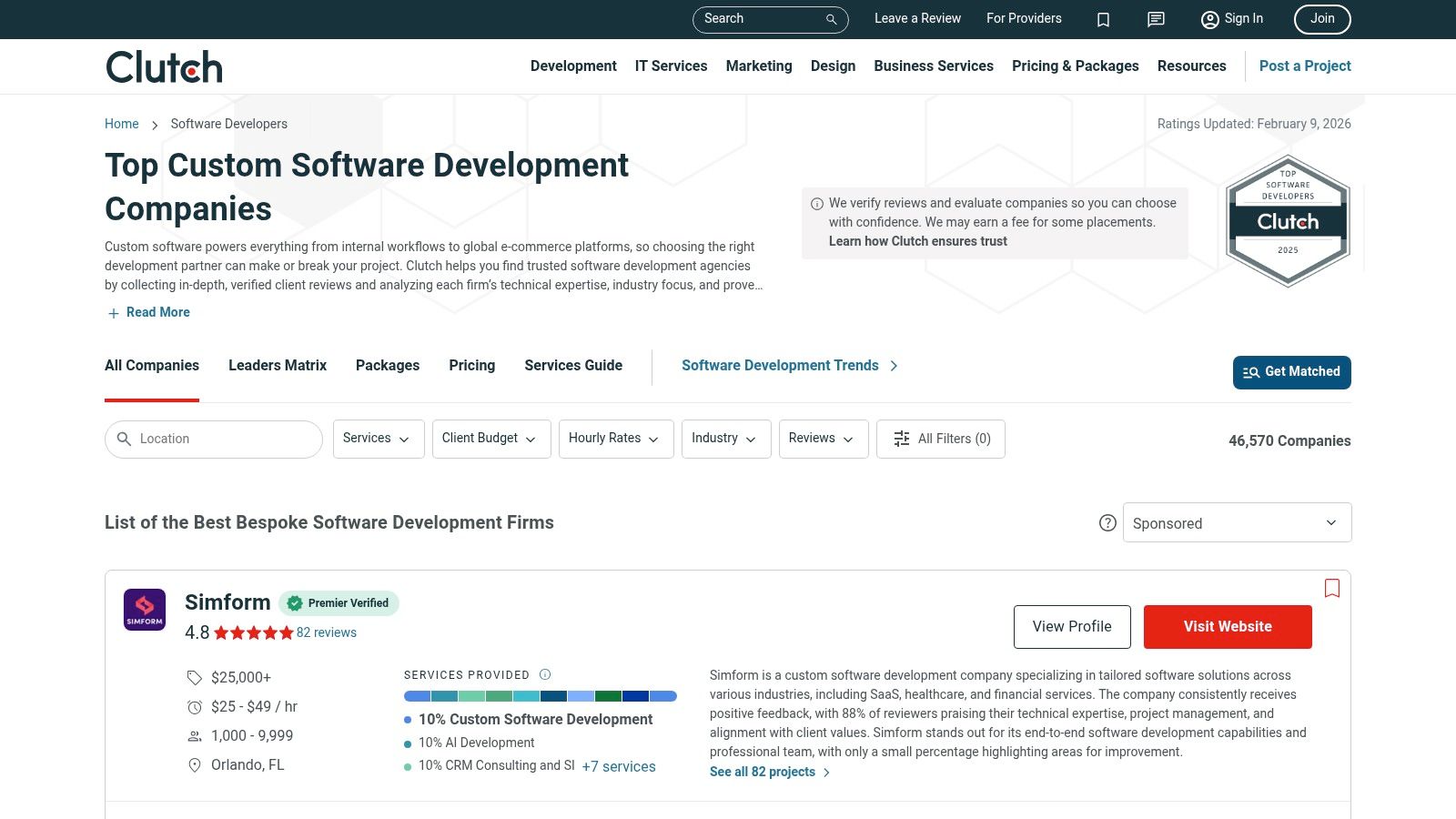
This platform excels at helping businesses move from a broad search to a qualified shortlist. Its powerful filtering system allows you to narrow down thousands of agencies by location, team size, hourly rate, project budget, and specific technology stacks like React, Python, or AWS. For those needing a clear framework on what to look for, exploring a guide on how to choose a software development company can provide essential criteria to apply when using Clutch’s filters.
Key Features and How to Use Them Effectively
Clutch’s interface is designed for deep due diligence. Each company profile is a rich repository of information, acting as a one-stop shop for your initial vetting process.
- Verified Client Reviews: This is Clutch's standout feature. Reviews are detailed, often including project context, costs, timelines, and direct quotes from former clients. Pay close attention to the "Results" section of each review to understand the tangible business impact the vendor delivered.
- The Leaders Matrix: This proprietary tool visually maps companies based on their "Ability to Deliver" and "Focus" within a specific service area (e.g., Mobile App Development in North America). Use this to quickly identify established leaders versus focused specialists in your niche.
- Portfolio and Case Studies: Don’t just read the reviews; analyze the portfolio items. Look for projects similar in scope, industry, and technological complexity to your own. A strong portfolio provides direct evidence of a company's relevant experience.
- Transparent Cost Information: Most profiles list a minimum project size (e.g., $25,000+) and an average hourly rate range (e.g., $50 - $99/hr). This transparency saves significant time by helping you immediately disqualify agencies that are outside your budget.
Pros and Cons
| Strengths | Considerations |
|---|---|
| High-Trust Verified Reviews: In-depth, analyst-verified client feedback. | Sponsored Placements: Top spots can be paid for. |
| Powerful Filtering: Granular search by tech, budget, location, and more. | Time-Consuming: The sheer volume of options can be overwhelming. |
| Transparent Pricing: Clear data on hourly rates and project minimums. | U.S./Nearshore Focus: Strongest for North American and LATAM vendors. |
Website: https://clutch.co/developers
3. Upwork
Upwork is a massive global talent marketplace where businesses can find and hire individual developers or cohesive agencies for custom software projects. It stands out by offering unparalleled flexibility, making it a go-to platform for startups and SMEs that need to engage talent on an hourly, fixed-price, or milestone basis. The platform’s built-in collaboration tools and payment protection systems provide a secure framework for managing projects, from initial concept to final delivery.
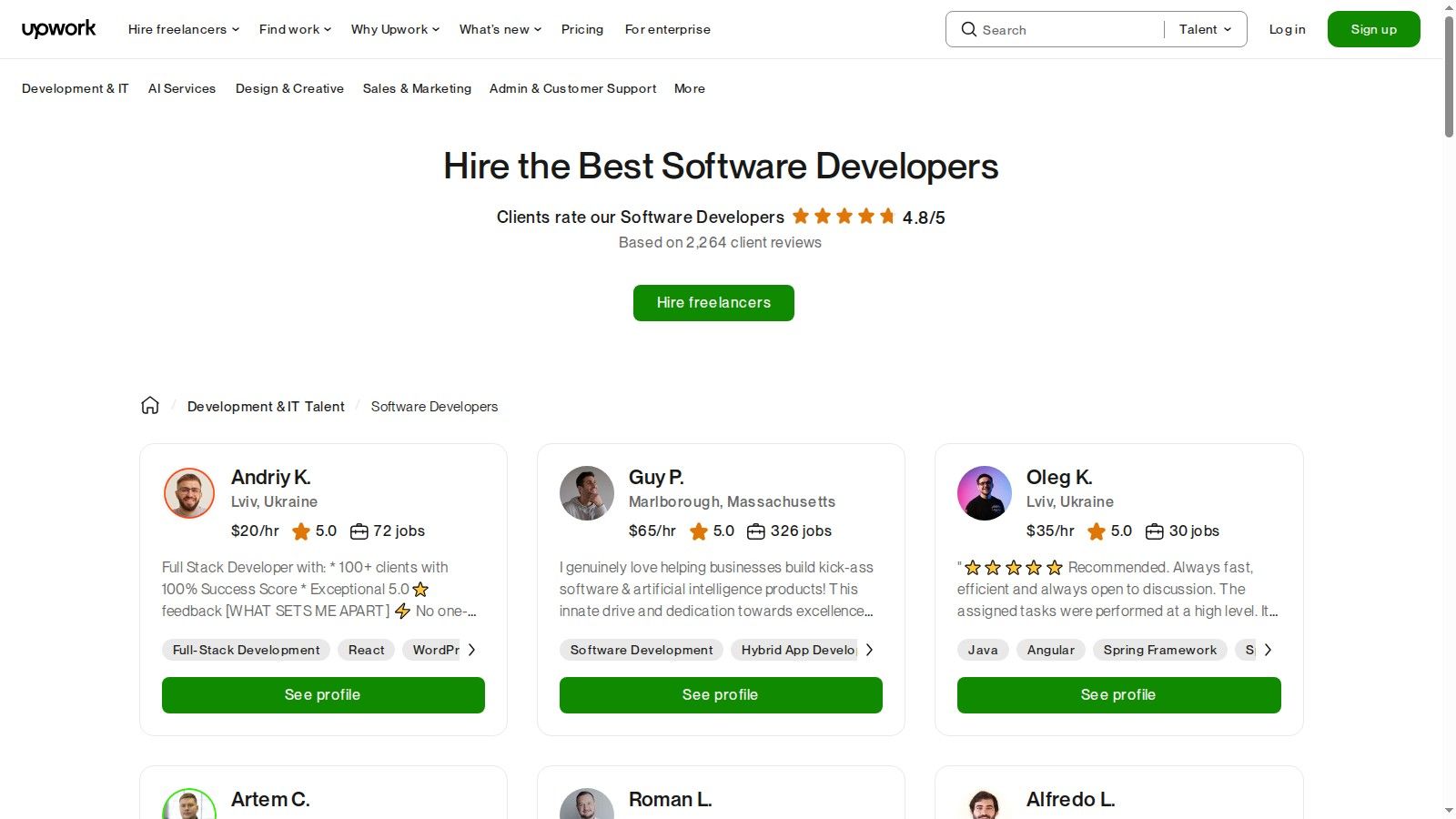
This platform excels at speed and accessibility, allowing businesses to connect with custom software development companies or freelancers in days rather than weeks. Its vast talent pool means you can find expertise in virtually any technology stack or industry niche. Upwork is particularly effective for augmenting an existing team with specialized skills, launching a minimum viable product (MVP) quickly, or handling smaller, well-defined project scopes where direct collaboration is key.
Key Features and How to Use Them Effectively
Upwork’s platform is designed to facilitate direct hiring and project management. Success often depends on how well you leverage its tools to vet and manage talent.
- Flexible Contract Types: You can hire on an hourly basis, which is ideal for ongoing projects with evolving requirements, or use fixed-price contracts for projects with clear deliverables and deadlines. Fixed-price contracts benefit from escrow protection, where funds are held by Upwork until you approve the completed milestones.
- Talent Search and Profiles: Use the advanced search filters to find developers or agencies based on skills, "Job Success Score," hourly rate, and location. Pay close attention to profiles with "Top Rated" or "Expert-Vetted" badges, as these indicate a history of high client satisfaction and proven expertise.
- Work Diary and Payment Protection: For hourly contracts, the Work Diary provides screenshots of the freelancer's screen, offering transparency and ensuring you only pay for hours worked. This feature, combined with secure payment processing, builds trust in remote collaborations.
- Project Catalog: For common tasks like "Build a Landing Page" or "Fix Bugs in a React App," you can browse the Project Catalog to purchase predefined services at a fixed price, streamlining the hiring process for simple, standardized needs.
Pros and Cons
| Strengths | Considerations |
|---|---|
| Wide Cost Spectrum: Access to global talent at various price points. | Vetting Varies: Buyer must perform thorough diligence on profiles. |
| Fast Time-to-Hire: Quickly find and onboard talent for urgent needs. | Marketplace Fees: Client service fees and contract initiation fees apply. |
| Flexible Engagement Models: Hourly, fixed-price, and project-based work. | Best for Smaller Scopes: Can be complex to manage large, enterprise-level projects. |
Website: https://www.upwork.com/hire/software-developers/
4. Toptal
Toptal positions itself not as a marketplace but as an exclusive network of the "top 3%" of freelance talent. It's a premier platform for businesses looking to hire rigorously vetted senior developers, designers, and project managers. For companies where quality, speed, and low hiring risk are non-negotiable, Toptal offers a curated approach that bypasses the noise of open platforms, making it a key resource for finding elite members of best custom software development companies. The core value is its intensive screening process, ensuring that every expert presented to a client has already passed a gauntlet of technical and professional tests.
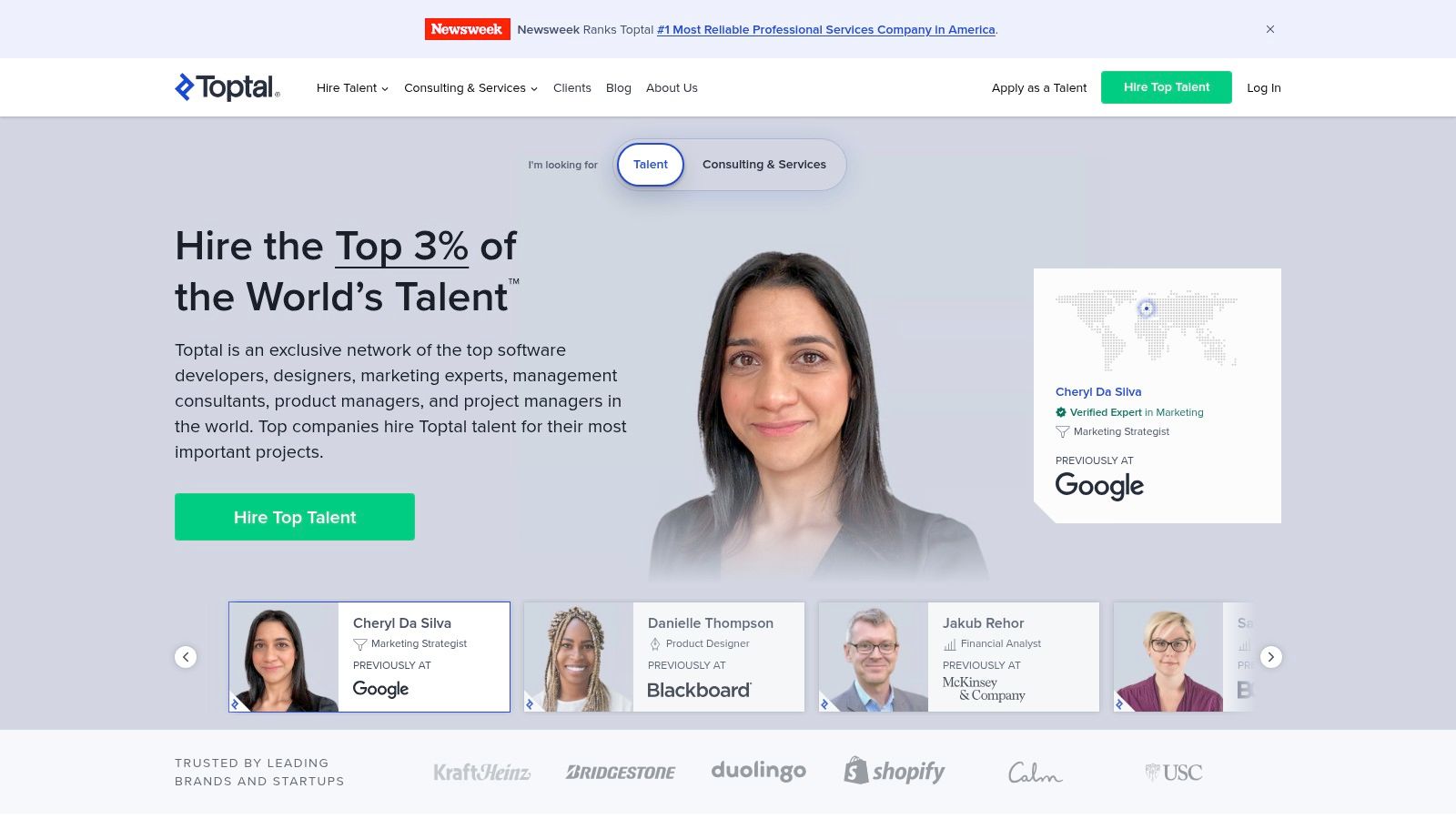
This platform excels at rapidly connecting businesses with high-caliber, pre-vetted experts for critical projects. Unlike traditional hiring, which can take weeks or months, Toptal's matching process often delivers a qualified candidate within 24 to 48 hours. This model is a powerful form of on-demand expertise, aligning closely with staff augmentation strategies. For a deeper understanding of how this differs from other models, exploring the nuances of staff augmentation vs. outsourcing can clarify which approach best fits your project needs.
Key Features and How to Use Them Effectively
Toptal is engineered for efficiency and quality assurance, with features designed to de-risk the hiring process and accelerate project kickoff.
- Intensive Vetting Process: Toptal's "top 3%" claim is backed by a multi-stage screening that includes language proficiency, personality assessments, timed algorithm tests, and live technical interviews. Trust this process; be specific and demanding in your project brief, knowing that only highly qualified candidates will be matched.
- Rapid Matching System: The platform’s algorithm and matching experts connect your project requirements to the ideal talent in their network, often within a day. To maximize this feature, provide a detailed job description with must-have skills, project goals, and team dynamics.
- No-Risk Trial Period: Toptal offers a trial period (typically up to two weeks) with a new hire. If you're not completely satisfied, you won't be billed. Use this period to assess not just technical skills but also communication, collaboration, and cultural fit before committing.
- Flexible Engagement Models: The platform supports hourly, part-time, and full-time engagements, allowing you to scale your team up or down as project needs evolve. This flexibility is ideal for agile development cycles and dynamic project scopes.
Pros and Cons
| Strengths | Considerations |
|---|---|
| Consistently High-Caliber Talent: Rigorous screening ensures senior-level expertise. | Higher Effective Rates: Premium talent comes at a premium cost. |
| Extremely Fast Onboarding: Go from project brief to a working developer in days. | Less Suited for Small Budgets: Not ideal for micro-tasks or very small projects. |
| Low-Risk Trial Period: A satisfaction guarantee protects your initial investment. | Network-Driven: You are matched with talent rather than browsing a public pool. |
Website: https://www.toptal.com/
5. G2 (Software Developer Services Providers category)
G2 is a massive peer-to-peer review site best known for SaaS product comparisons, but its dedicated "Software Developer Services Providers" category offers a powerful alternative for vetting the best custom software development companies. Where other platforms focus on analyst-led verification, G2’s strength lies in its volume of fresh, user-generated reviews from recent buyers. This makes it an excellent resource for cross-referencing claims and gauging current client sentiment.
The platform translates thousands of reviews into actionable data points, using algorithms to generate scores and grids that help you quickly understand a company’s market presence and customer satisfaction. Its focus on unfiltered user feedback provides a valuable "voice of the customer" perspective, revealing how a development partner performs in real-world engagements.
Key Features and How to Use Them Effectively
G2’s interface is built for efficient comparison and validation, helping you confirm if a company’s reputation matches its marketing.
- Grid Reports and Scoring: G2 plots vendors on a grid based on "Satisfaction" and "Market Presence." Use the "Highest Rated" filter to immediately surface companies that consistently receive positive feedback, regardless of their size or marketing budget.
- Review Themes: The platform automatically analyzes reviews to identify recurring topics, such as "quality of support," "ease of doing business," and "project management." This feature is invaluable for quickly pinpointing a company's perceived strengths and potential weaknesses without reading every single review.
- Company Comparisons: You can select up to four companies and compare them side-by-side on key metrics like user ratings, feature satisfaction, and company information. This is ideal for making a final decision between shortlisted vendors.
- Pricing Information: While not universal, some vendor profiles list starting prices or minimum engagement levels (e.g., "$10,000+"). This helps in filtering out potential partners that are misaligned with your budget early in the process.
Pros and Cons
| Strengths | Considerations |
|---|---|
| High Volume of Recent Reviews: Captures fresh buyer sentiment. | Variable Information Depth: Some profiles can be sparse. |
| Easy Side-by-Side Comparisons: Simplifies final decision-making. | Less Detailed Project Info: Reviews may lack deep project context. |
| Covers Both Niche and Large Firms: A broad market view. | Not all Vendors Disclose Pricing: Cost data can be inconsistent. |
Website: https://www.g2.com/categories/software-developer-services
6. DesignRush
DesignRush positions itself as a curated B2B marketplace where businesses can discover, compare, and connect with top-tier agencies. While it covers a wide range of services from marketing to web design, its lists of the best custom software development companies are particularly valuable for buyers. The platform blends a traditional directory model with editorial insights, expert analysis, and verified reviews to help businesses make more informed decisions quickly.
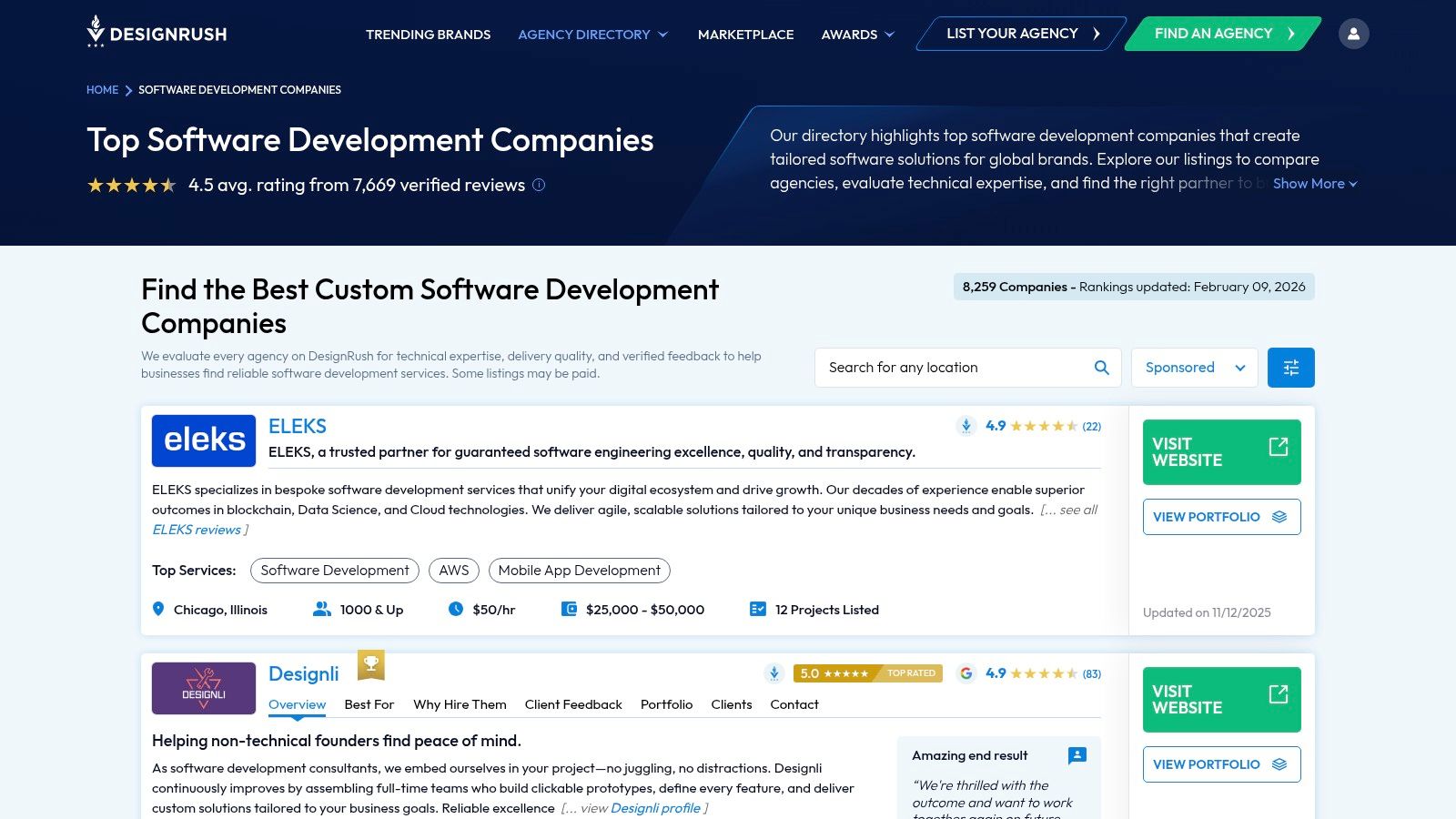
This platform is especially useful for those in the discovery phase. Instead of just presenting a massive, unfiltered list, DesignRush often creates specific, curated shortlists like "Top Software Development Companies in New York" or "Best Python Developers." This editorial approach helps narrow the field from the start, making it a great starting point for finding qualified partners without getting lost in an overwhelming number of options.
Key Features and How to Use Them Effectively
DesignRush focuses on simplifying the agency discovery and shortlisting process. Its features are geared toward providing quick, scannable insights to accelerate your initial research.
- Curated Shortlists and Rankings: DesignRush frequently publishes editorially-driven lists of top companies for specific services and locations. Use these lists as a jumping-off point to quickly identify reputable vendors without having to apply dozens of filters yourself.
- Detailed Agency Profiles: Each profile provides a snapshot of a company's expertise, leadership, notable projects, and client reviews. Pay attention to the "Portfolio" and "Case Studies" sections to see tangible examples of their work and assess their industry experience.
- Robust Filtering System: You can effectively narrow your search by services (e.g., IoT, AI, Blockchain), location, budget (minimum project size and hourly rates), and industry focus. This helps you quickly filter out agencies that don't align with your core requirements.
- Educational Content and Trends: The platform integrates trend reports, articles, and expert interviews. Leveraging this content can help you understand the current software development landscape and refine what to look for in a technology partner.
Pros and Cons
| Strengths | Considerations |
|---|---|
| Helpful shortlists for quick discovery: Curated lists save initial research time. | Sponsored placements: Some "Top" rankings are paid partnerships. |
| Combines rankings with educational content: Informs buyers as they search. | Less review depth: Reviews are often less detailed than on Clutch. |
| Good visibility into niche expertise: Easy to find specialists in areas like AI or testing. | U.S.-centric view: The platform has a strong focus on U.S.-based agencies. |
Website: https://www.designrush.com/agency-map/software-development
7. GoodFirms
GoodFirms is a long-standing B2B research and review platform that serves as a vast directory for finding service providers, including a comprehensive list of best custom software development companies. It functions as a valuable resource for businesses in the initial discovery phase, allowing them to cast a wide net and assemble a longlist of potential partners. The platform is particularly useful for its extensive catalog of U.S.-based firms, making it ideal for those prioritizing domestic or nearshore collaboration.
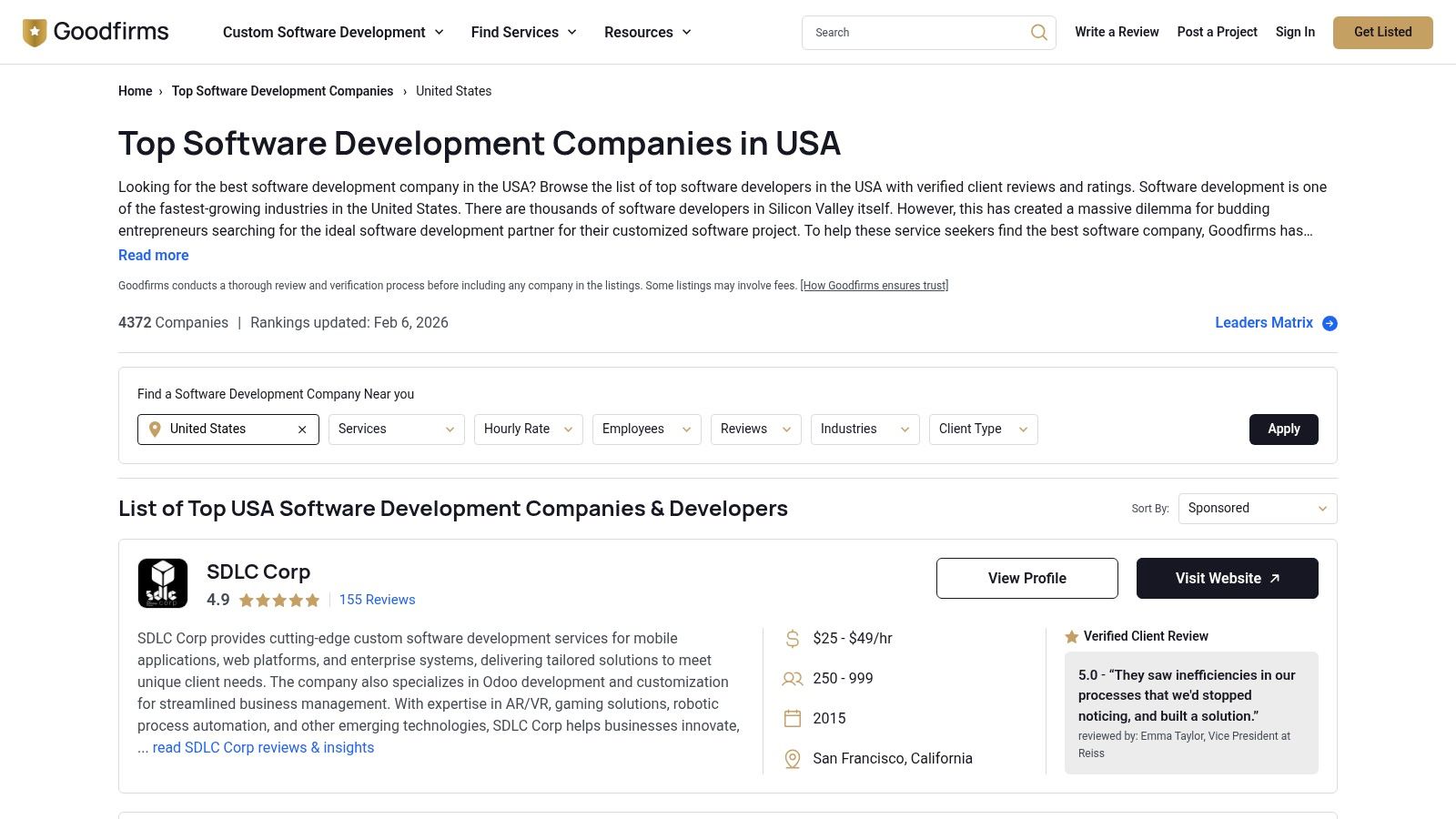
The platform’s strength lies in its straightforward search and filtering capabilities. Users can efficiently sort thousands of companies by city or state, hourly rates, minimum project budgets, and client ratings. This makes GoodFirms an excellent tool for early-stage budget planning and market research, helping you understand the competitive landscape before diving into a more formal Request for Proposal (RFP) process. It provides the necessary breadth to ensure you don't miss smaller, specialized agencies that might be a perfect fit.
Key Features and How to Use Them Effectively
GoodFirms is designed for broad canvassing and initial qualification. Leveraging its features correctly can significantly speed up the process of building a candidate list.
- Extensive U.S. Directory: With thousands of U.S. companies listed, this is a go-to resource for finding local or national partners. Use the city-level search to identify agencies in your region for easier collaboration and communication.
- Budget and Rate Filters: The platform allows you to filter by average hourly rate (e.g., < $25/hr, $50 - $99/hr) and minimum project size. Apply these filters early to create a realistic longlist of vendors that align with your financial constraints.
- Service Focus Breakdowns: Many profiles detail a company's specific service offerings, such as mobile app development, web development, or enterprise software. Use this to find specialists rather than generalists if your project has niche technical requirements.
- Reviews and Ratings: While the review verification process is less rigorous than on some other platforms, the aggregated ratings provide a good high-level indicator of a company’s reputation. Scan for consistent positive feedback and look for reviews on projects similar to yours.
Pros and Cons
| Strengths | Considerations |
|---|---|
| Broad Coverage: A massive directory of U.S. firms of all sizes. | Lighter Review Verification: The review process is less transparent. |
| Excellent for Longlisting: Ideal for building a large candidate pool. | Potentially Outdated Listings: Some profiles may not be current. |
| Easy Price Scanning: Simple filters for early-stage budget planning. | Less In-Depth Profiles: Profiles may lack the detail of competitors. |
Website: https://www.goodfirms.co/directory/country/top-software-development-companies/us
Top 7 Custom Software Development Companies Comparison
| Service | Implementation complexity 🔄 | Resource requirements ⚡ | Expected outcomes ⭐📊 | Ideal use cases 💡 | Key advantages |
|---|---|---|---|---|---|
| Nerdify | Medium — full-service agency requires scoping & coordination | Moderate–High — dedicated agency teams or nearshore augmentation | High — cohesive product delivery, scalable apps, reported user-growth | Startups → enterprises needing concept-to-deployment or scalable nearshore teams | End-to-end capabilities, nearshore/time-zone alignment, strong communication |
| Clutch | Low — research/platform use; vendor outreach required | Low–Moderate — time for due diligence, no hiring overhead | Medium — higher-quality shortlists and vetted vendor insights | Vendor due diligence, US-focused shortlisting, comparing providers | Verified reviews, Leaders Matrix, detailed profiles & pricing bands |
| Upwork | Low–Medium — marketplace workflows; buyer must vet talent | Variable — hire individuals or agencies across budgets and time zones | Variable — fast hires for pilots; quality depends on vetting ⭐/⚡ | Quick hires, pilots, augmenting teams, flexible hourly or fixed contracts | Large talent pool, fast time-to-hire, escrow/payment protection |
| Toptal | Low — curated matching simplifies search and onboarding | High — premium rates for rigorously vetted senior talent | High — senior-caliber talent, rapid onboarding, low hiring risk ⭐ | Projects needing senior engineers or cross-functional expert teams | Rigorous vetting (top 3%), fast match, trial period, clear IP terms |
| G2 | Low — review platform; requires cross-checking vendor listings | Low — time to research and compare recent buyer feedback | Medium — fresh buyer sentiment and reputational checks 📊 | Validating vendor claims, cross-checking reviews and ratings | Large review volume, review themes, some pricing visibility |
| DesignRush | Low — curated directory with editorial notes; sponsored spots exist | Low — quick discovery and shortlisting | Medium — curated shortlists plus editorial insights | Discovery and shortlisting when editorial guidance or trends help | Editorial curation, verified reviews, trend reports and FAQs |
| GoodFirms | Low — directory for broad canvassing; follow-up validation needed | Low–Moderate — useful for building longlists by location/budget | Medium — broad candidate lists useful for RFP prep 📊 | Building longlists by city/state and early-stage budgeting | Large coverage, city-level search, visible pricing bands |
Making Your Final Decision: An Actionable Checklist
Navigating the landscape of custom software development can feel daunting. You've reviewed platforms like Clutch and G2, explored freelance hubs such as Toptal and Upwork, and considered specialized partners like Nerdify. The crucial takeaway is that finding the "best" partner isn't about a single ranking; it's about finding the right partner for your specific project, budget, and business goals. The best custom software development companies act as strategic allies, not just code vendors. They integrate into your team, challenge your assumptions for the better, and remain focused on the business outcomes your software is designed to achieve.
This final section synthesizes the article's key insights into a practical, step-by-step checklist. Use it to transition from research to action, ensuring you make a well-informed and confident decision that sets your project up for success.
Your Pre-Engagement Action Plan
Before you send a single email or book a consultation, internal alignment is paramount. A clear vision on your end is the foundation for a productive partnership.
Define Your "Why" and "What": Go beyond "we need an app." Document the core business problem you are solving. Is it to increase operational efficiency, enter a new market, or improve customer retention? Then, outline your core feature requirements. Create a concise project brief that covers:
- Business Objectives: What are the key performance indicators (KPIs) for this project?
- Target Audience: Who are the end-users, and what are their primary needs?
- Core Functionality: List the "must-have" features for the initial launch (MVP).
- Technical Constraints: Are there any existing systems for integration or specific technology preferences?
- Budget & Timeline: Establish a realistic budget range and a target launch window.
Determine Your Ideal Engagement Model: Reflect on your internal resources and project needs to choose the right collaboration style.
- End-to-End Development: Ideal for startups or businesses without an in-house tech team. A partner like Nerdify can handle everything from ideation and UX/UI design to development, launch, and maintenance.
- Staff Augmentation: Perfect for companies with an existing team that needs to scale quickly or fill a specific skill gap (e.g., adding a senior React Native developer). This model offers flexibility and direct control over the augmented team members.
- Project-Based Freelancers: Suitable for well-defined, smaller tasks or short-term projects. Platforms like Toptal and Upwork excel here, but require more hands-on project management from your side.
The Vetting and Selection Checklist
With your internal brief prepared, you can now effectively evaluate potential partners. Use this checklist as you vet the companies on your shortlist.
[ ] Portfolio and Case Study Alignment: Don't just look for pretty designs. Does their past work demonstrate experience in your industry or with similar technical challenges? Look for case studies on platforms like Clutch or their company website that detail the business problem, their solution, and measurable results.
[ ] Technical Expertise Verification: Review their stated technology stack. Does it align with your project's needs? During initial calls, ask specific questions about their experience with your required technologies. For instance, "Can you describe a complex project you've completed using Node.js and AWS Lambda?"
[ ] Communication and Process Transparency: A great partner communicates proactively. Ask them to walk you through their development process.
Key Questions to Ask:
- What does your typical project workflow look like (e.g., Agile, Scrum)?
- How frequently will we have check-in meetings?
- What tools do you use for project management and communication (e.g., Jira, Slack)?
- Who will be my primary point of contact?
[ ] Cultural and Time Zone Compatibility: This is especially crucial for staff augmentation or nearshore models. A partner in a similar time zone, like Nerdify for North American clients, can significantly improve collaboration efficiency. Assess if their working style and company culture feel like a good fit for your team.
[ ] Review Client Testimonials and References: Go beyond the curated reviews on their homepage. Check their profiles on GoodFirms and G2. Ask for 2-3 client references you can speak with directly to get an unfiltered perspective on their strengths and weaknesses.
Your Path Forward
The journey to launching a successful custom software application begins with choosing the right development partner. The platforms and companies featured in this guide offer diverse paths to achieving your goals, from vetting established agencies to augmenting your team with specialized nearshore talent.
By following this checklist, you transform a complex decision into a structured process. You move from a broad search for the "best custom software development companies" to a targeted selection of a partner perfectly suited to build your vision. Your due diligence now will pay dividends throughout the entire development lifecycle, resulting in a higher-quality product, a smoother process, and a greater return on your investment. The right partner is out there; it's time to go find them.