10 Customer Onboarding Best Practices to Boost Retention in 2025
The first few moments a user spends with your product are the most critical. This is where they decide if your solution is a game-changer or just another tool destined for the digital graveyard. Poor onboarding isn't just a bad experience; it's a direct path to churn, lost revenue, and a tarnished brand reputation. Conversely, a seamless, value-driven welcome experience sets the stage for long-term loyalty, advocacy, and sustainable growth. Getting this initial interaction right is the difference between a successful product and a forgotten one.
For a foundational understanding, it's helpful to grasp the core principles. To grasp the fundamental concept and importance of this process, consider exploring What Is Customer Onboarding for digital creators. This process is far more than a simple tutorial; it's a strategic framework designed to guide users to their "Aha!" moment as quickly and efficiently as possible. It is the crucial bridge between the value you promised during acquisition and the value a user actually experiences within your platform.
This article moves beyond generic advice to provide a prioritized, actionable roundup of the 10 most impactful customer onboarding best practices. We'll dissect how to build personalized user journeys, leverage smart automation, and measure the metrics that truly matter. Each point is structured with practical implementation details and real-world examples, tailored for startups, product managers, and teams using nearshore augmentation to scale their development efforts. By the end, you'll have a clear blueprint to transform your onboarding from a mere checklist into a powerful engine for customer success and retention. Let's dive into the strategies that will help you make every first impression count.
1. Clear Welcome Communication and First Impressions
The very first interaction a new customer has with your product post-signup is the most critical. It sets the tone for the entire relationship and can significantly impact long-term retention. A well-crafted welcome communication strategy immediately validates their decision, clarifies what to do next, and makes them feel seen and valued, forming a cornerstone of effective customer onboarding best practices.

This initial touchpoint is your opportunity to guide the user toward their first "aha!" moment. It's not just about a generic "Welcome!" email; it's a strategic sequence designed to reduce anxiety, manage expectations, and reinforce your product's core value proposition.
Why It's a Top Practice
A strong first impression prevents early-stage churn by immediately tackling buyer's remorse and user uncertainty. By providing a clear, simple path forward, you empower users to achieve a quick win, which builds momentum and encourages deeper engagement with your platform. This approach transforms a transactional signup into the beginning of a supportive partnership.
Actionable Implementation Steps
To craft a welcome experience that resonates, focus on clarity, personalization, and a clear call-to-action.
- Personalize Every Touchpoint: Use the customer’s name and company in all communications. A simple "Welcome, [Name] from [Company]!" is far more effective than a generic greeting.
- Create a Welcome Video: A short, engaging video (60-90 seconds) from a founder or product manager can humanize your brand. Briefly explain the core value and guide them to their first essential step.
- Provide a Human Connection: Assign a single point of contact for onboarding questions, whether it's a dedicated onboarding specialist or a customer success manager. Include their name, photo, and contact information in the welcome email.
- Keep It Simple: Overwhelming users with too much information is a common mistake. Limit your initial instructions to 3-5 crucial steps that lead directly to experiencing the product’s value.
For example, Slack excels here by launching an interactive bot that not only welcomes the user but actively guides them through setting up their first channel and inviting a teammate. This turns a potentially complex task into an immediate, collaborative win.
2. Interactive Product Walkthroughs and In-App Guidance
Instead of telling users what to do, show them. Interactive product walkthroughs guide new customers through your application step-by-step, directly within the user interface. This hands-on approach replaces lengthy documentation or external tutorials with contextual, learn-by-doing guidance, which is a fundamental element of modern customer onboarding best practices.
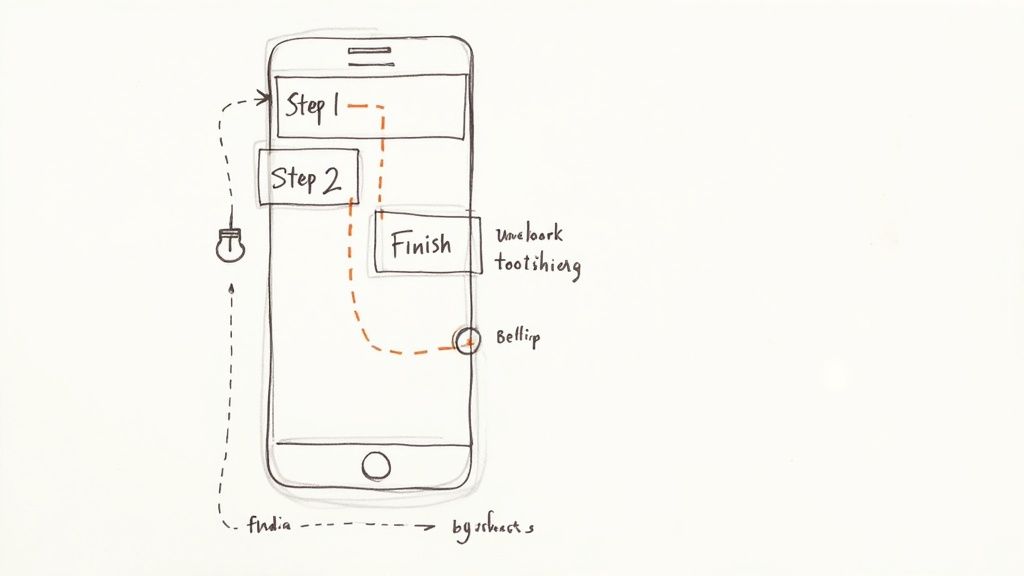
These tours use tooltips, modals, and highlighted elements to focus user attention on key features and workflows. The goal is to drive feature adoption and help users complete their first critical tasks effortlessly, accelerating their journey to realizing your product's value.
Why It's a Top Practice
In-app guidance reduces friction and cognitive load for new users, preventing them from feeling lost or overwhelmed. By providing immediate, contextual help, you empower users to build confidence and achieve quick wins without ever leaving the product. This method directly combats early-stage abandonment and significantly boosts user activation rates.
Actionable Implementation Steps
To design effective product walkthroughs, prioritize context, brevity, and user control.
- Segment Tours by Use Case: Don't show every user the same tour. Tailor walkthroughs based on user roles, goals, or the plan they signed up for. A power user needs a different path than a casual user.
- Keep It Short and Focused: Aim for walkthroughs that take less than five minutes to complete. Break complex processes into multiple, smaller tours that users can engage with over time.
- Trigger Guides Behaviorally: Launch guidance based on specific user actions or inactions. For example, trigger a tooltip explaining a feature the first time a user hovers over it, rather than forcing it on them at login.
- Allow On-Demand Access: Users should be able to skip a tour and revisit it later from a help menu or resource center. This respects user autonomy and provides a safety net for those who need a refresher.
For instance, Pendo allows teams to create in-app guides that are highly segmented. A new user might receive a tour of core navigation, while a user who has visited the "reporting" section three times without creating a report could receive a targeted guide on how to build their first one.
3. Personalized Onboarding Paths Based on User Segments
A one-size-fits-all onboarding flow fails to recognize that different customers have vastly different goals, technical skills, and use cases. Tailoring the onboarding experience based on specific user segments ensures that each new customer receives the most relevant guidance, accelerating their time to value. This personalized approach is a cornerstone of modern customer onboarding best practices.
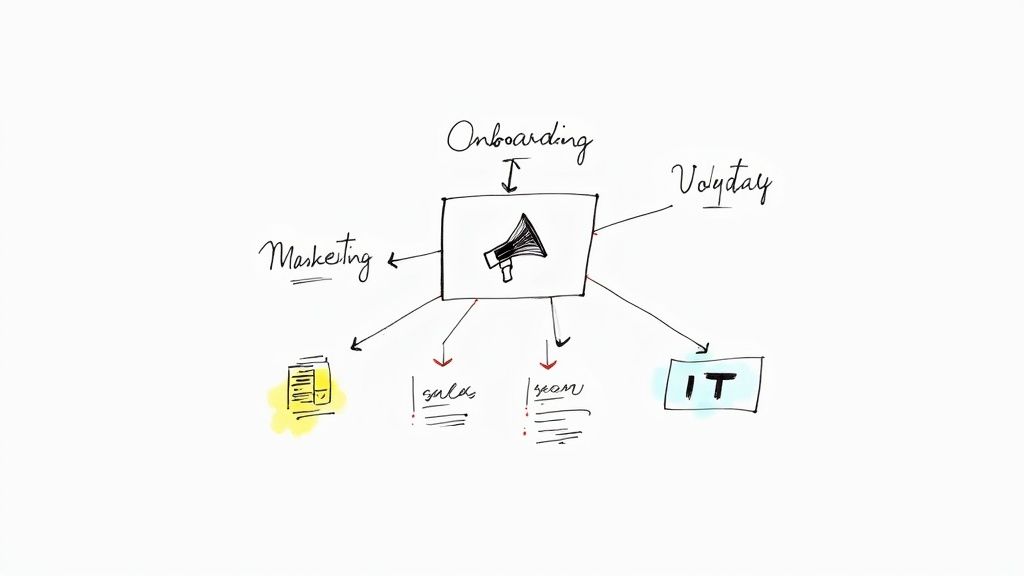
This strategy moves beyond generic welcome messages by creating distinct pathways based on user roles, industries, or intended use. By asking a few key questions during signup or analyzing initial behavior, you can direct users to features and content that directly address their unique problems, making the product feel like it was built just for them.
Why It's a Top Practice
Segmented onboarding dramatically increases activation rates and long-term retention. When users are shown how your product solves their specific problem from the very beginning, they are far more likely to experience that critical "aha!" moment. It eliminates noise, reduces cognitive load, and builds a powerful sense of relevance that generic flows cannot match.
Actionable Implementation Steps
To implement segmented onboarding effectively, start with data-driven personas and build distinct, value-focused paths for each.
- Identify Key Segments: Start by defining 3-5 core user segments based on data from your sign-up form, product analytics, or sales team insights. Common segments include role (e.g., marketer vs. developer), company size, or use case.
- Use Progressive Profiling: Ask one or two critical segmentation questions during sign-up (e.g., "What is your primary goal with our product?"). Collect more detailed information later as the user engages.
- Build Persona-Driven Paths: Create distinct checklists, tooltips, and email sequences for each segment. A sales leader might need a CRM integration guide, while a marketing manager might need a campaign-building tutorial.
- Allow for Self-Correction: Give users the ability to change their selected path or role if they feel they were misclassified, ensuring they can always find the most relevant journey.
For instance, HubSpot excels at this by creating entirely different onboarding experiences for users signing up for its Marketing Hub versus its Sales Hub. The content, tutorials, and initial setup steps are all perfectly aligned with the persona and goals of that specific user, creating a highly effective and personalized introduction. Developing these distinct pathways is a key outcome of creating a detailed user journey mapping template, a practice that helps visualize and optimize each segment's experience.
4. Progressive Disclosure and Feature Phasing
One of the most common onboarding failures is overwhelming new users with every feature at once. Progressive disclosure is a powerful technique that introduces complexity gradually, revealing advanced functionality only as users become more proficient. This is a crucial element of customer onboarding best practices because it respects the user's learning curve and prevents cognitive overload.

Instead of a cluttered interface, this approach provides a clean, focused starting point. Features are phased in based on user behavior, completion of key tasks, or explicit choices to explore more advanced options, creating a guided and manageable journey toward product mastery.
Why It's a Top Practice
Progressive disclosure directly combats user frustration and churn. By simplifying the initial experience, you make it easier for users to achieve their first "aha!" moment with core features. As they gain confidence, new functionalities are introduced as solutions to emerging needs, not as distractions, which increases adoption rates for your product's full feature set.
Actionable Implementation Steps
To implement feature phasing effectively, you need a clear strategy for what to show, when to show it, and how to measure its impact.
- Define Graduation Criteria: Establish clear milestones for when a user is ready for more features. This could be based on completing specific tasks, reaching a certain usage level, or spending a set amount of time in the app.
- Use In-App Cues: Announce newly unlocked features with non-intrusive tooltips, notifications, or celebratory modals. For example, "You've created 10 projects! Ready to unlock advanced reporting tools?"
- Track Feature Adoption: Monitor which phased features are being adopted and which are ignored. This data is invaluable for optimizing the timing and presentation of your disclosures.
- Never Hide Critical Features: Ensure that essential, core functionality is always accessible from the beginning. Phasing should apply to advanced or secondary features, not the primary value proposition.
For example, GitHub expertly guides developers by initially focusing on basic repository creation and commits. More complex features like GitHub Actions, advanced security scanning, and package registries are introduced as a developer's needs and project complexity grow, making the powerful platform feel accessible from day one.
5. Dedicated Human Onboarding Support and Success Managers
For high-value or complex products, automation alone is not enough. Providing dedicated human support through Customer Success Managers (CSMs) or onboarding specialists transforms a standard setup process into a personalized, consultative partnership. This high-touch approach is a cornerstone of enterprise-level customer onboarding best practices, ensuring complex needs are met with expert guidance.
This strategy involves assigning a specific person to a new customer account, responsible for understanding their unique goals and guiding them to achieve early wins. It's about building a relationship, not just processing a ticket. This human layer provides assurance, accelerates time-to-value, and lays the foundation for a long-term, high-retention partnership.
Why It's a Top Practice
A dedicated human connection significantly reduces churn for high-ACV (Annual Contract Value) customers by providing tailored solutions and proactive problem-solving. This approach ensures customers don't just learn how to use your product, but why it's the best solution for their specific challenges. It builds trust and demonstrates a deep commitment to their success, which is difficult to replicate with automated flows alone.
Actionable Implementation Steps
To implement a successful high-touch onboarding program, focus on structure, clear goals, and strategic resource allocation.
- Reserve for High-Value Segments: This model is resource-intensive. Reserve dedicated managers for customers who exceed a specific ACV threshold to ensure a positive ROI.
- Schedule a Kick-Off Meeting Promptly: Engage the customer within 48 hours of purchase. Use this initial call to set clear expectations, define success metrics, and establish key milestones for the onboarding journey.
- Create Detailed Onboarding Runbooks: Equip your CSMs with standardized playbooks and checklists for consistent delivery. This ensures every customer receives the same high-quality experience, regardless of who is managing their account.
- Transition to Self-Service: The goal is to empower customers, not create dependency. As onboarding concludes, strategically transition the customer toward self-service resources and your standard support channels for long-term success.
For example, Salesforce assigns Customer Success Managers to enterprise accounts to provide strategic guidance, ensuring these complex organizations not only implement the software correctly but also align its use with their core business objectives, driving deep adoption and long-term loyalty.
6. Knowledge Base and Self-Service Documentation
Empowering users to find answers on their own is a scalable and highly effective onboarding strategy. A robust knowledge base, complete with tutorials, FAQs, and guides, allows customers to learn at their own pace and solve problems independently. This self-service approach reduces the burden on your support team and fosters user competence and confidence.
This resource acts as a central repository for product knowledge, accessible 24/7. It's not just a support tool but an integral part of the learning journey, helping users move past roadblocks without needing to wait for a human response. Integrating this into your onboarding is one of the most impactful customer onboarding best practices for long-term success.
Why It's a Top Practice
A comprehensive knowledge base directly addresses the user’s desire for autonomy and immediate solutions. It scales support efforts infinitely, allowing your customer success team to focus on proactive, high-value interactions rather than repetitive, low-level queries. This builds user self-sufficiency, which is a key driver of product adoption and retention.
Actionable Implementation Steps
To build a self-service resource that users actually use, focus on accessibility, clarity, and goal-oriented content.
- Structure Content Around User Goals: Organize articles based on what a user is trying to achieve (e.g., "How to Invite Your Team") rather than by feature name (e.g., "The User Management Module").
- Create Video Tutorials for Complex Tasks: For multi-step processes, a short (2-5 minute) screen-recording video is often more effective than a lengthy text document.
- Implement a Powerful Search Function: Your knowledge base must be easily searchable. Use a tool with smart search, autocomplete, and tagging to help users find relevant articles quickly.
- Use Analytics to Identify Content Gaps: Regularly review search queries within your help center that yield no results. These searches are direct requests from your users for new documentation.
For instance, Notion's help center is a masterclass in this practice. It uses its own product to create an intuitive, searchable database of guides, complete with embedded videos and templates that not only answer questions but also showcase the product's capabilities.
7. Onboarding Metrics and Success Tracking
You can't improve what you don't measure. Establishing clear metrics and Key Performance Indicators (KPIs) to track your onboarding process is not just good practice; it’s essential for sustainable growth. This data-driven approach transforms onboarding from a hopeful gesture into a predictable, optimizable system that directly impacts user success and business outcomes.
This practice involves defining what success looks like for a new user and then systematically tracking their journey toward that outcome. It allows you to pinpoint friction points, validate your hypotheses, and make informed decisions to refine the user experience, making it one of the most critical customer onboarding best practices.
Why It's a Top Practice
Without metrics, your onboarding strategy is based on guesswork. Tracking KPIs provides objective insights into user behavior, revealing where users get stuck, what features they adopt quickly, and which segments are most successful. This information is crucial for reducing churn, increasing long-term retention, and aligning your product development with actual user needs.
Actionable Implementation Steps
To effectively measure your onboarding, you need to define your goals, select the right metrics, and create a feedback loop for continuous improvement.
- Define Core Success Metrics: Before launching or iterating on your onboarding, define what success means. Key metrics include Time-to-Value (TTV), user activation rate (completing key setup actions), and feature adoption rate.
- Establish a Customer Health Score: Combine several metrics (e.g., login frequency, feature usage, support tickets) into a single score. Salesforce uses health scores to proactively identify at-risk accounts and predict renewal likelihood.
- Track by Customer Segment: Analyze metrics for different user personas or company sizes. This helps identify patterns and tailor onboarding flows for specific segments, improving relevance and effectiveness.
- Correlate Onboarding with Retention: The ultimate test of your onboarding is its impact on long-term retention. Regularly analyze the correlation between users who complete key onboarding milestones and their LTV.
For instance, HubSpot meticulously tracks the adoption of its core features within a customer's first 30 days. By correlating this data with long-term subscription renewals, they can precisely identify which initial actions create the most valuable, loyal customers. To dive deeper into which specific metrics to follow, you can explore detailed guides on user experience metrics to inform your strategy.
8. Community Building and Peer Learning
Onboarding isn't just a one-to-one relationship between your company and a customer; it can be a one-to-many relationship between customers themselves. Fostering a community allows new users to learn from experienced peers, share best practices, and find solutions in a collaborative environment. This peer-to-peer support system significantly enhances the user experience and is a powerful component of modern customer onboarding best practices.
Introducing users to a community early in their journey shows them they are not alone. It provides a valuable resource for troubleshooting, inspiration, and advanced use cases that go beyond what a standard knowledge base can offer. This sense of belonging accelerates learning and deepens product adoption.
Why It's a Top Practice
A strong community reduces the support burden on your team by enabling users to solve each other's problems. It also creates a powerful feedback loop, offering direct insight into how customers are using your product and what challenges they face. This network effect transforms users into advocates, creating a self-sustaining ecosystem of engagement and loyalty that drives long-term retention.
Actionable Implementation Steps
To build a thriving community, focus on creating a welcoming space that encourages participation and provides tangible value from day one.
- Start with a Moderated Space: Begin with a simple, manageable platform like a dedicated Slack channel or a moderated forum. This allows you to guide conversations and ensure a positive, helpful environment.
- Identify and Nurture Power Users: Pinpoint your most active and knowledgeable customers and empower them as community advocates. Recognize their contributions with special badges, titles, or early access to new features.
- Host Regular Office Hours: Schedule monthly live Q&A sessions or webinars with members of your product or success teams. This creates a direct line of communication and shows users you value their input.
- Integrate Community Content: Link relevant community discussions and solutions directly within your knowledge base or in-app help center. This surfaces valuable user-generated content where customers are already looking for help.
For example, Figma has masterfully cultivated a design ecosystem through its community platform. Users can share templates, plugins, and design files, allowing new designers to learn directly from the work of seasoned professionals. This peer-learning model accelerates onboarding and has been crucial to Figma's widespread adoption.
9. Pre-Onboarding Qualification and Expectation Setting
Successful onboarding doesn't start the moment a customer logs in for the first time; it begins during the sales process and the immediate post-purchase window. Setting clear, mutual expectations upfront prevents misunderstandings, aligns goals, and ensures customers are a good fit for your solution, which is a foundational element of effective customer onboarding best practices.
This proactive approach involves qualifying customers to confirm they have the necessary resources and understanding to succeed. It transforms onboarding from a reactive tutorial into a strategic partnership where both parties know what is required, what the timeline looks like, and what success will be.
Why It's a Top Practice
Pre-onboarding alignment drastically reduces the risk of early churn caused by a mismatch in expectations versus reality. When customers know the effort required and the likely outcomes, they enter the process prepared and committed. This strategy ensures you invest your resources in customers who are truly ready to succeed, maximizing their time-to-value and your team's efficiency.
Actionable Implementation Steps
To build a strong pre-onboarding framework, focus on discovery, documentation, and communication.
- Host a Kick-Off Call: Within 48 hours of purchase, schedule a 30-minute kick-off call. Use this meeting to introduce the onboarding team, review goals, and outline the next steps and timeline.
- Document Mutual Success Criteria: Co-create a simple "Success Plan" document that defines what a successful implementation looks like from the customer's perspective. Include key metrics and desired business outcomes.
- Identify Required Resources: Clearly state what you need from the customer, such as access to specific personnel, data, or technical resources. This prevents delays and frustration later.
- Set a Realistic Timeline: Provide a clear, documented timeline with key milestones. Be sure to include a buffer for potential iterations and clearly define the communication cadence (e.g., weekly check-ins).
For example, HubSpot uses an "Onboarding Game Plan" questionnaire to gather critical information about a new customer's goals and resources before the first official onboarding session even begins. This ensures their onboarding specialists arrive prepared to deliver a highly relevant and valuable experience from day one.
10. Automated Drip Campaigns and Email Sequences
Once the welcome email is sent, maintaining momentum is crucial. Automated drip campaigns and email sequences act as a personalized guide, delivering the right information at the right time to keep users engaged and moving forward. This systematic approach uses user behavior as a trigger, ensuring communications are relevant and helpful, making it one of the most scalable customer onboarding best practices.
This isn't about spamming inboxes; it's a strategic series of communications designed to educate, motivate, and guide users toward key activation milestones. By automating this process, you ensure no user falls through the cracks and everyone gets the support they need to succeed with your product.
Why It's a Top Practice
Automated sequences scale the onboarding experience without losing the personal touch. They allow you to proactively address common questions, highlight underutilized features, and celebrate user progress, which builds confidence and deepens product adoption. This continuous engagement prevents users from getting stuck or losing interest after their initial sign-up.
Actionable Implementation Steps
To build a drip campaign that drives activation, focus on behavioral triggers, value-driven content, and clear, singular calls to action in each message.
- Trigger Emails Based on Actions: Instead of a rigid time-based schedule, trigger emails when a user completes (or fails to complete) a key action. For example, send a "how-to" email if they haven't used a core feature within three days.
- Keep Each Email Focused: Dedicate each email to a single goal or feature. Include one primary call-to-action (CTA) that guides the user to the next logical step in their journey.
- Personalize Beyond the Name: Reference the user's specific use case or industry if you have that data. An email titled "3 Ways [Company Type] Can Use [Feature]" is far more compelling than a generic feature announcement. For a deeper dive, consider this comprehensive guide to automated email success and drip campaigns.
- A/B Test Everything: Continuously test subject lines, content, CTAs, and send times to optimize engagement. Monitor open rates and click-through rates, and adjust your sequence based on what the data tells you.
For instance, Asana sends a "tip-of-the-day" email series to new users, showcasing one specific feature at a time. This bite-sized approach makes learning the platform feel manageable and progressively builds the user's expertise and confidence. For more inspiration, you can explore various email drip campaign examples from Nerdify.
Top 10 Customer Onboarding Best Practices Comparison
| Onboarding Approach | 🔄 Implementation Complexity | ⚡ Resource Requirements | ⭐ Expected Outcomes / 📊 Impact | 💡 Ideal Use Cases | Key Advantages |
|---|---|---|---|---|---|
| Clear Welcome Communication and First Impressions | Low 🔄 | Low ⚡ | Builds trust and increases early retention (⭐⭐ 📊) | All new customers; first 24 hours after signup | Sets expectations, reduces anxiety, memorable first touch |
| Interactive Product Walkthroughs and In‑App Guidance | Medium 🔄🔄 | Medium ⚡⚡ | Faster feature discovery and reduced support (⭐⭐⭐ 📊) | Feature-rich web/mobile apps; first‑time flows | Contextual guidance, measurable interaction data |
| Personalized Onboarding Paths Based on User Segments | High 🔄🔄🔄 | High ⚡⚡⚡ | Higher engagement and faster time‑to‑value (⭐⭐⭐ 📊) | Segmented customers (roles, industry, company size) | Relevance increases activation and retention |
| Progressive Disclosure and Feature Phasing | Medium‑High 🔄🔄 | Medium ⚡⚡ | Reduced cognitive load; better advanced feature adoption (⭐⭐ 📊) | Complex products with varied skill levels | Phased complexity, supports mastery and retention |
| Dedicated Human Onboarding Support and Success Managers | Medium 🔄🔄 | Very High ⚡⚡⚡ | Highest satisfaction and retention for high‑value accounts (⭐⭐⭐⭐ 📊) | Enterprise / high‑ACV customers, complex implementations | Personalized guidance, handles bespoke needs, uncovers upsell |
| Knowledge Base and Self‑Service Documentation | Medium 🔄🔄 | Medium‑High ⚡⚡⚡ | Lower ticket volume; scalable 24/7 support (⭐⭐⭐ 📊) | Mature products and large user bases | Searchable resources, SEO benefits, user independence |
| Onboarding Metrics and Success Tracking | Medium 🔄🔄 | Medium ⚡⚡ | Data‑driven optimization; early risk detection (⭐⭐⭐ 📊) | Any org measuring onboarding effectiveness | Identifies bottlenecks, aligns teams, informs product changes |
| Community Building and Peer Learning | High 🔄🔄🔄 | Medium‑High ⚡⚡⚡ | Network effects, advocacy, improved retention (⭐⭐⭐ 📊) | Collaborative tools, developer ecosystems, SaaS with power users | Peer support, user-generated content, long‑term engagement |
| Pre‑Onboarding Qualification and Expectation Setting | Medium 🔄🔄 | Low‑Medium ⚡⚡ | Fewer poor‑fit customers; better alignment (⭐⭐ 📊) | Complex / resource‑intensive implementations, enterprise sales | Prevents mismatches, clarifies commitments, reduces churn |
| Automated Drip Campaigns and Email Sequences | Low‑Medium 🔄 | Low ⚡ | Scalable engagement and activation lift (⭐⭐⭐ 📊) | Broad user bases, behavior‑triggered nurture flows | Consistent, cost‑effective, measurable via A/B testing |
From Onboarding to Advocacy: Building Your Customer Success Flywheel
We've explored a comprehensive set of ten customer onboarding best practices, moving from the critical first impression of your welcome communication to the long-term engagement driven by community and automated follow-ups. It's clear that exceptional onboarding is not a single, static checklist but a dynamic, interconnected system designed to guide users from initial curiosity to deep, lasting value. Viewing this process as the first, most crucial cog in your customer success flywheel is the key to unlocking sustainable growth and turning new sign-ups into loyal brand advocates.
The core theme connecting these strategies is a relentless focus on the customer's journey. It's about understanding their unique goals, anticipating their friction points, and delivering the right information at the precise moment of need. This isn't just about showing them how to use your product; it’s about proving why it will make their lives better.
Your Actionable Roadmap to a World-Class Onboarding Experience
To move from theory to implementation, it's essential to distill these extensive practices into a focused, actionable plan. Don't try to boil the ocean. Instead, adopt a strategic, iterative approach to elevate your user experience.
Here are your immediate next steps:
- Conduct a Ruthless Audit: Before building anything new, analyze your current onboarding flow against the ten practices we've discussed. Where are the most significant gaps? Are you tracking activation metrics? Is your knowledge base easily accessible? A simple audit will immediately highlight your lowest-hanging fruit.
- Pick Your "Big Three": Select three practices from the list that will have the most significant impact on your key metrics right now. For an early-stage startup, this might be interactive product walkthroughs, onboarding metrics and success tracking, and dedicated human support. A more mature company might focus on personalized onboarding paths, automated drip campaigns, and community building.
- Define and Measure Success: For each initiative you choose, establish a clear KPI. For example, if you implement an interactive walkthrough, your goal might be to increase the "Aha!" moment adoption rate by 15% within the first 30 days. Without clear metrics, you're just guessing.
- Leverage Your Team (and Augmentation): This is where operational strategy meets execution. Building a personalized onboarding flow or an automated email sequence requires development and UX resources. For startups and scaling teams, this is a prime opportunity to utilize a nearshore staff augmentation model. You can bring in specialized UX designers or backend developers to build, test, and deploy these new features faster and more cost-effectively than hiring full-time, allowing your core team to remain focused on its primary roadmap.
The Long-Term Impact of Mastering Customer Onboarding
Implementing these customer onboarding best practices does more than just reduce churn; it fundamentally transforms your business's growth trajectory. A seamless onboarding experience directly correlates with higher feature adoption, increased customer lifetime value (LTV), and a shorter time-to-value for your users. When customers succeed quickly, they become more than just users; they become your most powerful marketing channel through referrals, positive reviews, and case studies.
Your onboarding process is the single greatest point of leverage you have in the entire customer lifecycle. It sets the tone for the entire relationship and is the foundation upon which long-term loyalty is built. By investing in a thoughtful, data-driven, and user-centric onboarding system, you are not just acquiring customers; you are creating the very foundation for a thriving, self-perpetuating community of successful advocates. Start today, iterate relentlessly, and watch your flywheel begin to spin.