Digital Project Management Guide for Web and Mobile Teams
A product launch rarely fails because nobody opened the project-management platform. It fails because the product owner approved one version in a meeting, a designer worked from another in Figma, developers found requirements buried in Slack, and the client learned about a schedule risk when the release date was already in jeopardy.
That pattern becomes more expensive as web and mobile teams grow across locations. Digital project management gives founders, CTOs, product managers, and marketing leaders a shared operating system for decisions, responsibilities, evidence, and escalation. The value isn't another dashboard. The value is making delivery visible enough that people can act before a missed dependency becomes a missed launch.
Table of Contents
- Why Digital Project Management Makes or Breaks Delivery
- Choosing Your Delivery Model and Defining Roles
- Implementing the End to End Workflow for Web and Mobile Projects
- Tooling Stack and AI Governance That Scales With Your Team
- Best Practices Templates and Metrics That Prevent Failure
- Putting Your System Into Action With the Right Partner
Why Digital Project Management Makes or Breaks Delivery
A website redesign can look healthy in a status meeting while accumulating risk. The homepage is approved, but the content migration isn't planned. The mobile breakpoints haven't been validated. Analytics requirements are still being discussed. A nearshore developer is waiting for an API decision, while the marketing team assumes the integration is already underway.
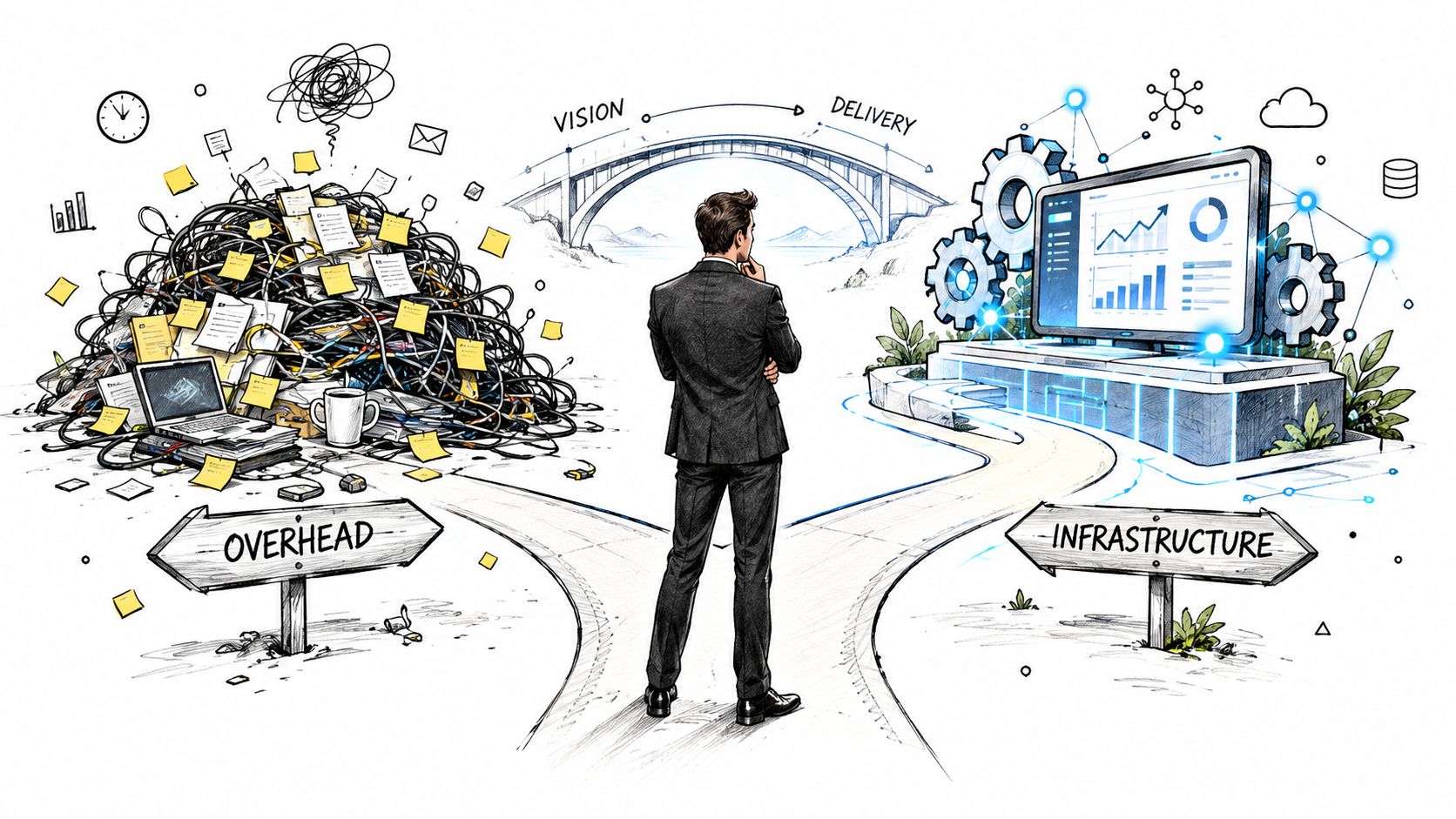
Without a governed digital workflow, each person optimizes for the information in front of them. Spreadsheets track dates, chat threads contain decisions, email holds approvals, and project managers reconstruct the truth manually. That arrangement may survive a small initiative, but it becomes fragile when several disciplines and time zones contribute to the same product.
Visibility changes the quality of decisions
A useful system connects requirements, owners, dependencies, approvals, defects, and release evidence. A CTO can see which technical decision blocks implementation. A product manager can distinguish committed work from ideas. A marketing leader can confirm that SEO redirects, analytics events, landing-page content, and launch assets have owners rather than assumptions.
The market's scale reflects this operational shift. One industry summary reported a global project management software market of USD 7.24 billion in 2023, projected to reach USD 15.06 billion by 2030, with an 11.1% CAGR. The same source also presents a later estimate of USD 9.76 billion in 2025, projected to reach USD 23.09 billion by 2030, implying a 15.42% CAGR. These estimates differ, but both point to the same conclusion, digital coordination has become part of delivery infrastructure, not a niche administrative add-on. Project management industry statistics also reports broad adoption, with one estimate placing usage at 82% of companies and another at 88% of organizations.
Accountability needs evidence
Accountability isn't assigning blame after a deadline slips. It means recording who owns a decision, what completion requires, which assumption supports the plan, and when the team will revisit the risk. That evidence protects both the client and the delivery team.
The historical evolution of the discipline explains why modern practice combines structured planning with flexible execution. Henry Gantt developed the Gantt chart in 1917, the Critical Path Method emerged in 1957, PERT followed in 1958, and the Project Management Institute was founded in 1969. The first PMBOK Guide appeared in 1987, Agile was formalized in 2001, and remote project work accelerated during the COVID-19 pandemic in 2020. This project management history shows how visual scheduling and formal governance gradually merged with cloud collaboration and distributed execution.
Practical rule: A project-management tool is useful only when it makes the next decision, owner, and risk easier to find.
For a startup, that operating model can protect an MVP from uncontrolled expansion. For an agency, it can separate client feedback from approved scope and prevent a casual request from becoming an invisible commitment. The core outcome is predictable decision-making, even when the team isn't in the same room.
Choosing Your Delivery Model and Defining Roles
The delivery model should reflect uncertainty, approval patterns, and the cost of changing direction. Teams shouldn't select Scrum because it sounds modern or Kanban because it looks simple. A web team with fixed regulatory requirements may need staged approvals, while a mobile startup validating product-market fit needs short learning cycles.
Match the method to the work
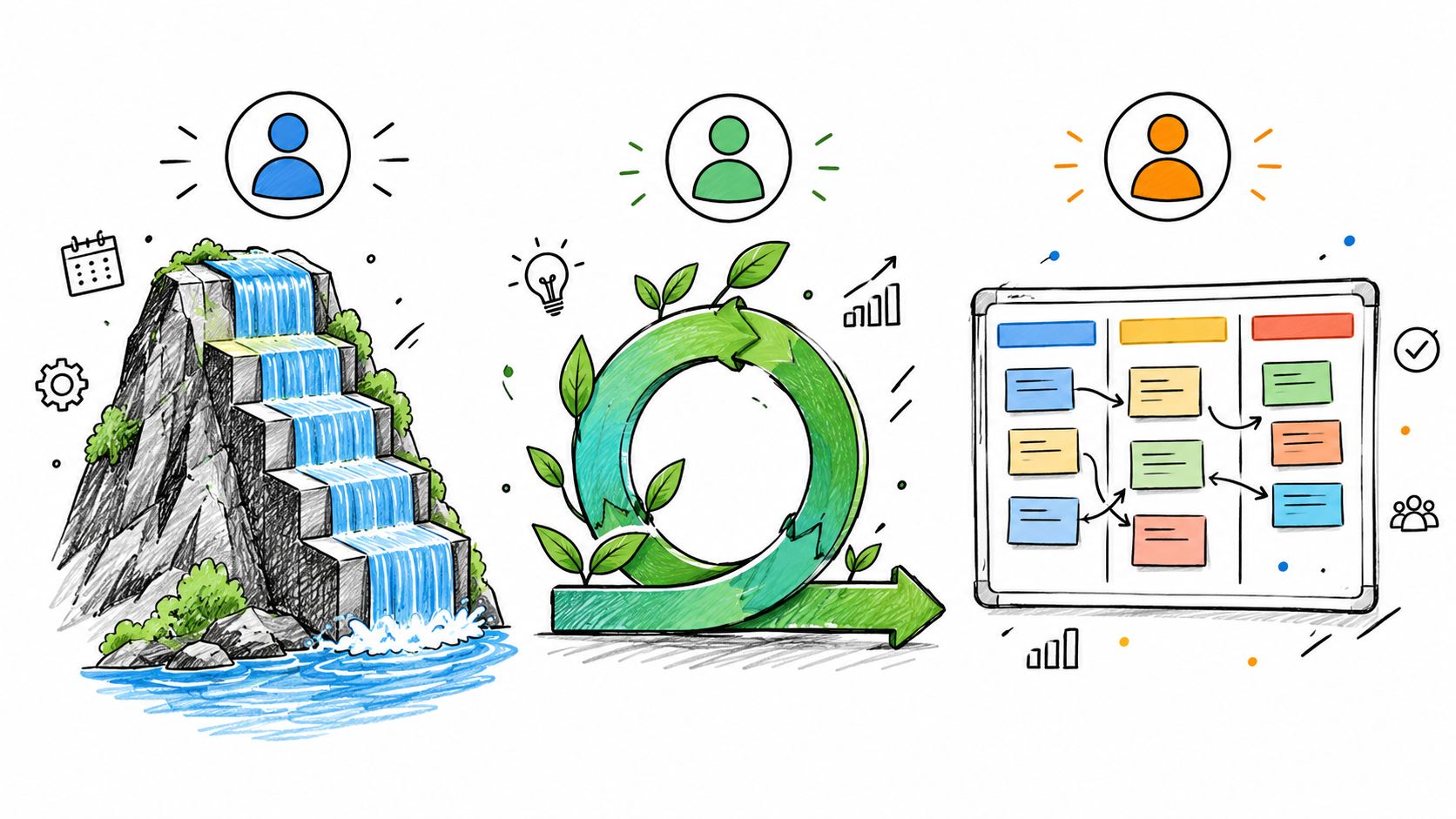
Waterfall fits work with stable requirements, sequential dependencies, and formal approval gates. It can work for a website migration with a locked information architecture, content inventory, compliance review, and planned cutover. Its weakness is late feedback. If users reject the experience after most implementation is complete, correction becomes expensive.
Agile fits products where discovery continues during delivery. A mobile MVP benefits from short increments, regular demonstrations, and a backlog that changes as user feedback improves the product definition. Agile doesn't remove planning. It moves planning into smaller, more frequent decisions.
Scrum adds a specific cadence, roles, sprint planning, reviews, and retrospectives. It works when a stable product team can protect a prioritized backlog and make decisions quickly. It works poorly when stakeholders bypass the product owner and inject urgent work directly into developers' queues.
Kanban suits operational work, maintenance, SEO tasks, design requests, and teams with unpredictable demand. Work-in-progress limits expose bottlenecks, but Kanban needs explicit service policies or the board becomes a list of vague intentions.
A hybrid model often fits agency delivery. Discovery and design may use staged approvals, development may run in sprints, and post-launch support may use Kanban. The method must be visible in the project charter so clients understand how requests, priorities, and releases will work.
Turn roles into decisions
The Project Manager owns coordination, schedule visibility, risks, dependencies, governance, and escalation. The Product Owner owns value decisions, backlog priority, acceptance, and trade-offs. The Scrum Master, where used, protects the team process, removes impediments, and helps the group improve its way of working.
Designers own experience artifacts and design rationale. Developers own technical implementation and engineering quality. QA owns test planning, defect evidence, regression coverage, and release confidence. These roles can be combined in a small startup, but the decisions can't be left ownerless.
A practical RACI should name one accountable person for each major outcome, including requirements approval, design sign-off, technical architecture, content readiness, analytics validation, release approval, and support handover. For teams comparing staffing structures and project-management roles, anchor4 offers useful context on the broader project and program management category.
Nerdify's software development team structure guide can help leaders map these responsibilities before adding nearshore specialists. The important test is simple: every decision has one accountable owner, contributors know when their input is needed, and informed stakeholders receive updates without becoming approval bottlenecks.
Implementing the End to End Workflow for Web and Mobile Projects
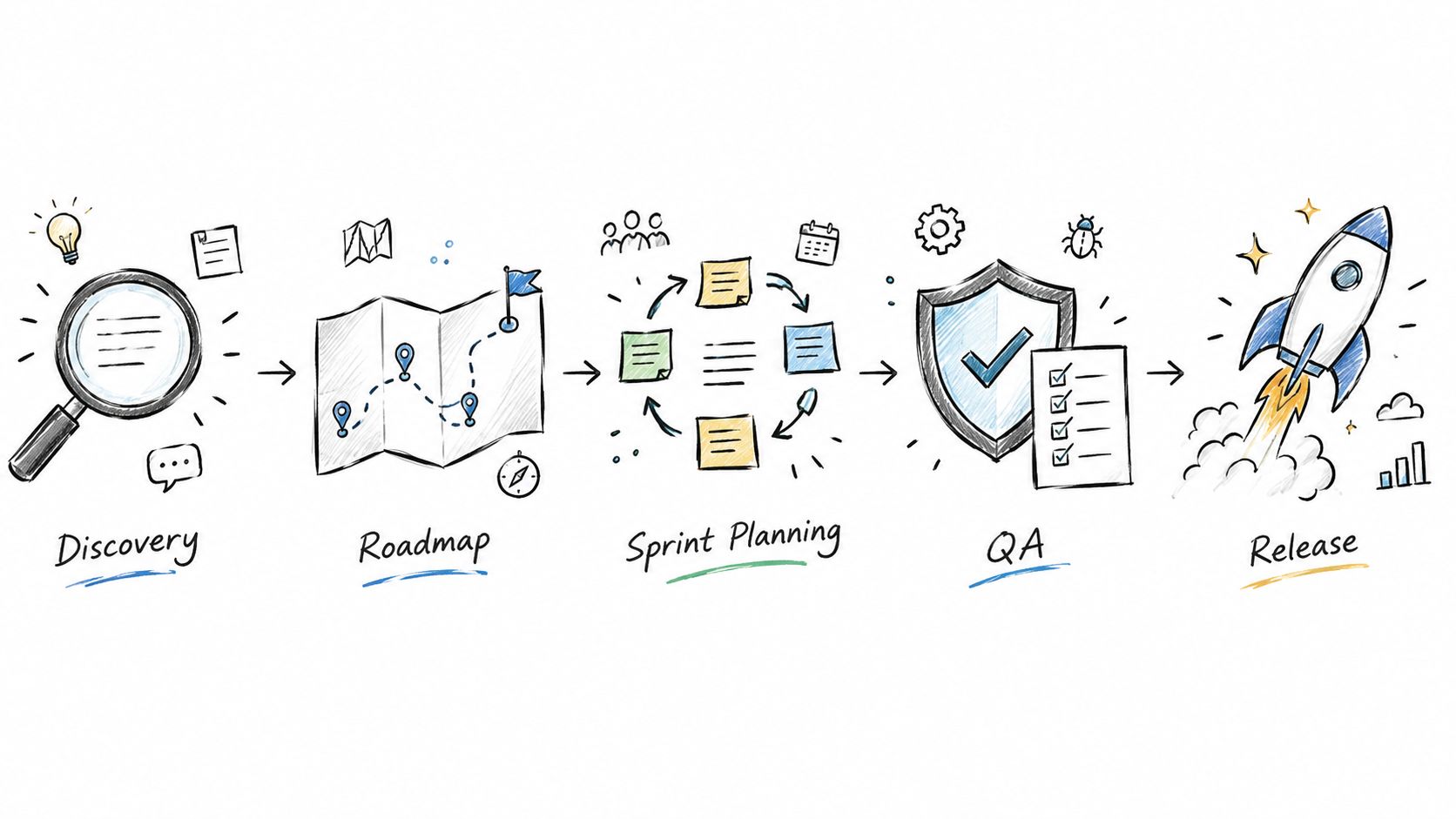
A dependable workflow turns an idea into a sequence of evidence-backed decisions. Each stage should produce an artifact that reduces ambiguity for the next stage. The process below works for a client website revamp, a mobile MVP, or a larger product initiative, provided the team adjusts the level of detail to the risk.
Start with discovery and a usable baseline
Discovery should resolve the questions that would otherwise interrupt delivery. The team identifies business outcomes, target users, technical constraints, existing systems, content dependencies, accessibility needs, SEO requirements, and approval authority.
The project charter captures the problem, objectives, non-goals, assumptions, constraints, stakeholders, budget approach, delivery model, and success criteria. For a website revamp, discovery may include the current sitemap, analytics needs, CMS constraints, redirect requirements, and content ownership. For a mobile MVP, it may include platform priorities, authentication, notifications, data privacy, offline behavior, and the smallest testable product.
Requirements should become traceable user stories or acceptance criteria. A story such as “a user can save an item for later” needs observable conditions, not just a feature label. The team should connect each requirement to a design, implementation task, test case, and release decision where appropriate.
Build the roadmap and backlog
The roadmap expresses sequencing and outcomes. The backlog expresses executable work. Mixing the two creates confusion because a quarterly outcome and a developer task require different levels of detail.
The product owner prioritizes the backlog with input from design, engineering, QA, marketing, and business stakeholders. Dependencies should be explicit. A mobile feature that requires a new backend endpoint, analytics events, store assets, and legal copy isn't one task. It is a small delivery slice with several owners.
Before sprint planning, the team defines a Definition of Done. It may include code review, automated checks where applicable, QA validation, responsive or device testing, analytics verification, documentation, stakeholder acceptance, and deployment readiness. A ticket isn't done because the code exists.
Plan, execute, and govern each increment
Sprint planning selects work that matches capacity and dependency readiness. The team identifies the outcome, confirms acceptance criteria, and records risks before implementation starts. During execution, the project manager watches blockers and variance while the product owner protects priority.
A daily status ritual should remain lightweight. The important information is what changed, what is blocked, what decision is needed, and whether the forecast still supports the target. Nearshore teams benefit from written updates because they preserve context across working hours and reduce reliance on meetings.
Change control protects the baseline without freezing learning. A new request should record its effect on scope, timeline, cost, dependencies, and acceptance criteria. The client can still approve the change, but the impact shouldn't disappear inside a chat message.
A weekly governance review examines milestone variance, open risks, unresolved decisions, defect trends, and forecast confidence. Project success research cited by this project-management statistics analysis reports that only 50% of projects worldwide are rated successful, while just 31% meet the full on-time, on-budget, on-scope standard. That benchmark supports treating scope, schedule, and cost as separate control variables rather than one general health label.
Validate, release, and hand over
QA begins before the final week. Test scenarios should reflect acceptance criteria and real user paths, including permissions, device behavior, integrations, accessibility, performance expectations, and failure states. Defects need severity, reproduction steps, environment details, owner, and retest status.
The release checklist confirms approved scope, resolved critical defects, content, analytics, SEO redirects, app-store materials, backups, rollback decisions, monitoring, and support contacts. A website release may require DNS or hosting coordination, but the project record should focus on accountable actions and approvals rather than scattered instructions.
After launch, the team monitors the agreed business and product signals, records incidents, and runs a retrospective. The handover should include known limitations, operational documentation, unresolved backlog items, and ownership after the delivery team steps back. A connected end-to-end product development process gives leaders a useful reference for aligning these stages across strategy, design, engineering, and launch.
Tooling Stack and AI Governance That Scales With Your Team
Tools should support the operating model, not substitute for it. A startup may need a simple backlog, product brief, design workspace, repository, and reporting view. An agency serving several clients may need stronger permission controls, approval history, reusable templates, and a clean separation between client-facing status and internal delivery detail.
| Category | Best For | Key Strength | Governance Tip |
|---|---|---|---|
| Work board | Backlog, sprint, or Kanban flow | Makes ownership and status visible | Define required fields and status meanings |
| Documentation | Charters, decisions, requirements | Preserves context and rationale | Give every important decision an owner and date |
| Design workspace | UX/UI exploration and handoff | Connects prototypes, specifications, and feedback | Mark approved designs clearly and archive superseded versions |
| Code platform | Source control, reviews, releases | Creates technical traceability | Link pull requests and release branches to work items |
| QA and reporting | Defects, test evidence, governance | Shows quality and forecast risk | Separate defect severity from delivery priority |
| Communication | Daily coordination and escalation | Speeds clarification | Treat chat as a signal, not the system of record |
Leaders evaluating alternatives can compare project management software before selecting a stack. The selection criteria should include integrations, permissions, auditability, reporting flexibility, export capability, and how easily a new contributor can understand the project without attending every meeting.
Connect tools around a single truth
The work board should link to the requirement, design decision, code change, test evidence, and release record. This doesn't require one vendor for every function. It requires stable identifiers, naming conventions, clear ownership, and a rule that final decisions live in a durable location.
Nearshore collaboration benefits from an overlap window for decisions, asynchronous written updates for progress, and a defined escalation path for blockers. Time-zone alignment helps, but it won't fix unclear ownership. A distributed team still needs agreed response expectations, handoff notes, and meeting discipline.
Set rules before introducing AI
AI adoption needs governance because generated content can be plausible, incomplete, or unsafe. A 2025 global survey reported that 66% of project professionals were using AI tools, up from 41% in 2023, while AI was the top driver of project-management software purchases for 55% of buyers. The same survey reported adoption challenges tied to skills gaps and onboarding for 41% of respondents. The 2025 AI project management research supports a practical conclusion, tool access is easier than reliable implementation.
AI can assist with meeting summaries, draft requirements, estimation prompts, test-case suggestions, backlog classification, and documentation cleanup. It shouldn't approve scope, make unreviewed architecture decisions, expose confidential information, or replace human acceptance of product behavior.
A workable policy defines approved tools, prohibited data, review requirements, attribution expectations, retention rules, and escalation for suspected errors. Teams should label AI-assisted artifacts, require a named reviewer, and test outputs against source requirements. Nerdify's generative AI integration services are relevant when an organization needs help connecting AI capabilities to existing product and delivery workflows rather than purchasing another license.
Best Practices Templates and Metrics That Prevent Failure
The strongest delivery systems prevent predictable failure before dashboards announce it. Requirements get clarified during discovery, sponsors make decisions at scheduled reviews, risks have owners, and scope changes leave an evidence trail.
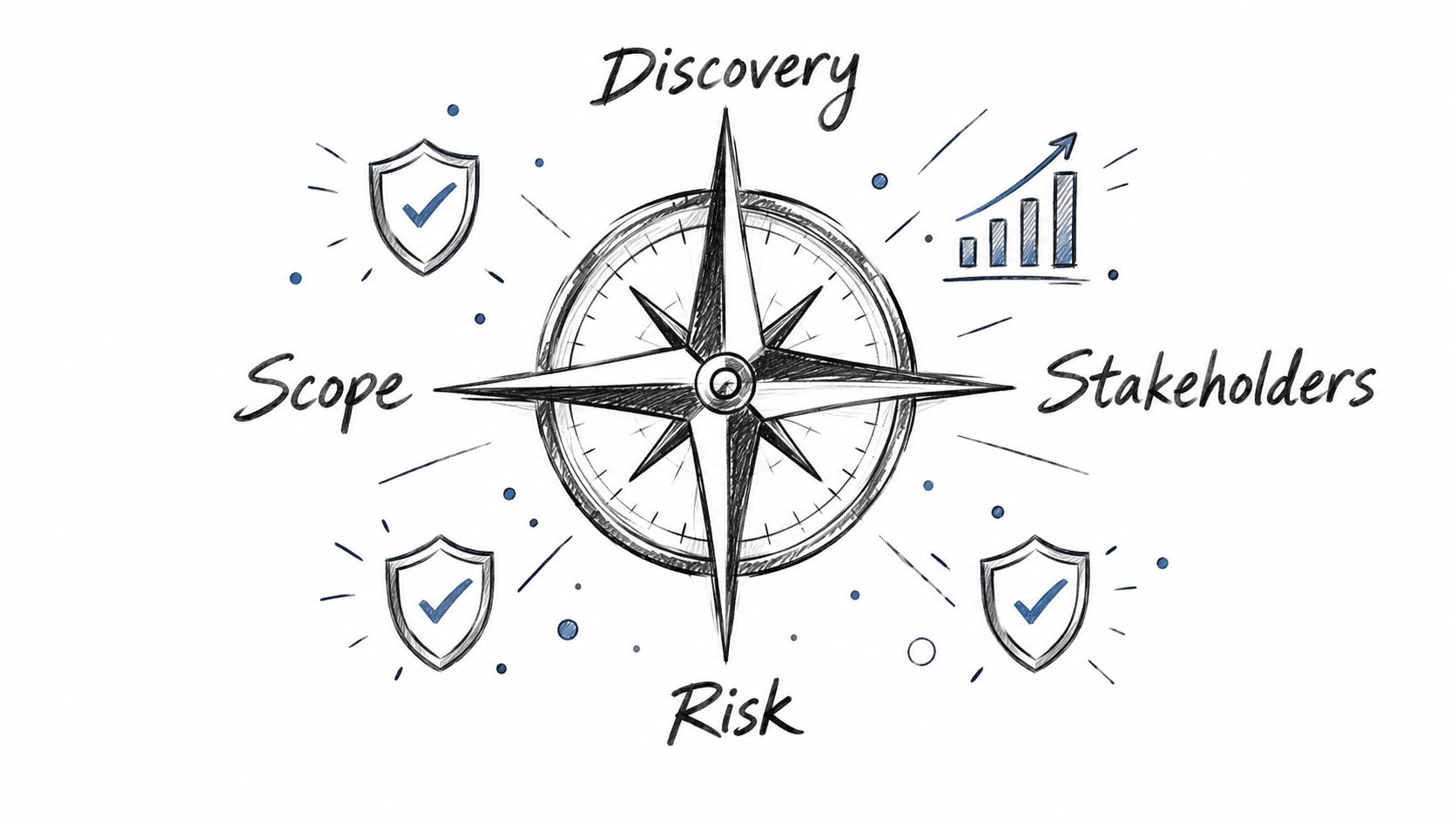
Independent project-failure research identifies poor requirements, weak executive sponsorship, unrealistic deadlines, insufficient user involvement, and inadequate risk management as recurring breakdown causes. It also reports that challenged projects commonly experience 63% time overruns, 45% cost overruns, and delivery of only 67% of intended functionality. This digital transformation failure research gives leaders a reason to treat discovery and governance as delivery work, not paperwork.
Use templates that force useful decisions
A project charter should answer what problem is being solved, who benefits, what isn't included, who approves changes, and how success will be evaluated. A sprint plan should identify the increment outcome, selected stories, dependencies, capacity assumptions, risks, and acceptance owner.
A status report should be short enough to read and specific enough to act on. It should show:
- Forecast: Current target, confidence, and any milestone movement.
- Decisions: Items requiring a named stakeholder, with a due date.
- Risks: Probability, impact, mitigation, owner, and trigger.
- Scope: Approved additions, removals, and pending changes.
- Quality: Open defects by severity, test progress, and release concerns.
- Business outcome: Evidence that the increment is moving toward the agreed objective.
A scope-traceability matrix connects business requirements to stories, designs, implementation, tests, and release status. Freeze points don't mean the team can't learn. They mark the moment when a change needs explicit impact analysis instead of informal acceptance.
Measure flow and forecast risk
Velocity helps a consistent team understand delivery capacity, but it shouldn't compare unrelated teams or become a target. Burndown shows remaining planned work, while milestone variance shows whether key dates are moving. Earned value can add a more formal view of planned work, completed value, and actual cost when the project has a suitable baseline.
Metrics become harmful when teams optimize the number rather than the outcome. A rising velocity can hide quality problems. A flat burndown can reflect incomplete ticket slicing. A green status can conceal a decision that nobody owns.
Run a lightweight governance cadence
A weekly review should examine the baseline, change log, dependencies, risk register, milestone variance, quality evidence, and upcoming decisions. The sponsor shouldn't attend every working meeting, but the sponsor should receive clear escalation when a trend threatens the business outcome.
Google's guidance favors helpful, reliable, people-first content, crawlable links, and clear technical signals, while its helpful-content guidance warns against search-engine-first publishing and arbitrary word-count targets. Those principles apply to delivery documentation too. Google Search Essentials and Google's helpful-content guidance both reinforce the value of clarity, usefulness, and content created for real users.
Interface quality belongs in the same control system. Nielsen Norman Group's usability heuristics emphasize visible system status, familiar language, consistency, error prevention, and plain-language error messages that explain the problem and suggest a solution. These usability heuristics should inform acceptance criteria and QA review, not remain isolated inside the design team's workspace.
Putting Your System Into Action With the Right Partner
Digital project management works when the pieces reinforce one another. The delivery model sets the cadence, the role charter assigns decisions, the workflow creates evidence, the tool stack preserves context, AI rules control risk, and metrics expose variance early.
A practical first month starts with an audit of the current process. The leadership team can select one active web or mobile project, document its charter and decision owners, connect the backlog to requirements and release evidence, then run the governance cadence against real work. After the pilot, the organization can standardize the templates that reduced confusion and remove rituals that produced no decisions.
A nearshore partner can extend this system without forcing a company to build every capability internally. Nerdify is a Nicaragua-based partner with more than nine years of experience and over 100 projects across ten countries, providing web and mobile development, UX/UI design, digital marketing, and nearshore staff augmentation. Its proximity, cultural affinity, and time-zone alignment support direct collaboration, while transparent project coordination helps clients keep business owners, designers, developers, and QA aligned.
The right partner won't make governance unnecessary. The partner should make disciplined governance easier to operate across strategy, design, engineering, marketing, and support.
Nerdify helps teams plan and deliver web and mobile products with UX/UI design, development, digital marketing, and nearshore staff augmentation. Visit Nerdify to discuss a project, extend an existing team, or build a delivery system with clearer ownership, stronger AI controls, and more predictable execution.