10 Essential Project Management Tips for Tech Teams in 2026
In the fast-paced world of software, web, and mobile development, effective project management is the bedrock of success. For startups, CTOs, marketing leads, and project managers, juggling tight deadlines, evolving requirements, and distributed teams is a daily reality. The difference between a project that thrives and one that falters often comes down to the strategies and workflows you implement. A well-executed plan prevents scope creep, streamlines communication, and ensures that the final product aligns perfectly with user needs and business goals.
This article presents a curated roundup of 10 essential project management tips, designed specifically for tech teams. We will move beyond generic advice to provide actionable insights on everything from agile practices and nearshore team coordination to risk mitigation and effective tooling. Each tip is structured to offer practical implementation guidance, helping you translate theory into tangible results for your projects.
Whether you're leading a small startup, augmenting your staff with nearshore talent, or managing a large enterprise-level application, these battle-tested tips will help you deliver exceptional digital products on time and within budget. Let's explore the strategies that transform complex development cycles into streamlined, predictable, and successful outcomes.
1. Define Clear Project Scope and Requirements
Establishing a well-defined project scope and detailed requirements from the very beginning is the bedrock of successful project delivery. This foundational step involves meticulously documenting all deliverables, features, constraints, and success criteria before a single line of code is written. It acts as a shared understanding, a "single source of truth" that aligns stakeholders, designers, and developers on a unified path.
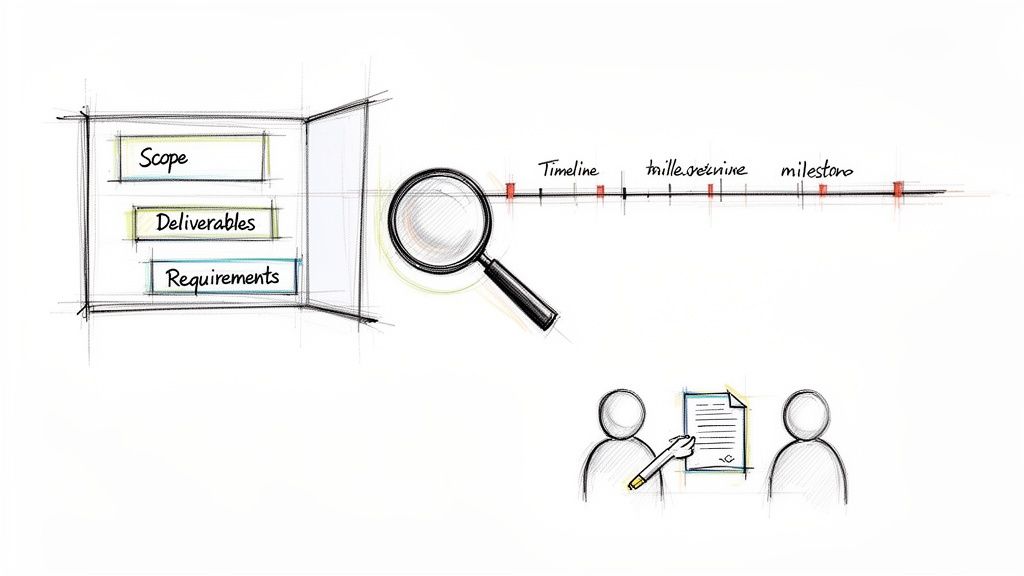
This clarity is non-negotiable for preventing scope creep, the silent project killer where uncontrolled changes derail timelines and inflate budgets. By setting clear boundaries, teams can manage client expectations effectively and provide developers with a precise roadmap. For example, a mobile app project with clearly defined user stories and acceptance criteria ensures that every feature developed meets pre-agreed standards, preventing costly mid-project pivots and rework.
How to Implement This Tip
To effectively define your project's scope, focus on collaborative and visual documentation techniques. This crucial planning phase is one of the most important project management tips for ensuring your team's efforts are always aligned with the desired outcomes.
- Host Collaborative Workshops: Bring all key stakeholders together to brainstorm and document every requirement, assumption, and constraint.
- Utilize Visual Aids: Use wireframes, mockups, and process flow diagrams to visually communicate complex requirements, ensuring everyone shares the same vision.
- Create a Requirements Traceability Matrix: This document maps each requirement to its corresponding design element, development task, and test case, ensuring nothing is missed.
- Implement Formal Change Control: Establish a clear process for how changes to the scope will be requested, evaluated, and approved to maintain project control.
For a deeper dive into this essential practice, you can learn more about how to define project scope and create a solid foundation for your next project.
2. Implement Agile/Scrum Methodology
Agile and Scrum frameworks provide an iterative approach to development, enabling teams to deliver value incrementally and adapt to changes quickly. Instead of a single, long development phase, Agile breaks projects into short cycles called sprints, typically lasting two weeks. This methodology is particularly powerful for complex projects, as it ensures continuous stakeholder feedback and allows teams to deliver working software regularly.
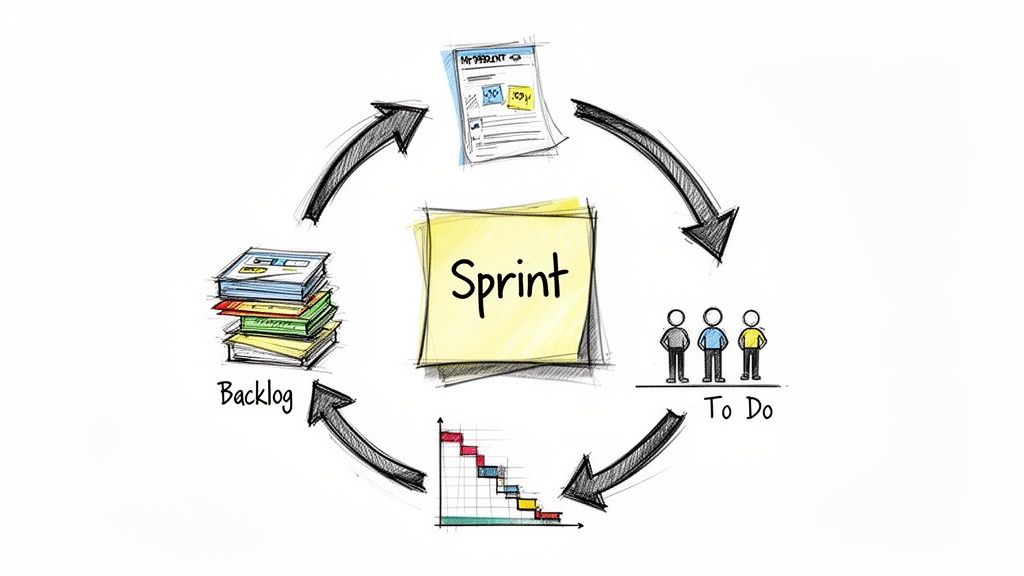
This iterative process fosters flexibility, transparency, and rapid issue resolution. For example, a mobile app development team using Agile can release a core feature set, gather real user feedback, and then use that data to prioritize the next sprint's development. This ensures the final product is market-validated and aligned with user needs, preventing investment in features that don't add value. It's a dynamic way to manage evolving project requirements.
How to Implement This Tip
To successfully implement Agile, focus on establishing consistent routines and clear definitions that guide the team's work. Adopting this framework is one of the most effective project management tips for boosting productivity and responsiveness to change.
- Hold Daily Stand-ups: Conduct brief, daily meetings where each team member shares progress, plans, and any impediments to maintain momentum.
- Maintain a Prioritized Backlog: Keep a dynamic list of all desired features and tasks, ordered by business value, to ensure the team is always working on the most important items.
- Define a "Definition of Done": Create a clear, agreed-upon checklist of criteria that a task must meet to be considered complete, ensuring consistent quality.
- Conduct Sprint Retrospectives: After each sprint, hold a meeting for the team to reflect on what went well and what could be improved, fostering a culture of continuous improvement.
For a more comprehensive guide to this framework, you can learn more about Scrum methodology and how to apply it to your projects.
3. Establish Effective Communication Protocols
Clear, consistent communication is the lifeblood of successful project delivery, especially when working with distributed or nearshore teams. Establishing effective communication protocols involves creating a formal plan that dictates the channels, frequency, escalation paths, and expected response times for all project-related discussions. This structured approach prevents misunderstandings, ensures alignment across different time zones, and builds a strong, transparent relationship between the team and stakeholders.
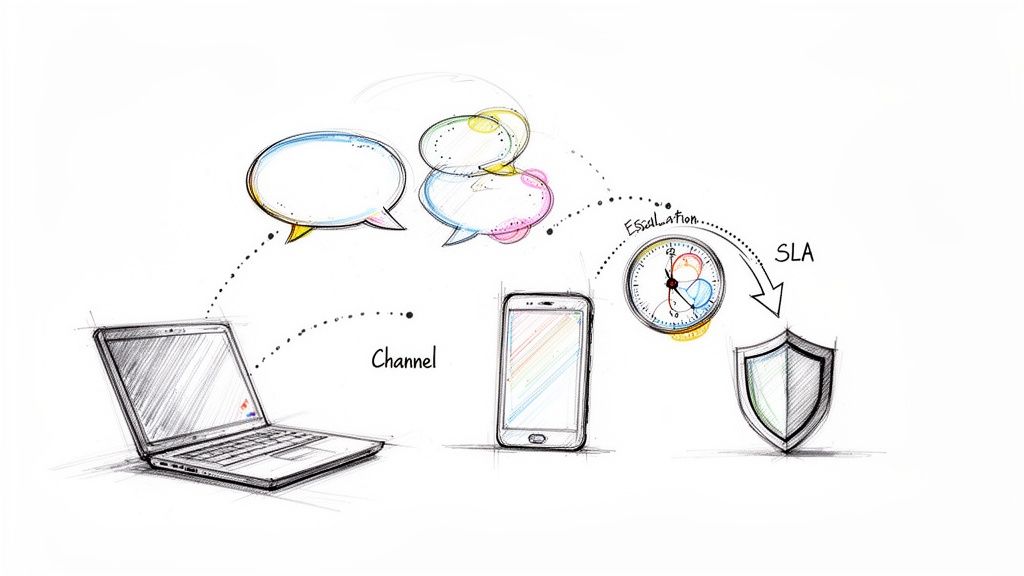
Without a defined plan, critical information can get lost in cluttered inboxes or endless chat threads, leading to delays and frustration. A formal protocol ensures every team member knows exactly where to go for specific types of information. For instance, nearshore teams can use daily standups during overlapping hours for high-level alignment, while Slack channels organized by project function can handle rapid, specific queries, and weekly status reports provide clear progress metrics to clients.
How to Implement This Tip
To build a robust communication framework, define your protocols collaboratively and make them easily accessible to everyone involved. This is one of the most critical project management tips for maintaining momentum and preventing communication breakdowns in a remote or hybrid environment.
- Define Preferred Channels: Assign specific tools for different communication types, like using Slack for urgent questions, email for formal updates, and a project management tool for task-specific comments.
- Leverage Asynchronous Communication: To accommodate different time zones, prioritize asynchronous tools like shared documents and task comments, which allow team members to contribute on their own schedules.
- Schedule Key Synchronous Meetings: Book recurring meetings like sprint planning and retrospectives during hours that overlap for all key team members to facilitate real-time collaboration.
- Document All Major Decisions: Maintain a "decision log" in a shared space like Confluence or Notion to create a single source of truth and an audit trail for important project choices.
- Conduct Regular Retrospectives: Use retrospectives to discuss what is working and what isn’t with your communication process, allowing the team to continuously improve it.
4. Implement Resource Planning and Capacity Management
Effective resource allocation ensures the right team members are assigned to the right tasks at the right time, preventing burnout and maximizing productivity. This strategic practice involves forecasting resource needs, tracking utilization, and balancing workloads across all roles. It moves project management from a reactive state to a proactive one, allowing teams to anticipate bottlenecks and scale effectively to meet deadlines without compromising on quality.
Without proper capacity management, projects risk delays, budget overruns, and decreased team morale. For instance, a mobile development team needs specific iOS and Android expertise allocated correctly based on project requirements. Similarly, sharing UX/UI designers across multiple projects requires careful planning to maintain accountability and quality. For tech projects in cloud environments, dedicated attention to mastering cloud resource and capacity planning is crucial for optimal performance and cost-effectiveness.
How to Implement This Tip
To integrate resource planning, focus on gaining visibility into your team's availability and skillset. This is one of the most critical project management tips for scaling teams and delivering complex projects successfully.
- Use Resource Management Tools: Platforms like Asana, Monday.com, or Kimble provide a visual overview of team availability and current allocations.
- Maintain a Flexible Resource Pool: Identify team members who can adapt to different project needs, allowing for dynamic allocation as priorities shift.
- Plan Capacity at 70-85% Utilization: This buffer accounts for administrative tasks, unexpected issues, and professional development, preventing burnout.
- Conduct Regular Capacity Reviews: Hold monthly or bi-weekly meetings to review project progress and adjust resource allocations accordingly.
- Cross-Train Team Members: Reduce single-point-of-failure risks by training developers and designers in multiple skills, creating a more resilient team.
For a deeper look into this strategy, you can explore more about project manager resource allocation and ensure your team is always positioned for success.
5. Use Project Management Tools and Dashboards
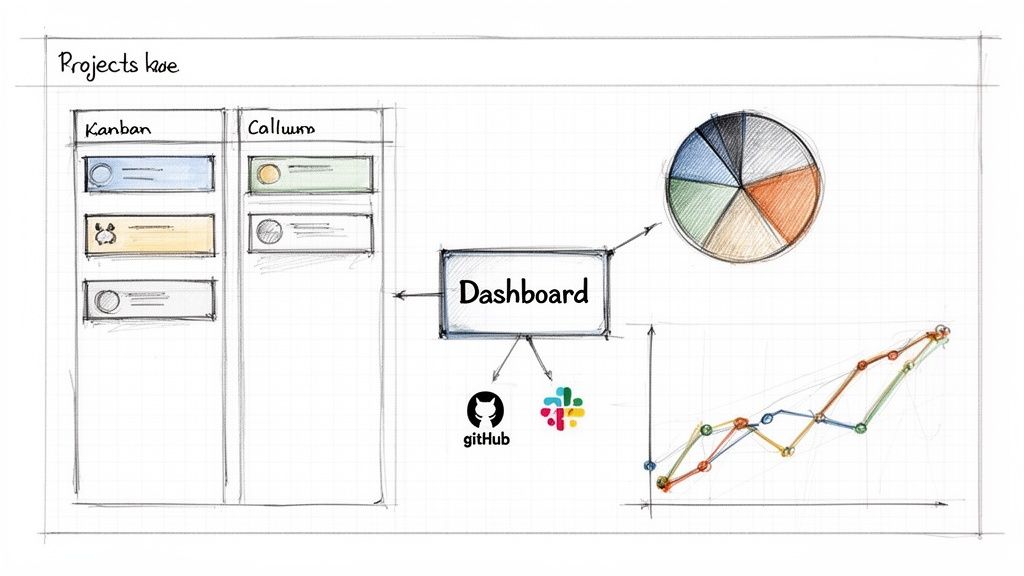
Leveraging modern project management tools and dashboards is essential for maintaining visibility, fostering collaboration, and automating workflows. These platforms act as a central hub, preventing information silos and enabling data-driven decisions, which is critical for agencies managing multiple projects across different teams and time zones. Centralized tools provide a single source of truth for project status, resources, and communication.
This approach ensures that every stakeholder, from developers to executives, has real-time access to the information they need. For example, using Jira for agile development allows for automated CI/CD integration, while a tool like Monday.com can provide executive-level dashboards that offer a high-level view of progress across dozens of concurrent projects. This prevents miscommunication and keeps everyone aligned without constant meetings.
How to Implement This Tip
To effectively select and utilize digital solutions, it's vital to choose platforms that fit your team's specific needs. Exploring the best project management software for engineers can help you find tools that integrate seamlessly with your existing development stack and workflows.
- Establish Clear Data Entry Standards: Ensure all team members input data consistently to maintain the integrity of your reports and dashboards.
- Create Role-Based Dashboards: Customize views for different stakeholders, such as a high-level summary for executives, a detailed task view for the project team, and a progress overview for clients.
- Automate Reporting: Configure your tools to automatically generate status rollups and reports, reducing the manual effort required for stakeholder updates.
- Integrate Your Tech Stack: Choose tools that connect with your existing communication and development platforms (like Slack, GitHub, and Figma) to create a unified ecosystem.
6. Manage Risks Proactively
Proactive risk management is the practice of identifying, analyzing, and mitigating potential threats before they derail a project. Instead of reacting to problems as they arise, this approach systematically anticipates issues, ensuring smoother execution and more predictable outcomes. For software development, this means looking beyond code to consider everything from technical dependencies and resource availability to stakeholder communication and budget stability.
This foresight is crucial for preventing major disruptions that can compromise timelines and inflate costs. A proactive stance transforms risk from a potential disaster into a managed variable. For example, by identifying a critical dependency on a third-party API early on, a team can develop a fallback solution or an alternative integration plan, ensuring a single point of failure doesn't halt the entire project. This strategic planning is one of the most impactful project management tips for maintaining momentum and control.
How to Implement This Tip
To effectively manage risks, integrate a structured process into your project lifecycle from the very beginning. This ensures that potential issues are continuously identified, assessed, and addressed by the entire team, fostering a culture of shared responsibility.
- Host a Risk Identification Workshop: At the project kickoff, bring together stakeholders from development, design, and management to brainstorm potential risks.
- Use a Probability-Impact Matrix: Prioritize identified risks by evaluating their likelihood and potential impact, allowing your team to focus on the most severe threats first.
- Maintain a Risk Register: Create a living document that lists all risks, their potential impact, assigned owners, and mitigation plans. Review and update it regularly.
- Build in Contingency: Allocate time and budget buffers based on the severity of prioritized risks to absorb unforeseen delays or costs without derailing the project.
7. Prioritize Tasks Using MoSCoW and Value-Based Methods
Effective task prioritization is the engine that drives value delivery, ensuring that your team's effort is always focused on what matters most. By distinguishing between essential features and nice-to-haves, you can maximize return on investment and deliver core functionality faster. This strategic approach helps manage stakeholder expectations and provides a clear, logical path for development, preventing wasted cycles on low-impact work.
Using frameworks like MoSCoW (Must have, Should have, Could have, Won't have) provides a simple yet powerful way to categorize requirements. For a new mobile app, core user registration and login functionality would be a "Must have," while integrating social media sharing is a "Should have," and adding a dark mode theme might be a "Could have." This clarity is one of the most vital project management tips for delivering a Minimum Viable Product (MVP) that meets primary user needs quickly.
How to Implement This Tip
To prioritize effectively, combine structured frameworks with collaborative, value-focused decision-making. This ensures that every task in the backlog is strategically placed to deliver maximum client value and project momentum.
- Involve Stakeholders in Prioritization: Conduct workshops where clients and team members collaboratively assign MoSCoW categories to features, ensuring universal buy-in.
- Combine with Value/Effort Scoring: Assign a "value" score (e.g., 1-10) and an "effort" score (using story points) to each task. Prioritize items with the highest value-to-effort ratio.
- Maintain a Transparent Priority Backlog: Use tools like Jira or Trello to create a backlog that is visible to everyone, clearly showing the rationale behind the current work order.
- Re-evaluate Priorities Regularly: Priorities are not static. Revisit the backlog at the beginning of each sprint or milestone to adapt to new feedback, market changes, or technical discoveries.
8. Conduct Regular Quality Assurance and Testing
Integrating quality assurance throughout the development lifecycle, rather than as a final step, is crucial for delivering a high-quality product. This continuous testing approach prevents defects from reaching production, significantly reduces the cost of rework, and safeguards client satisfaction. It shifts the focus from finding bugs at the end to building quality into the project from the start, a key principle in modern software development.
For agencies building web and mobile applications, this means a comprehensive strategy that includes unit, integration, and user acceptance testing (UAT). For example, a continuous integration (CI) pipeline that automatically runs tests on every code commit can catch integration issues instantly. Similarly, conducting formal UAT sessions with clients before a production release ensures the application meets business requirements and user expectations, preventing costly post-launch fixes.
How to Implement This Tip
To make quality assurance a continuous part of your workflow, embed testing activities into every sprint and development stage. This proactive stance is one of the most effective project management tips for ensuring reliability and performance.
- Implement Test-Driven Development (TDD): For critical features, write tests before writing the code. This ensures functionality meets requirements from the outset.
- Automate Repetitive Testing: Use CI/CD pipelines to automate regression tests, ensuring new changes don't break existing functionality.
- Establish Code Coverage Targets: Aim for a high code coverage percentage (e.g., >80%) with unit tests to ensure most of the codebase is validated.
- Dedicate QA Resources: Assign team members to perform exploratory and manual testing, which helps uncover usability issues and edge cases that automated tests might miss.
- Conduct Security Testing: For applications handling sensitive data, perform regular security audits and penetration testing to identify and patch vulnerabilities.
9. Establish Clear Stakeholder Engagement and Feedback Loops
Consistent stakeholder engagement is the lifeblood of a project, ensuring it remains aligned with business objectives and market needs. This practice involves creating a structured cadence of communication to gather feedback, manage expectations, and build strong, collaborative partnerships. It transforms stakeholders from passive observers into active participants, preventing costly surprises and ensuring the final product delivers real value.
This proactive communication is essential for maintaining momentum and buy-in. When stakeholders are regularly updated and their input is valued, they become champions for the project. For instance, in a nearshore partnership, scheduled bi-weekly sprint reviews provide a crucial forum to demonstrate progress, clarify requirements, and address concerns before they escalate, bridging potential cultural or time zone gaps and fostering a unified team environment.
How to Implement This Tip
To build effective stakeholder engagement, establish a reliable rhythm of communication and make every interaction count. These project management tips help create a transparent and collaborative atmosphere, which is vital for long-term success.
- Schedule a Regular Cadence of Meetings: Stick to a predictable schedule for sprint reviews, business updates, and steering committee meetings to create consistency.
- Show, Don't Just Tell: Prepare demos, prototypes, or tangible progress showcases for each touchpoint to make discussions more concrete and productive.
- Document and Circulate Decisions: After every meeting, send out a summary of key decisions, action items, and owners to ensure accountability and clarity.
- Tailor Communication: Create different forums for different stakeholder groups, such as detailed technical reviews for product owners and high-level strategic updates for executives.
10. Track Metrics and Data-Driven Decision Making
Grounding your project management decisions in objective data rather than intuition is a transformative practice. By tracking key metrics like velocity, cycle time, defect rates, and budget variance, you gain clear visibility into project health and can identify potential issues long before they escalate. This data-driven approach removes subjectivity from progress discussions and empowers teams to make informed, strategic choices.
This method provides a transparent, evidence-based framework for communication with both internal teams and external stakeholders. For example, by tracking sprint velocity, a team can accurately forecast completion dates and manage client expectations. Similarly, monitoring cycle time from task creation to completion can pinpoint process bottlenecks, allowing you to streamline workflows and boost efficiency.
How to Implement This Tip
Adopting a data-centric mindset is one of the most powerful project management tips for fostering continuous improvement and accountability. Start by defining metrics that align directly with your project and business goals, avoiding vanity metrics that offer little real insight.
- Define Key Performance Indicators (KPIs): Select a few crucial metrics that reflect project success, such as lead time, deployment frequency, or customer satisfaction.
- Establish Baselines: Measure your current performance before implementing any new processes to accurately track the impact of your changes.
- Automate Reporting: Use project management tools to create automated dashboards (e.g., burndown charts, cumulative flow diagrams) to reduce manual effort and provide real-time insights.
- Conduct Regular Metric Reviews: Dedicate time in weekly meetings or retrospectives to discuss the data, analyze trends, and decide on actionable improvements together as a team.
10-Point Project Management Tips Comparison
| Item | Implementation Complexity 🔄 | Resource Requirements ⚡ | Expected Outcomes ⭐ | Ideal Use Cases 💡 | Key Advantages 📊 |
|---|---|---|---|---|---|
| Define Clear Project Scope and Requirements | 🔄 Medium — stakeholder workshops, documentation upfront | ⚡ Low–Medium — PM time, stakeholder availability | ⭐ High — reduces scope creep; clearer deliverables | 💡 Project kickoff; fixed-price or complex requirements | 📊 Better estimates, alignment, less rework |
| Implement Agile/Scrum Methodology | 🔄 Medium–High — role adoption, ceremonies, cadence | ⚡ Medium — Scrum Master, regular stakeholder time | ⭐ High — iterative delivery and adaptability | 💡 Uncertain requirements; iterative product development | 📊 Frequent releases, transparency, early ROI |
| Establish Effective Communication Protocols | 🔄 Low–Medium — define channels, SLAs, escalation paths | ⚡ Low — communication tools and discipline | ⭐ High — fewer misunderstandings; faster resolution | 💡 Distributed/nearshore teams; client-facing projects | 📊 Improved alignment, accountability, reduced rework |
| Implement Resource Planning and Capacity Management | 🔄 Medium–High — forecasting and utilization tracking | ⚡ Medium — resource tools, accurate time tracking | ⭐ Medium–High — predictable delivery; balanced workload | 💡 High-volume portfolios; staff augmentation models | 📊 Optimized utilization, less burnout, scalable staffing |
| Use Project Management Tools and Dashboards | 🔄 Medium — setup, integrations, governance | ⚡ Medium — licenses, training, maintenance | ⭐ High — real-time visibility and automated reporting | 💡 Multi-project environments; distributed teams | 📊 Single source of truth; faster decisions; fewer meetings |
| Manage Risks Proactively | 🔄 Medium — continuous identification and mitigation | ⚡ Low–Medium — workshops, contingency reserves | ⭐ Medium–High — fewer surprises; controlled impacts | 💡 Complex technical projects; multi-vendor setups | 📊 Early mitigation; improved stakeholder confidence |
| Prioritize Tasks Using MoSCoW and Value-Based Methods | 🔄 Low–Medium — framework facilitation and alignment | ⚡ Low — product owner time and prioritization sessions | ⭐ High — delivers highest-value items first | 💡 MVPs; tight timelines; ROI-driven projects | 📊 Maximizes early value; reduces scope creep |
| Conduct Regular Quality Assurance and Testing | 🔄 Medium–High — integrate CI/CD and test suites | ⚡ High — QA engineers, automation, infrastructure | ⭐ High — fewer production defects; reliable releases | 💡 Customer-facing apps; regulated or high-reliability systems | 📊 Lower rework costs; confident deployments; maintainability |
| Establish Clear Stakeholder Engagement and Feedback Loops | 🔄 Low–Medium — meeting cadence and governance | ⚡ Medium — time for demos, reviews, and reporting | ⭐ High — alignment and timely course corrections | 💡 Strategic initiatives; client partnerships; product work | 📊 Builds trust; validates requirements early |
| Track Metrics and Data-Driven Decision Making | 🔄 Medium — define metrics, collection, analysis | ⚡ Medium — tooling, dashboards, data governance | ⭐ High — objective decisions; improved predictability | 💡 Scaling operations; performance improvement; exec reporting | 📊 Identifies bottlenecks; better forecasts; measurable ROI |
From Tips to Transformation: Implementing Your Project Management Strategy
Navigating the complexities of modern software and web development requires more than just a talented team; it demands a structured, intentional approach to project management. We've explored a comprehensive set of project management tips, from defining a crystal-clear project scope and implementing agile methodologies to establishing robust communication protocols and managing risks proactively. These aren't just isolated tactics but interconnected pillars that support the entire project lifecycle, ensuring alignment, efficiency, and ultimately, success.
The journey from a good idea to a market-ready digital product is paved with potential challenges. By integrating these strategies, you create a resilient framework that can withstand unexpected hurdles. The core theme connecting all these tips is a shift from reactive problem-solving to proactive, strategic execution. It’s the difference between hoping for a good outcome and engineering one.
Synthesizing the Core Takeaways
The most impactful takeaway is that effective project management is a holistic discipline. You cannot excel at stakeholder engagement without clear communication channels, nor can you practice meaningful agile development without data-driven decision-making and rigorous quality assurance.
Consider these three principles as the foundation of your new approach:
- Clarity Above All: Unambiguous scope, transparent communication, and well-defined roles eliminate confusion and empower your team to focus on execution.
- Agility in Action: True agility isn't just about sprints and stand-ups; it's a mindset of continuous improvement, iterative progress, and adapting to feedback from real-world data and stakeholder insights.
- Discipline in Execution: From proactive risk mitigation and rigorous QA testing to consistent use of project management tools, a disciplined approach transforms your workflow from chaotic to predictable and reliable.
Your Actionable Next Steps
Reading a list of project management tips is the first step; implementation is what drives transformation. Don't try to overhaul your entire process overnight. Instead, adopt an incremental approach.
- Conduct a Project Health Check: Using the tips in this article as a checklist, evaluate one of your current projects. Where are the most significant gaps? Is it a poorly defined scope, inconsistent communication, or a lack of proactive risk planning?
- Select One High-Impact Area: Choose the single biggest pain point and focus on implementing the relevant tip. For example, if stakeholder feedback is chaotic, formalize your engagement and feedback loop process immediately.
- Champion the Change: Secure buy-in from your team and stakeholders. Explain the "why" behind the new process and demonstrate its value through a small, successful pilot. Celebrate the win and build momentum for the next improvement.
By mastering these project management fundamentals, you do more than just deliver projects on time and within budget. You build a culture of accountability, foster innovation, and create a predictable engine for growth. You empower your team, delight your stakeholders, and consistently deliver high-quality digital products that make a real-world impact. This strategic foundation is your key to unlocking sustained success in a competitive digital landscape.