Remote Work Best Practices: Boost Team Productivity (remote work best practices)
Remote work has evolved from a temporary solution into a permanent strategy for building elite development and product teams. But thriving in this model requires more than just a fast internet connection and a Slack account. It demands intentionality, discipline, and a framework of robust remote work best practices. Without a deliberate structure, distributed teams risk succumbing to communication silos, project delays, and a diluted company culture. This is especially true for high-stakes environments in startups and SMEs where agility and cohesion are paramount for survival and growth.
This guide cuts through the noise to provide 10 essential, actionable strategies specifically tailored for technical teams. We move beyond generic advice to offer a comprehensive blueprint for engineering a high-performance distributed workforce. You will learn how to implement concrete systems for asynchronous communication, secure development, and outcome-focused performance tracking. We will cover everything from mastering time zone differences in nearshore collaborations to creating a remote-first culture that fosters connection and prevents burnout.
For teams to truly thrive, individual remote workers must also master their personal productivity. Delve deeper into strategies on how to stay productive working from home to complement the team-wide systems we'll discuss. By combining effective organizational frameworks with individual discipline, your team can achieve peak performance. The following best practices will ensure your distributed team isn't just surviving, but setting new standards for innovation, collaboration, and delivery. Let’s dive into the foundational pillars that separate the successful remote teams from the rest.
1. Establish Clear Communication Protocols and Tools
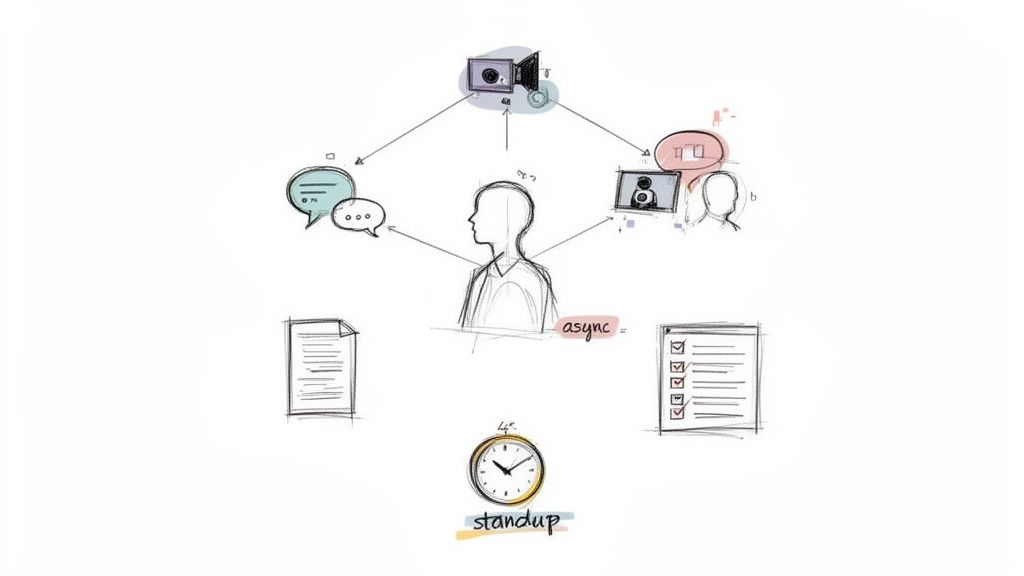
Effective remote work hinges on a communication framework that is intentional, documented, and universally understood. Without the natural osmosis of an office environment, teams must proactively create structure to prevent information silos, reduce meeting fatigue, and maintain project velocity. This involves defining which tools to use for specific purposes and setting clear expectations for response times, ensuring every team member knows where to find information and how to communicate effectively.
This foundational practice is one of the most critical remote work best practices because it directly impacts productivity and team cohesion. By creating a clear "communication playbook," you replace ambiguity with a reliable system. For example, GitLab, a pioneer in all-remote work, champions an asynchronous-first model where detailed documentation in their handbook is the primary source of truth, minimizing the need for synchronous interruptions.
How to Implement Structured Communication
To build a robust communication protocol, start by auditing your current workflows and then formalizing the rules of engagement. This process ensures everyone is aligned, whether they are a full-time developer or part of a nearshore augmented team.
- Channel Segmentation: Assign specific purposes to each tool. For instance, use Slack or Microsoft Teams for urgent, quick-fire questions that block progress. Reserve email for formal, external communication or non-urgent internal announcements. All technical discussions, task assignments, and progress updates should live within your project management tool like Jira or Asana to maintain a single source of truth.
- Establish 'Core Hours': Even in an async-first culture, define a 2-4 hour window of overlapping time where team members are expected to be available for synchronous collaboration. This is especially vital for nearshore teams to conduct critical sprint planning, retrospectives, or complex problem-solving sessions.
- Document Everything: Make decisions and key conversations searchable. Use a knowledge base like Confluence or Notion to document project decisions, meeting notes, and process guidelines. This reduces repetitive questions and empowers team members to find answers independently.
Key Insight: The goal isn't to replicate the in-office experience but to build a more efficient, deliberate communication system. A well-defined protocol empowers autonomy and reduces the mental overhead of guessing how or where to communicate.
By mastering these protocols, you can effectively manage distributed teams and ensure projects stay on track. For more strategies on this topic, explore these additional tips for managing remote teams to further refine your approach.
2. Define Clear Project Management and Delivery Workflows
Beyond communication tools, effective remote work demands transparent and documented workflows that govern how work gets done. Without the ability to glance over a shoulder or gather for an impromptu whiteboard session, distributed teams need a shared system for tracking progress, managing handoffs, and defining what "done" truly means. This involves establishing clear processes for everything from sprint planning to code deployment, ensuring alignment across all team members, regardless of their location.
This structured approach is a cornerstone of successful remote work best practices because it creates predictability and accountability. A well-defined workflow acts as the team's operational playbook, minimizing confusion and empowering individuals to execute their tasks autonomously. For instance, Spotify’s famous squad model relies on cross-functional teams with clear objectives (OKRs) and ceremonies, allowing them to operate independently while contributing to a larger product vision. This clarity is essential for scaling distributed teams effectively.
How to Implement Structured Workflows
To build a reliable project delivery system, codify your development lifecycle from ideation to release. This ensures that every contributor, including those from nearshore augmented teams, understands their role and the expectations at each stage. Many teams find success by adapting agile frameworks like Scrum for a remote context.
- Standardize Your 'Definition of Done': Create a clear, written checklist that a task must meet before it can be considered complete. This should include criteria like code reviewed, unit tests passed, and documentation updated. This eliminates ambiguity and ensures consistent quality.
- Automate Handoffs with CI/CD: Implement Continuous Integration and Continuous Delivery (CI/CD) pipelines to automate the build, test, and deployment process. This reduces manual intervention, minimizes human error, and creates visible, repeatable steps for code progression.
- Establish Clear Sprint Ceremonies: Formalize your agile meetings like daily standups (15 minutes max, with an async option), sprint planning, and retrospectives. Ensure each has a clear agenda and purpose, focusing retrospectives on actionable process improvements. You can learn more about how these ceremonies fit into a larger framework by exploring what the Scrum methodology is and how it can be adapted for remote work.
- Visualize Dependencies: Use project management tools like Jira or Asana to map out task dependencies across teams. This helps identify potential blockers early and is crucial when integrating nearshore staff augmentation teams with client-side contributors.
Key Insight: The objective is to make your workflow so transparent that progress and priorities are obvious to everyone without needing a meeting. This systemization builds trust and allows for true asynchronous productivity.
3. Implement Time Zone Management Strategies
Managing a distributed team across multiple time zones requires a deliberate strategy to balance asynchronous independence with necessary synchronous collaboration. Instead of letting schedules become a constant source of friction, teams must proactively design workflows that respect everyone's local hours while maximizing productivity. This involves establishing clear overlap periods, leveraging asynchronous communication, and fairly distributing the burden of off-hours meetings.
This practice is one of the most essential remote work best practices for global teams, as it prevents burnout and ensures equitable participation. Companies that master this create a more inclusive and efficient environment. For instance, Automattic, the company behind WordPress.com, successfully employs a "follow-the-sun" support model, where work is passed between teams in different regions, ensuring 24/7 coverage without requiring any single person to work odd hours.

How to Implement Time Zone Management
To create a time-zone-inclusive culture, shift from a "who is online now" mindset to a system of intentional scheduling and robust documentation. This approach is particularly effective when working with nearshore teams, where a few hours of overlap can be maximized for high-impact collaboration.
- Define 'Core Overlap' Hours: Establish a 3-4 hour window where all team members are expected to be available for real-time communication. For a US-based company with a nearshore team in Latin America, this might be 1:00 PM to 4:00 PM EST. Use this time for critical meetings like sprint planning or live problem-solving.
- Rotate Meeting Times: For recurring meetings that must happen outside core hours, rotate the schedule quarterly. This ensures the same team members are not always burdened with early morning or late-night calls, distributing the inconvenience fairly across the entire team.
- Record and Document Everything: All synchronous meetings should be recorded and a summary of key decisions posted in a shared channel or knowledge base like Confluence. This allows team members in different time zones to stay fully informed without needing to attend every call live. Use calendar tools that automatically display events in each user's local time zone to avoid confusion.
Key Insight: Effective time zone management isn't about forcing everyone onto a single schedule. It's about creating a flexible system that leverages windows of overlap for high-bandwidth work and relies on strong asynchronous practices for everything else.
By implementing these strategies, you build a sustainable model for global collaboration. For more on this, you can explore how companies like Buffer manage their fully distributed teams across the globe.
4. Documentation, Onboarding, and Continuous Learning
In a distributed environment, institutional knowledge cannot be transferred through casual office conversations. A commitment to comprehensive documentation, structured onboarding, and continuous learning is essential for preserving critical information, accelerating new hire productivity, and enabling asynchronous work. This practice ensures that every team member, especially those joining through staff augmentation, can quickly become a self-sufficient and valuable contributor.
This pillar of remote work best practices is about building a scalable, resilient organization. By creating a single source of truth and a clear path for growth, you reduce dependency on individual team members and create a more efficient, autonomous culture. GitLab exemplifies this by publishing their entire company handbook publicly, creating a transparent and accessible knowledge base that powers their all-remote operations.
How to Implement Documentation and Learning
To build a culture of learning and documentation, integrate these practices directly into your core development and operational workflows. This makes knowledge sharing a standard part of doing work, not an afterthought.
- Integrate Documentation into Workflows: Make documentation a required part of your "Definition of Done" for new features. Use tools like Notion or Confluence for centralized knowledge bases, and keep technical docs close to the code in version control using GitHub wikis or Markdown files. Create Architecture Decision Records (ADRs) to log significant technical choices.
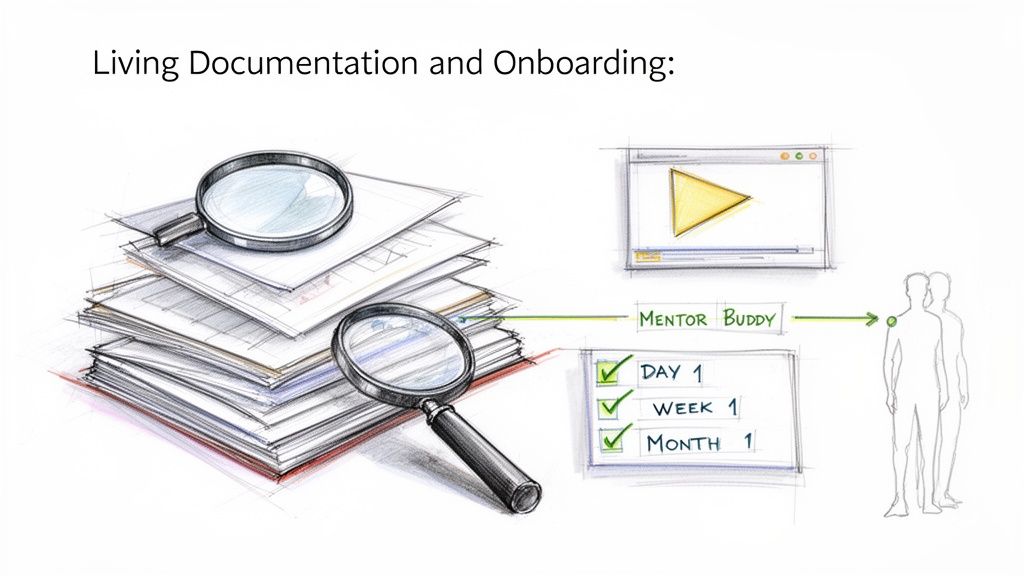
- Structure the Onboarding Journey: Design a clear 'Day 1', 'Week 1', and 'Month 1' plan for new hires. Assign a dedicated onboarding buddy or mentor, and consider compensating them for their time. Record video walkthroughs of complex processes to supplement written guides, giving new team members multiple ways to learn.
- Foster Continuous Growth: Encourage ongoing learning by providing stipends for courses, books, and conferences. Host internal "lunch-and-learn" sessions where team members can share their expertise on new technologies or processes. Assign ownership for key documentation areas and schedule quarterly reviews to ensure information stays current.
Key Insight: Excellent documentation is the ultimate enabler of asynchronous collaboration. It empowers team members to solve problems independently, reduces interruptions, and ensures that knowledge is an asset owned by the company, not just by individuals.
5. Establish Dedicated Home Office Infrastructure and Ergonomics
A productive and healthy remote employee is one who has a dedicated, comfortable, and well-equipped workspace. Unlike in an office where the company controls the environment, remote work shifts this responsibility to the individual. Leading companies recognize that investing in home office infrastructure is not a perk but a strategic necessity to ensure long-term productivity, employee well-being, and professional-quality collaboration.
This practice is essential because an ergonomic setup prevents burnout and physical strain, while proper tech infrastructure ensures seamless connectivity and professionalism on calls. Companies like GitLab and Basecamp have set the standard by offering generous home office stipends, understanding that a one-time investment in a proper chair or high-speed internet pays dividends in sustained performance and employee retention. This support signals to your team that their health and effectiveness are a priority.
How to Implement Home Office Support
Providing a structured program for home office setup empowers employees to create an optimal work environment. This is a critical remote work best practice that directly impacts daily output and long-term health.
- Provide an Equipment Stipend: Offer a one-time allowance, typically between $500 and $1,500, for new hires to purchase essential equipment like an ergonomic chair, a standing desk, or an external monitor. Companies like GitHub and Zapier have popularized this model, providing reimbursements for initial setup costs.
- Offer Recurring Subsidies: Cover ongoing costs that contribute to a productive workspace. This can include a monthly stipend for high-speed internet upgrades or a co-working space membership, giving employees flexibility in where they work.
- Create a Setup Guide: Develop a resource with recommendations for ergonomic equipment (e.g., Herman Miller, Steelcase), ideal lighting setups, and tips for noise management. Include a home office wellness checklist to guide employees in creating a space that supports both physical and mental health.
Key Insight: Supporting your team's physical workspace is a direct investment in their productivity and well-being. A well-designed home office reduces distractions and physical discomfort, enabling deeper focus and higher quality work.
6. Foster Team Culture and Social Connection Despite Distance
In a remote setting, the spontaneous social interactions that build team culture and camaraderie don't happen automatically. Leaders must intentionally cultivate a sense of community to combat isolation, improve collaboration, and boost retention. This involves creating dedicated spaces and routines for non-work interactions, celebrating successes publicly, and ensuring team members feel like part of a cohesive unit, not just a collection of individuals.
This practice is a cornerstone of sustainable remote work because it addresses the human need for connection, which directly impacts morale and engagement. A strong remote culture transforms a transactional work environment into a supportive community. For example, Automattic, the company behind WordPress, has thrived for years by prioritizing connection through global "Grand Meetups" and team-specific travel budgets, ensuring colleagues build deep personal bonds that translate into better professional collaboration.
How to Foster Remote Team Culture
Building a vibrant remote culture requires a multi-pronged approach that mixes asynchronous check-ins with synchronous social events. The key is to be consistent and authentic in your efforts, especially when integrating nearshore or augmented team members into your company's social fabric.
- Create Virtual 'Water Coolers': Establish dedicated Slack or Teams channels for non-work chat, like
#random,#pets, or#hobbies. These spaces allow for the casual, personal conversations that build relationships and help team members get to know each other beyond their job titles. - Host Regular Social Events: Organize monthly or quarterly virtual gatherings that aren't focused on work. Ideas include virtual game nights, online trivia, guided cooking classes, or simple "coffee and chat" sessions. The goal is to create shared experiences that are fun and low-pressure.
- Publicly Celebrate Wins: Make recognition a visible and consistent practice. Use a dedicated
#kudosor#winschannel to celebrate project milestones, individual achievements, and positive customer feedback. This reinforces a culture of appreciation and ensures everyone's contributions are seen. - Prioritize In-Person Gatherings: If budget allows, organize annual or semi-annual in-person retreats. These gatherings are invaluable for cementing team bonds, tackling strategic planning, and re-energizing the entire organization.
Key Insight: Remote culture isn't about virtual pizza parties; it's about creating a system of intentional connection points that make every team member feel seen, valued, and connected to the company's mission and to each other.
7. Implement Security and Data Protection Best Practices
In a distributed environment, the company network perimeter dissolves, making robust security a non-negotiable foundation for remote operations. Protecting sensitive client data and valuable intellectual property requires a proactive, multi-layered security strategy that addresses device, network, and user vulnerabilities. This involves enforcing strict access controls, deploying advanced security tools, and cultivating a security-conscious culture across the entire team, including nearshore partners.
This practice is essential among remote work best practices because a single breach can cause catastrophic reputational and financial damage. By embedding security into every aspect of remote work, you mitigate risks associated with unsecured networks and personal devices. For instance, GitHub mandates Multi-Factor Authentication (MFA) for all contributors, while Stripe leverages a zero-trust architecture, treating every access request as if it originates from an open network, thereby minimizing potential attack surfaces.
How to Implement Security and Data Protection
Building a secure remote work environment requires a combination of technology, policy, and ongoing education. To implement effective security and data protection, it's essential to understand and deploy robust secure remote work solutions that go beyond basic tools.
- Enforce Strict Access Controls: Mandate Multi-Factor Authentication (MFA) for all applications and services, from email to code repositories. Require the use of a company-wide password manager like 1Password or LastPass to eliminate weak or reused passwords. All access to internal systems and client infrastructure should be routed through a secure VPN.
- Secure All Endpoints: Implement an endpoint detection and response (EDR) solution to monitor all company and personal devices (under a BYOD policy) for threats. Ensure all device hard drives are encrypted and that operating systems are kept up-to-date with the latest security patches.
- Conduct Regular Training and Audits: Schedule quarterly security awareness training and run simulated phishing campaigns to keep the team vigilant. Establish clear incident response and communication plans so everyone knows their role in a security event. Regular security audits, like those detailed in a comprehensive website security audit guide, can help identify and patch vulnerabilities before they are exploited.
Key Insight: Security in a remote setting is not just an IT responsibility; it's a collective cultural commitment. The strongest defense is a well-informed and vigilant team that understands its role in protecting company and client assets.
8. Create Structures for Focused Deep Work and Minimize Meeting Bloat
In a remote setting, the lines between collaborative time and individual focus time can easily blur, leading to constant interruptions and context-switching. Establishing firm structures to protect deep work is essential for roles requiring intense concentration, like software development and design. This means intentionally creating uninterrupted blocks of time where team members can tackle complex problems without the distraction of pings, notifications, and unnecessary meetings.
This practice is one of the most impactful remote work best practices for boosting productivity and output quality. By prioritizing focused work, you combat the "always-on" culture that leads to burnout and shallow, reactive work. Companies like Basecamp champion this philosophy by implementing policies like four-day workweeks and minimal meetings, recognizing that true progress comes from sustained, uninterrupted effort, not from being perpetually available for discussion.
How to Implement Focused Deep Work
To reclaim focus time for your team, you must be deliberate about setting boundaries and defaulting to asynchronous communication. This ensures that synchronous time is reserved for high-value, complex collaboration, not for routine updates.
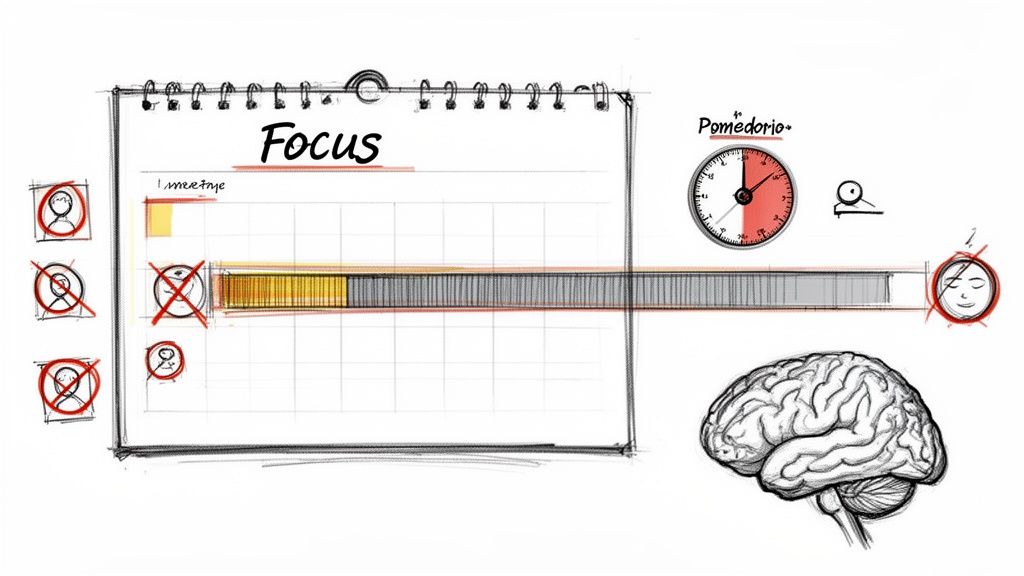
- Block Out Deep Work Windows: Encourage team members to block 2-3 hour "deep work" sessions in their calendars daily. These blocks should be respected by everyone, treating them as seriously as a scheduled meeting.
- Implement 'No Meeting' Days: Designate a specific day, like "No Meeting Wednesday," to give the entire team a full day of protected focus time. This synchronizes deep work periods across the organization, reducing the temptation to schedule interruptions.
- Mandate Strict Meeting Hygiene: Require a clear agenda and pre-read materials for every meeting. Set firm time limits, such as 25 minutes for status updates or 50 minutes for problem-solving sessions, to encourage efficiency and respect for attendees' time.
- Default to Asynchronous: Before scheduling a meeting, ask: "Can this be resolved via a detailed message, document, or video recording?" Use project management tools for updates and decisions that don’t require real-time debate.
Key Insight: The goal is to shift the company culture from valuing immediate responsiveness to valuing thoughtful, high-quality output. Protecting focus time is not a luxury; it is a prerequisite for innovation and excellence in a distributed environment.
9. Establish Health, Wellness, and Burnout Prevention Programs
The boundary-blurring nature of remote work can accelerate burnout, making proactive wellness initiatives essential for long-term team sustainability. Without the physical separation of an office, employees are more susceptible to overworking, digital fatigue, and isolation. A dedicated wellness and burnout prevention program acknowledges these risks and provides a structural support system to protect your team's most valuable asset: their well-being.
Prioritizing health is one of the most impactful remote work best practices because it directly correlates with employee retention, engagement, and sustainable productivity. When team members feel supported beyond their daily tasks, they are more likely to stay motivated and perform at their best. For example, GitLab champions this by openly documenting its mental health policies in its public handbook, offering flexible schedules, and encouraging "Family and Friends Days" where the entire company takes a day off to recharge.
How to Implement Wellness and Burnout Prevention
Building an effective program requires a multi-faceted approach that combines tangible benefits with cultural reinforcement. It’s about creating an environment where taking time off is encouraged, not just permitted, and well-being is a shared responsibility from leadership down.
- Provide Tangible Health Benefits: Go beyond standard insurance by offering comprehensive mental health coverage that includes therapy and counseling. Supplement this with a monthly wellness stipend ($100-$500) that employees can use for gym memberships, meditation apps like Calm, or other personal health activities.
- Enforce Genuine Time Off: Implement policies that encourage unplugging. This could include minimum vacation day requirements, paid sabbaticals after a certain tenure, or clearly defined company-wide "no-work" hours. Basecamp famously models this by discouraging work after 5 p.m. and on weekends.
- Model Healthy Boundaries from the Top: Leadership behavior sets the tone. When managers and executives visibly disconnect after hours, take their full vacation time, and openly discuss well-being, it normalizes these behaviors for the entire team.
- Conduct Regular Well-being Check-ins: Use one-on-one meetings to discuss more than just project status. Intentionally ask about workload, stress levels, and work-life balance. This helps identify early signs of burnout and allows for proactive intervention.
Key Insight: A wellness program isn't just a list of perks; it's a cultural commitment to preventing burnout before it happens. True success lies in creating a system where employees feel empowered and encouraged to prioritize their health without fear of falling behind.
10. Implement Trust-Based Management and Outcome-Focused Performance Metrics
Traditional management, often reliant on physical presence, falters in a remote setting. The most effective remote work best practices involve a fundamental shift from monitoring activity to measuring outcomes. This trust-based approach empowers employees by focusing on what they produce, not how many hours they are online, fostering autonomy, accountability, and higher job satisfaction. It requires setting clear goals and trusting your team to deliver on them.
This pivot is crucial because micromanagement is a culture killer for distributed teams. By focusing on deliverables, you align everyone on what truly matters: impact. For instance, Best Buy's corporate team famously implemented a Results-Only Work Environment (ROWE), which led to a 35% increase in productivity by giving employees complete control over their schedules as long as their work was completed successfully. This model proves that trust is not just a cultural ideal but a strategic business advantage.
How to Implement Outcome-Focused Management
Building a culture of trust and accountability starts with defining success clearly and giving teams the freedom to achieve it. This is especially important when integrating nearshore or augmented team members, as it aligns everyone on shared goals regardless of location.
- Define Clear OKRs: Set explicit Objectives and Key Results (OKRs) or KPIs each quarter. Ensure every task within your project management tool, like Jira, is tied to a larger strategic goal, making an individual’s impact visible and measurable.
- Shift Performance Metrics: Move away from tracking 'hours worked' or 'lines of code' and focus on metrics like project completion rates, quality of deliverables (e.g., bug counts), and adherence to deadlines. The conversation should be about results, not activity.
- Trust and Verify: Empower employees to manage their own schedules, using core hours only for essential collaboration. Use project management tools for transparent progress tracking, not for surveillance. The goal is visibility into work, not into workers.
- Structure Client Deliverables: When working with augmented teams, define clear, outcome-based deliverables with clients upfront. This ensures the focus remains on the specific results the client is paying for, rather than the hours billed, creating a more successful partnership.
Key Insight: Focusing on outcomes rather than presence is the foundation of high-performing remote teams. It replaces suspicion with trust, encouraging ownership and enabling individuals to do their best work on a schedule that suits them.
10-Point Remote Work Best Practices Comparison
| Practice | 🔄 Implementation Complexity | ⚡ Resource Requirements | ⭐ Expected Effectiveness / 📊 Outcomes | 💡 Ideal Use Cases | 📊 Key Advantages |
|---|---|---|---|---|---|
| Establish Clear Communication Protocols and Tools | 🔄🔄 Medium — governance & adoption | ⚡⚡ Medium — messaging + docs | ⭐⭐⭐ High — fewer misunderstandings, async enablement | Distributed teams; client-facing work | Improved transparency; async collaboration; decision trails |
| Define Clear Project Management and Delivery Workflows | 🔄🔄🔄 High — process design + automation | ⚡⚡⚡ High — PM tools, CI/CD, training | ⭐⭐⭐⭐ Very high — alignment, predictability | Scaling teams; complex deliveries; staff augmentation | Visibility, faster handoffs, early bottleneck detection |
| Implement Time Zone Management Strategies | 🔄🔄 Medium — scheduling policies & rotations | ⚡ Low — scheduling tools, recording | ⭐⭐⭐ High — smoother coordination, faster cycle times | Global teams; nearshore/follow-the-sun models | Reduced scheduling friction; extended coverage; quicker time-to-market |
| Documentation, Onboarding, and Continuous Learning | 🔄🔄 Medium — content creation & upkeep | ⚡⚡ Moderate — docs platforms, mentors | ⭐⭐⭐⭐ Very high — faster ramp, preserved knowledge | Staff augmentation; high turnover; complex systems | Faster onboarding; fewer interruptions; institutional memory |
| Establish Dedicated Home Office Infrastructure and Ergonomics | 🔄 Low — policy + stipend programs | ⚡⚡ Moderate — equipment allowances | ⭐⭐⭐ High — better productivity & call quality | Remote hires; client-facing roles | Improved focus, health, professionalism, retention |
| Foster Team Culture and Social Connection Despite Distance | 🔄🔄 Medium — program planning & scheduling | ⚡ Low–⚡⚡ Low-moderate — events budget | ⭐⭐⭐ High — improved morale and retention | Distributed teams needing cohesion | Stronger trust, reduced isolation, better knowledge sharing |
| Implement Security and Data Protection Best Practices | 🔄🔄🔄 High — technical controls & compliance | ⚡⚡⚡ High — security tooling, audits, training | ⭐⭐⭐⭐ Very high — risk reduction, compliance | Client data handling; regulated industries; nearshore teams | Reduced breach risk, client confidence, auditable controls |
| Create Structures for Focused Deep Work and Minimize Meeting Bloat | 🔄🔄 Medium — cultural change & policy | ⚡ Low — calendar practices, norms | ⭐⭐⭐⭐ Very high — quality, focus, reduced context switching | Design & engineering teams; high-concentration work | Higher output quality, less burnout, improved decision-making |
| Establish Health, Wellness, and Burnout Prevention Programs | 🔄🔄 Medium — benefits design & policy | ⚡⚡ Moderate — benefits/stipends cost | ⭐⭐⭐ High — better retention and well‑being | Long-term remote teams; high-pressure phases | Reduced burnout, improved satisfaction, talent attraction |
| Implement Trust-Based Management and Outcome-Focused Metrics | 🔄🔄 Medium — goal-setting and culture shift | ⚡ Low — OKR tooling, reporting | ⭐⭐⭐⭐ Very high — autonomy and results orientation | Mature teams; skilled augmented staff; creative work | Increased autonomy, ownership, alignment to deliverables |
Build Your Remote-First Future Deliberately
Navigating the landscape of distributed work successfully is no longer a matter of chance; it requires a deliberate and strategic approach. The journey from simply managing remote employees to building a thriving, high-performance remote-first organization is paved with intentional choices. This guide has detailed ten critical pillars, moving beyond generic advice to provide a concrete blueprint for development and product teams. By implementing these remote work best practices, you are not just adapting to a trend; you are architecting a more resilient, productive, and human-centric way of working.
The practices we've explored, from establishing crystal-clear communication protocols and asynchronous workflows to fortifying your security posture and fostering a genuine team culture, are interconnected. A robust documentation culture (Practice #4) directly supports effective onboarding and timezone management (Practice #3). Similarly, trust-based, outcome-focused metrics (Practice #10) are the only way to empower deep work and prevent burnout (Practices #8 and #9) in a distributed environment. Viewing these as isolated tips misses the point. They are components of a holistic system designed for the digital workplace.
From Theory to Action: Your Implementation Roadmap
Mastering this new operational model can feel overwhelming, but progress is achieved through incremental, consistent effort. The goal is not to implement all ten practices overnight but to begin building momentum.
Here are your actionable next steps:
Conduct a Remote Work Audit: Start by assessing your current state. Use the ten practices in this article as a checklist. Where are you strongest? Where are the most significant gaps? A simple survey sent to your team can provide invaluable, ground-level insights into what is working and what is causing friction.
Prioritize Your Top 2-3 Initiatives: Based on your audit, identify the areas that will have the most immediate impact. Is your team drowning in unnecessary meetings? Tackle Practice #8 by implementing "no-meeting Wednesdays" or requiring agendas for every call. Is onboarding chaotic? Focus on Practice #4 by creating a dedicated Onboarding Hub in your knowledge base.
Create a Deliberate Implementation Plan: For each chosen initiative, assign an owner, define what success looks like, and set a clear timeline. For example, if you're improving communication protocols (Practice #1), the plan might be: "By the end of Q3, we will have a documented Communication Charter in Notion that clarifies which tool to use for which purpose, with a 90% team adoption rate."
The Strategic Advantage of a Well-Designed Remote Model
Embracing these principles is more than an internal optimization; it is a profound competitive advantage. A well-run remote operation unlocks access to a global talent pool, allowing you to build a world-class team without geographical constraints. This is particularly powerful when scaling with nearshore partners. When your foundational practices for documentation, asynchronous communication, and trust-based management are already in place, integrating expert nearshore developers becomes a seamless and scalable process. They can onboard faster, contribute more meaningfully from day one, and feel like true members of the core team.
Ultimately, the future of work isn't just about location independence. It's about intentionality. It's about building an organization so clear in its processes, so strong in its culture, and so focused on its outcomes that excellence becomes the standard, regardless of where your team members log in from. Start today by choosing one small, deliberate action. Your future, high-performing remote team will thank you for it.