What is technical debt? what is technical debt and how to manage it

Ever heard a developer mutter the phrase "technical debt"? It’s not just coder slang—it’s a real-world business concept that every product manager and startup founder needs to understand.
At its core, technical debt is the future cost you'll pay for choosing a quick and easy solution today over a more robust, but slower, one. Think of it like financial debt. Taking a shortcut now to ship a feature faster is like getting a loan. You get the immediate benefit, but you're on the hook for "interest payments" later. Those payments come in the form of slower development cycles, a buggier product, and ballooning maintenance costs down the line.
A Simple Way to Think About Technical Debt
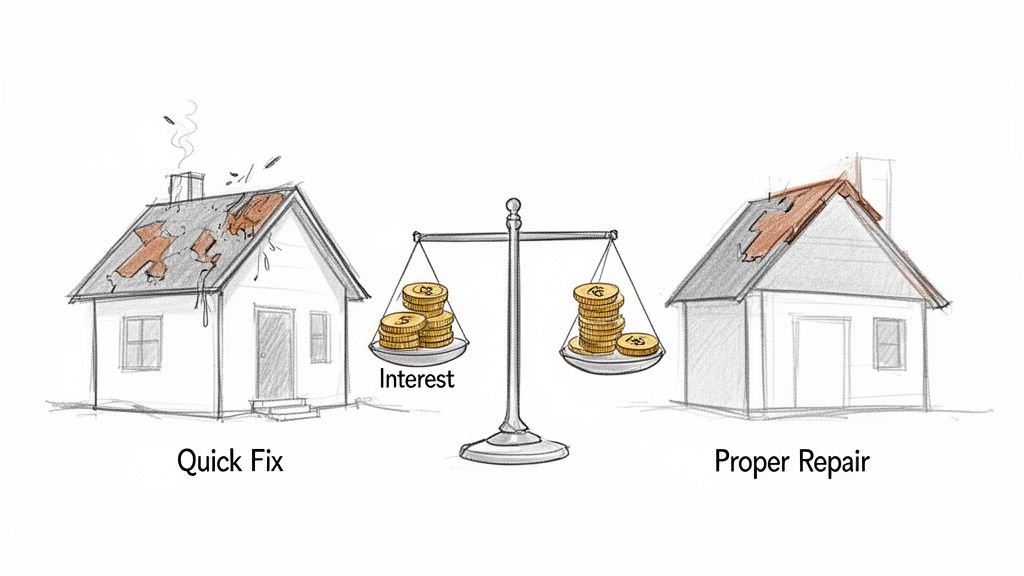
Let’s use an analogy. Imagine you're building a house on a tight deadline. Instead of installing a high-quality plumbing system, you go with cheap, quick-fit pipes to get the job done faster. You hit your move-in date, which feels great. But you've just taken on a hefty dose of technical debt.
A few months later, those pipes start to leak. Now, fixing them is a nightmare. You have to tear down drywall and disrupt the entire house, making the repair far more expensive and complicated than doing it right the first time. Every new appliance you want to add, like a dishwasher, becomes a massive project instead of a simple install. That extra work and cost? That's the interest you're paying on your initial shortcut.
Not All Debt Is Bad Debt
Here’s a crucial point: not all technical debt is a mistake. Sometimes, it’s a smart business move. Just as a company takes out a loan to seize a growth opportunity, a development team might intentionally take on some debt to hit a critical launch date or validate an idea in the market. Before getting too deep into the different types, it's worth having a solid grasp on what is technical debt in the broader sense.
The real difference comes down to whether the debt was taken on with open eyes or out of carelessness.
- Strategic Debt: This is a calculated risk. The team consciously chooses a shortcut, fully aware of the future refactoring work needed. They document the decision and have a plan to "repay" the debt later. It's a tool for agility.
- Reckless Debt: This is the messy, unintentional kind that piles up from poor practices, a lack of awareness, or simply cutting corners without thinking about the consequences. This is the debt that quietly suffocates a project.
Technical debt isn't just a headache for your engineers; it's a direct threat to your business. The "interest" you pay on it eats into your profitability, slows your momentum, and makes it harder to out-innovate competitors.
The goal isn't to have zero technical debt—that's an unrealistic and often counterproductive aim for any product that's actually shipping. The real objective is to manage it wisely. You want to make sure any new debt is a strategic choice, not an accident, and that you have a handle on the trade-offs you're making.
For a quick overview of the key ideas we've covered, this table breaks it down.
Technical Debt at a Glance
| Aspect | Brief Description |
|---|---|
| Definition | The implied cost of rework caused by choosing an easy solution now over a better approach that would take longer. |
| Analogy | Like financial debt, it offers a short-term gain but accrues "interest" over time. |
| Interest Payments | Slower development, increased bugs, higher maintenance costs, and reduced team morale. |
| Root Cause | Often stems from pressure to deliver quickly, changing requirements, or inadequate technical practices. |
| Primary Goal | Not elimination, but conscious and strategic management to maintain a healthy balance. |
Ultimately, understanding these core components is the first step toward making smarter decisions about when to borrow from the future and when to invest in a solid foundation.
The Four Common Types of Technical Debt
Technical debt isn't some single, giant problem you can point to. It’s more like a collection of different issues that pop up all over your tech stack. Pinpointing exactly what kind of debt you’re dealing with is the first real step toward getting it under control.
Think of it this way: a doctor needs to diagnose an illness before prescribing a treatment. In the same way, you need to figure out where your "interest payments" are actually coming from before you can start paying down the principal.
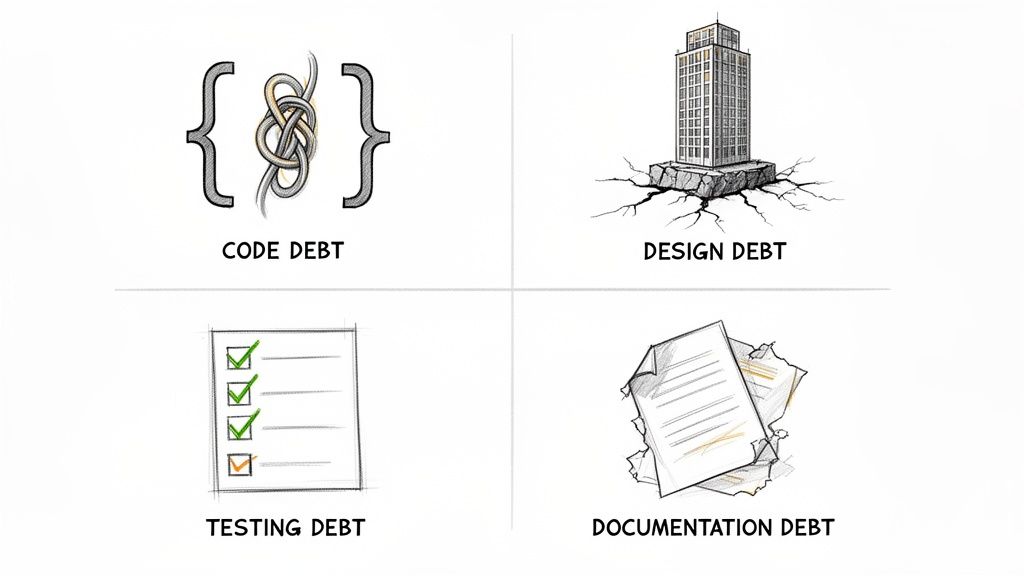
While you could slice it a dozen different ways, most technical debt falls into four main categories. Each one has its own unique causes and consequences, impacting everything from development speed to system stability.
1. Code Debt
This is the one most people think of first. Code debt is the messy, confusing, or inefficient code that gets written when deadlines are tight and pressure is high. It lives right there in your codebase.
Imagine trying to cook in a disorganized, cluttered kitchen. You can still make a meal, but everything takes twice as long because you're constantly searching for utensils and bumping into things. That's code debt in a nutshell. It’s the result of taking shortcuts, like skipping a code review or writing a "quick and dirty" fix that solves an immediate problem but creates a long-term headache.
Real-world examples of code debt include:
- "God" classes: These are massive, sprawling functions or classes that try to do everything at once. They become so complex that modifying them without breaking something else feels nearly impossible.
- Missing comments: Code with no explanation is like a map with no legend. Future developers (or even you, six months from now) will have to waste hours just trying to figure out what it was supposed to do.
- Duplicated code: We've all done it—copying and pasting a block of code instead of creating a reusable function. The problem is, when you find a bug in that code, you now have to fix it in multiple places.
Fixing code debt usually means refactoring, which is just a fancy word for cleaning up and restructuring existing code without changing what it actually does. It’s like finally organizing that messy kitchen so you can work efficiently again.
2. Design and Architectural Debt
If code debt is a messy kitchen, then design and architectural debt is building the entire house on a cracked foundation. This is a much deeper, more expensive kind of debt that comes from poor structural decisions at the system level.
This happens when the fundamental design of the software is flawed, inflexible, or just not right for what it needs to do long-term. Maybe the team rushed the design phase or didn't think far enough ahead. The consequences are huge because they affect the entire system. Adding a new feature isn’t just hard—it might require a massive, painful overhaul.
Architectural debt is particularly dangerous because its "interest payments" are exponential. A small compromise in the core design can create bottlenecks that slow down every single future development effort.
For example, choosing a monolithic architecture when a microservices approach was needed can lead to a system where everything is tangled together. A small change in one area risks breaking the whole application. You can learn more about how these foundational choices play out in our guide on software architecture design patterns.
3. Testing Debt
Testing debt is the risk you take on when you don't have enough automated tests. It’s like driving a car at night with the headlights off. Sure, you're moving forward, but you have no idea what's just ahead.
Every new release becomes a high-stakes gamble. You can't be confident that your new code hasn't broken something important because there's no safety net. This debt piles up when teams skip writing unit, integration, or end-to-end tests to hit a deadline. It feels faster at first, but the long-term cost is an explosion in manual QA work and a lot more bugs slipping into production.
Common signals of high testing debt:
- Long manual QA cycles: Your QA team spends days, or even weeks, manually clicking through the entire application before every single release.
- Fear of deployment: Engineers are genuinely afraid to push code to production because they don't know what might break.
- Frequent regressions: You keep seeing old, fixed bugs mysteriously reappear in new updates.
Paying down testing debt means carving out time to build a solid suite of automated tests. It’s an investment that pays for itself by giving your team the confidence to build and ship new features quickly.
4. Documentation Debt
And finally, we have documentation debt—the silent killer. This is all the missing knowledge about how your system works, why key decisions were made, and how to keep it running.
It’s like being handed a complex piece of machinery with no instruction manual. The people who built it might know how it all fits together, but as soon as they leave, that knowledge walks out the door with them. This kind of debt makes onboarding new developers a nightmare and turns troubleshooting into a forensic investigation.
Every simple question requires interrupting a senior developer, which drains productivity across the entire team. Something as basic as updating a system library becomes a risky adventure when nobody is quite sure what it will affect.
The Hidden Costs of Ignoring Technical Debt
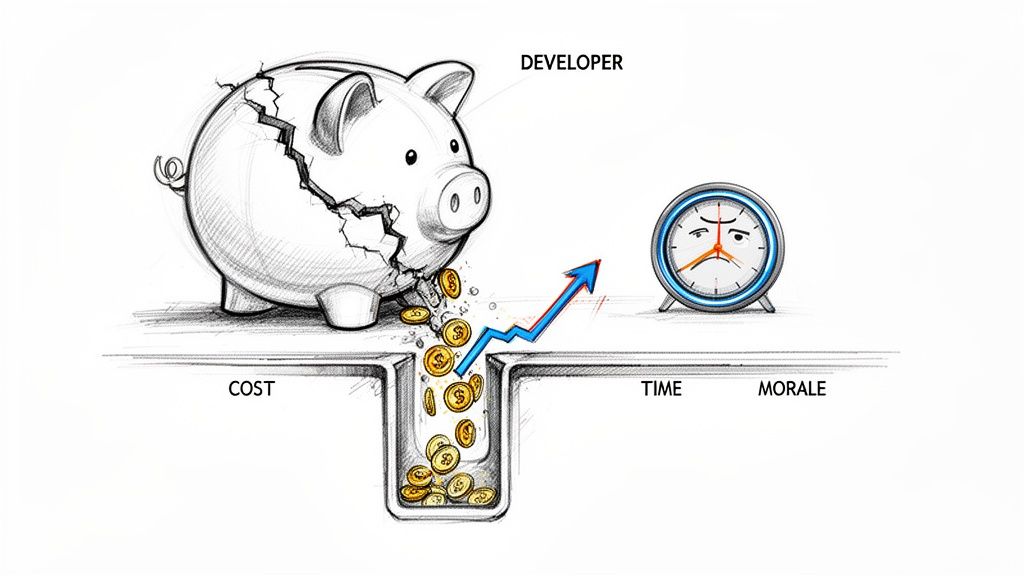
Technical debt is far more than a developer's headache—it's a silent killer of productivity, innovation, and ultimately, your bottom line. When left to fester, the "interest payments" on this debt start showing up in very real, painful ways. This isn't some abstract technical concept; it's a business problem with tangible financial consequences.
Think of it like driving a car while continuously adding bricks to the trunk. At first, you barely feel a difference. But over time, the engine strains, fuel efficiency plummets, and soon, the car can barely move. In software, this translates to a slow, grinding halt in your ability to innovate and react to the market.
The Slowdown of Innovation and Feature Delivery
The most immediate and frustrating cost of high technical debt is a major drop in development velocity. Simple updates that should take hours end up taking days. Adding a new feature feels less like construction and more like performing a high-risk surgery on a fragile system. Your team spends more time navigating tangled, brittle code than actually building anything new.
This slowdown directly kills your competitive edge. While your team is busy paying down "interest"—fixing bugs, untangling code, and running extensive manual tests—your competitors are shipping new features and grabbing market share.
Every shortcut taken today becomes a roadblock for a future feature. Unchecked technical debt ensures that your team will always be working harder, but moving slower.
This problem creates a vicious cycle. As deadlines approach, the pressure to take more shortcuts mounts, which in turn creates more debt. It's a downward spiral and a primary reason why many promising products eventually stagnate and lose their momentum.
The Rising Tide of Maintenance and Bug Fixes
A codebase drowning in debt is inherently unstable. It’s brittle, unpredictable, and breaks in the most unexpected ways. Before you know it, your development team is stuck in a reactive mode, constantly putting out fires instead of building for the future.
The budget for bug fixes starts to balloon, eating up resources that should be going toward new development. Instead of investing in growth, you're forced to spend more and more just to keep the lights on. This is one of the biggest hidden costs, as it directly cannibalizes your innovation budget.
Sound familiar? These are all classic symptoms of rising debt:
- More Bugs Per Feature: Every new release seems to introduce more bugs than it fixes.
- Surging Support Tickets: Your customer support team is overwhelmed with the same recurring issues.
- Increased System Downtime: The system becomes fragile, leading to more frequent and longer outages.
Getting a handle on these issues requires a solid framework. To learn more, see how these ideas connect in our guide to software project risk management.
The Human Cost: Developer Morale and Turnover
Perhaps the most overlooked cost of technical debt is the toll it takes on your team. Talented developers want to build great products and solve interesting problems, not fight a losing battle against a broken system every single day.
When engineers spend their time fixing the same bugs over and over or trying to add features to a codebase that resists every change, job satisfaction plummets. This is a direct path to burnout and low morale, which leads to higher employee turnover—an incredibly expensive problem. You don't just lose a person; you lose their institutional knowledge, time, and the money it takes to replace them.
The economic scale of this problem is staggering. Technical debt has become a massive global burden, with the United States alone facing an estimated $2.41 trillion in annual costs from poor software quality. A healthy codebase isn't just a technical asset; it's one of your most important tools for keeping top talent happy and productive.
How To Measure What You Can't See
You can't manage what you don’t measure. Technical debt often feels like this invisible force grinding your team to a halt, but it doesn't leave a clear paper trail. So, how do you get a handle on it? You have to make it visible.
This means moving beyond just a "gut feeling" and into the world of concrete data. The trick is to use a mix of hard numbers and human signals to paint a complete, honest picture of your codebase's health.
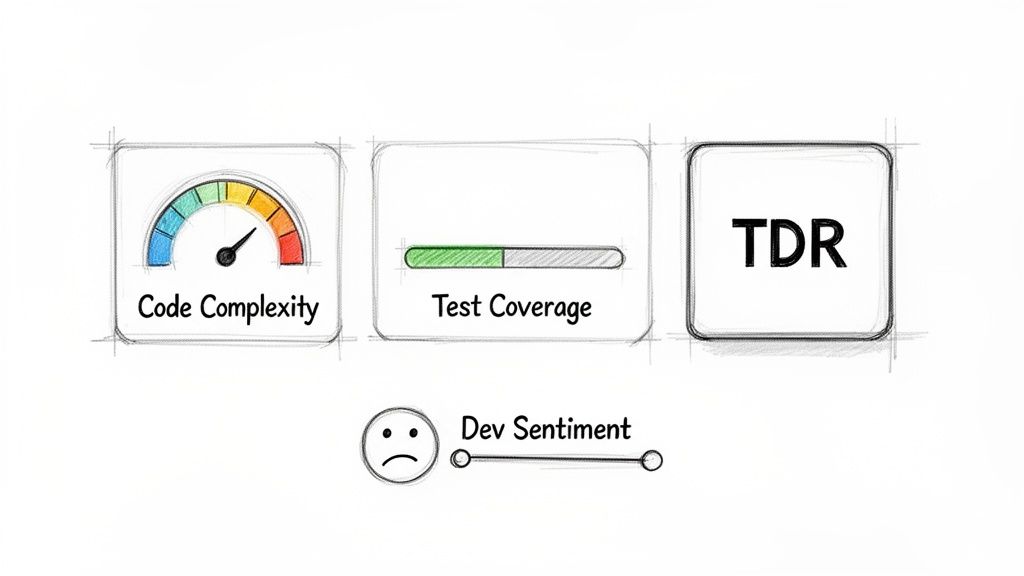
The goal isn't to find a single magic number that solves everything. Instead, you want to build a simple dashboard of key indicators. When you combine real data with candid feedback, you turn this abstract "debt" into something everyone—from developers to the C-suite—can actually understand and act on. A great starting point is establishing baseline metrics for continuous improvement, which lets you see if the changes you're making are actually working.
Quantitative Metrics: The Hard Numbers
Let's start with the hard data. Quantitative metrics are the objective, data-driven ways to see what’s going on under the hood. You’ll get these from static analysis tools that scan your codebase and spit out a score or a percentage. Think of these numbers as your first line of defense.
Here are some of the most effective metrics to keep an eye on:
- Code Complexity: This is often called Cyclomatic Complexity, and it measures how many different paths exist through a piece of code. A high number here means you're dealing with tangled, spaghetti-like logic that’s a nightmare to test, understand, or change safely.
- Test Coverage: What percentage of your code is actually covered by automated tests? Low test coverage is a massive red flag. It’s a direct sign of testing debt and means you’re rolling the dice with bugs and regressions every time you ship.
- Technical Debt Ratio (TDR): Tools like SonarQube can estimate the cost to fix all known issues versus what it would cost to rewrite the whole system. If your TDR creeps over 5%, it’s a strong signal that maintenance is starting to eat your development budget alive.
- Bug or Issue Count: This one is simple but powerful. Tracking the number of bugs reported per release or how long it takes to fix them gives you a direct pulse on code quality. If the bug count is consistently rising, you’re accumulating debt.
Qualitative Signals: Listening to Your Team
Numbers alone don't tell the whole story. Some of the most valuable intel you’ll get on technical debt comes straight from the people working in the trenches every day: your developers. These qualitative signals give you the why behind the numbers.
The pain points your developers feel are often the earliest and most accurate indicators of where technical debt is causing the most damage. Ignoring developer sentiment is like ignoring the check engine light on your car.
To get this feedback, you have to create a space where people feel safe being honest. You're looking for patterns in their frustrations—those patterns point directly to the biggest bottlenecks in your system.
Key qualitative signals to watch for:
- Developer Sentiment: Are your developers generally happy and productive, or are they constantly fighting the code? Regular, informal check-ins or quick, anonymous surveys can tell you a lot about how they feel about the codebase and their ability to get work done.
- Onboarding Time: How long does it take for a new engineer to ship their first meaningful piece of code? If that "time to first commit" is weeks or months, it’s a sure sign of crippling complexity and poor documentation.
- "No-Go Zones": Just ask your team: "Are there parts of the application you're afraid to touch?" These are almost always the areas with the most reckless debt, where a small change is likely to break five other things.
Key Metrics for Measuring Technical Debt
No single metric is a silver bullet. You need to pick a balanced set of indicators that fit your team’s goals and where you are as a company. A fast-moving startup will care about different things than a large enterprise supporting a critical legacy system.
This table can help you figure out where to focus your attention.
| Metric | What It Measures | Best For |
|---|---|---|
| Code Complexity | The intricacy and difficulty of understanding code logic. | Teams struggling with frequent bugs in specific modules. |
| Test Coverage | The percentage of code protected by automated tests. | Organizations looking to increase deployment confidence and speed. |
| Developer Sentiment | The team's overall frustration or satisfaction with the codebase. | Leaders trying to understand the human impact of debt and reduce turnover. |
| Onboarding Time | The speed at which new hires become productive. | Growing teams that need to scale their development capacity quickly. |
In the end, measuring technical debt is all about creating transparency. By combining automated tools with real human feedback, you build a shared, honest understanding of your challenges. This gives you the data you need to make a compelling case for investing in a healthier, more sustainable product.
A Practical Playbook for Managing Technical Debt
Knowing what technical debt is and how to spot it is one thing. Actually doing something about it is the real challenge. Teams often get stuck between two extremes: they either ignore the debt until the whole system grinds to a halt, or they demand a full stop on all new features to conduct a massive, and frankly, unrealistic cleanup.
Neither of those paths works.
A much better way is to treat technical debt management as an ongoing part of your development rhythm. It’s not about a single, heroic fix. It's about building smart habits and processes that keep your codebase healthy day in and day out. This playbook is all about combining proactive prevention with a smart, reactive repayment plan.
Proactive Strategies: Stop Digging the Hole
The easiest way to deal with technical debt is to stop creating the messy, reckless kind in the first place. These proactive strategies are about building a solid foundation and a team culture that actually cares about quality from the very beginning.
Enforce Clear Coding Standards: Consistency is your best friend. When everyone on the team agrees on how to format code, name variables, and structure files, the entire codebase becomes far easier to read and maintain. This one small step prevents a lot of confusion and messy code from ever making it into production.
Implement Robust Automated Testing: Think of a good test suite as your safety net. By investing in unit, integration, and end-to-end tests, you give developers the confidence to make changes without constantly worrying they're breaking something else. It lets your team move faster, not slower.
Foster a Culture of Ownership: Encourage a mindset where every engineer feels responsible for the health of the code. The "Boy Scout Rule" is perfect for this: always leave the code a little cleaner than you found it. It’s a simple idea, but it has a powerful, compounding effect over time.
Think of these habits as your first line of defense. They help create an environment where quality is a shared responsibility, not just a task for the QA team.
Reactive Tactics: Paying Down What You Owe
Even with the best intentions, some debt is going to slip through. The trick is to tackle it systematically instead of letting it pile up into an unmanageable mess. This is where your reactive tactics come in—identifying, prioritizing, and methodically paying down the debt that’s already there.
And make no mistake, that existing debt is costing you. A landmark 2018 study from Stripe found that developers spend a staggering 42% of their week—that’s almost two full days—just dealing with technical debt and bad code. You can find a deeper dive into these business costs in this detailed analysis. That’s time and money that should be going into building new things for your customers.
"The first step in paying down any debt is to stop accumulating more of it. Once you've stabilized the situation, you can create a realistic repayment plan that doesn't bankrupt your feature development budget."
Here’s a practical process to get that existing debt under control:
Create a Prioritized Debt Backlog: Don't just keep a vague list of "things to fix." Treat debt items just like you treat user stories. Document each one, estimate the effort to fix it, and—this is the most important part—analyze its business impact. Is it slowing down new features? Causing bugs for users? Posing a security risk?
Use an Impact vs. Effort Matrix: Once you have your backlog, prioritize it ruthlessly. Go after the high-impact, low-effort items first. These are your quick wins. They deliver immediate value and build momentum for tackling the bigger, hairier problems down the line. That low-impact, high-effort stuff? It can wait.
Schedule Dedicated Refactoring Cycles: If you don't schedule it, it won't happen. Formally allocate a slice of your team's time in every sprint specifically for paying down debt. Maybe it's a fixed 20% of your capacity or a dedicated "improvement day" every couple of weeks. This makes paying down debt a consistent, predictable part of your workflow.
By blending these proactive and reactive strategies, you shift from fighting fires to practicing good financial hygiene for your code. This balanced approach is critical for any team, especially those wrestling with older, more complex systems. For a closer look at this, our guide on effective legacy system modernization strategies offers some deeper insights. This playbook helps you keep innovating while ensuring the code you rely on gets healthier and more resilient over time.
Common Questions About Technical Debt
Once teams start talking seriously about technical debt, the same questions always pop up. It's one thing to understand the theory, but putting it into practice means dealing with tricky nuances, getting everyone on the same page, and turning technical problems into business priorities. Here are some straightforward answers to the most common hurdles you'll face.
Is All Technical Debt Bad?
Not at all. This is probably the biggest misconception out there—that technical debt is always a mistake or a sign of sloppy work. The truth is, some debt is a strategic tool that helps you move faster and innovate. The real difference comes down to one word: intentionality.
Think of it this way:
Strategic Debt is like taking out a business loan. You're consciously choosing to ship a feature faster to beat a competitor or validate an idea, knowing full well you'll have to clean things up later. You've calculated the "interest" and you have a plan to pay it back.
Reckless Debt is what happens when you're just careless. It’s the mess that builds up from cutting corners without a plan, from poor practices, or simply from not paying attention. This is the silent killer that slowly strangles a project.
The goal isn't to have zero debt. The goal is to make these trade-offs responsibly. Taking on strategic debt can be a brilliant move, but only if you document the decision, understand the future cost, and actually schedule the repayment. It's about making sure your debt is a deliberate choice, not a slow-moving accident.
How Can I Convince Leadership to Invest in This?
Trying to get buy-in from leadership to fix technical debt can feel like you're speaking a different language. The secret is to stop talking about "code quality" and start talking about things they care about: money, speed, and risk. You have to frame this not as a cost, but as an investment that will unlock your company's bigger goals.
Your job is to build a business case by showing them the cost of doing nothing. Use the metrics and signals you've gathered to tell a story backed by data. Show them exactly how that messy module is slowing down new feature development, how brittle code is causing more customer-facing bugs, and how it’s burning out your best engineers.
Your pitch should sound something like this: "If we invest 15% of our time over the next quarter to fix these specific bottlenecks, we can ship new features 30% faster by the end of the year."
Connect the dots for them. A healthier codebase directly leads to faster innovation, happier customers, and lower developer turnover. When the conversation shifts from "cleaning up code" to "investing in our ability to compete," you'll start getting nods instead of blank stares.
What Is the First Step Our Team Should Take?
Your absolute first step is to make the invisible visible. You can’t fix a problem that no one can see or agree on. Before you even think about refactoring code, your only goal should be to run a "debt audit" and get a shared picture of the landscape.
I recommend a two-pronged approach to start:
- Get a Quantitative Baseline: Run some static analysis tools on your codebase. These tools give you objective data on things like code complexity, duplication, and test coverage. This isn't the whole story, but it gives you a data-driven starting point.
- Identify the Pain Points: This part is crucial. Sit down with your developers in a blameless, open conversation. Ask them simple questions like, "What part of the code do you hate working in?" or "Which module are you most afraid to touch?" The qualitative feedback you get here is pure gold.
The point isn't to create a giant to-do list that will overwhelm everyone. It's to build a prioritized backlog of debt items. This ensures you can tackle the biggest-impact, lowest-effort items first, score a quick win, and build the momentum you need for the long haul.
Can We Ever Reach Zero Technical Debt?
Chasing "zero technical debt" is a fool's errand. In any software product that's actually growing and evolving, a certain amount of debt is not only inevitable but healthy. A codebase with absolutely zero debt is probably a codebase that isn't shipping new features or responding to the market.
The goal isn't elimination; it's management. You want to keep your debt at a manageable, low-interest level that doesn't cripple your ability to deliver value. It’s less like a one-time spring cleaning and more like good financial hygiene for your code. The cost of letting it spiral is huge; unmanaged debt now eats up around 40 percent of IT budgets in many companies, pulling money directly away from innovation. You can find more on this in SIG's analysis of how technical debt impacts IT balance sheets.
Instead of aiming for an impossible "zero," set a "debt ceiling" for your team. Or, even better, bake a "debt repayment" into every sprint. By consistently allocating a small slice of your development time to refactoring and improvements, you create a sustainable system where you're always paying down the high-interest stuff faster than you're taking on new, low-interest loans.